Are AI image and avatar generator screens growing in apps?
- By Ali Abouelatta
- n = 730
- Published
- Updated
- 2 min read
- ux-patterns · mobile · monetization · saas · design
Short answer
Only modestly. AI image/art/avatar generator screens rose from 2.4% of captured apps in 2023 to 3.5% in 2024, then held flat at 3.4% in 2025 (25 of 730 companies) source[1]. This is a steadier, smaller pattern than the AI-assistant surge (which quadrupled to 8.8%) source[2]. If you are choosing between shipping an AI chat assistant and an AI image generator, the assistant has far more momentum.
AI media-generator screens sat flat near 3.4% of captured apps in 2024-2025, while AI assistants quadrupled to 8.8% (July 2026).
Bar chart · Companies with pattern
Companies with pattern — The trend: a small, flat plateau
One block is about 0.9 Companies with pattern
- 2023
- 7
- 2024
- 14
- 2025
- 25
The trend: a small, flat plateau
Share of captured apps showing an AI image/art/avatar/portrait/photo generator screen, by capture year:
AI media generators inched up then flattened near 3.4% - a much shallower curve than the AI-assistant pattern source[1].
AI generators vs AI assistants
The contrast is the decision-relevant point. Over the same window, conversational AI-assistant screens went 2.4% -> 6.0% -> 8.8%, quadrupling, while media generators stalled near 3.4% source[2]. So within the AI-feature family, the conversational assistant is the surface actually spreading; image generation looks like a narrower, category-specific feature rather than a broad wave.
How to apply it
Treat an AI image/avatar generator as a fit-dependent feature for photo, avatar, and creative-tool categories - not a general growth lever, given its flat corpus-wide share. If you are allocating one AI investment, the assistant pattern carries more market momentum and broader adoption. Ship the generator when it maps directly to your core value, not to ride an AI trend, because the trend here is essentially flat.
Caveats
Prevalence is deduped by distinct company and matched on %ai image%, %ai art%, %ai avatar%, %ai portrait%, %ai photo%; it is a lower bound bounded by tag recall source[1]. Base sizes are small (7-25 companies) source[1]. Partial-2026 (10 apps) is excluded as a thin-capture artifact source[1].
Real in-market screens
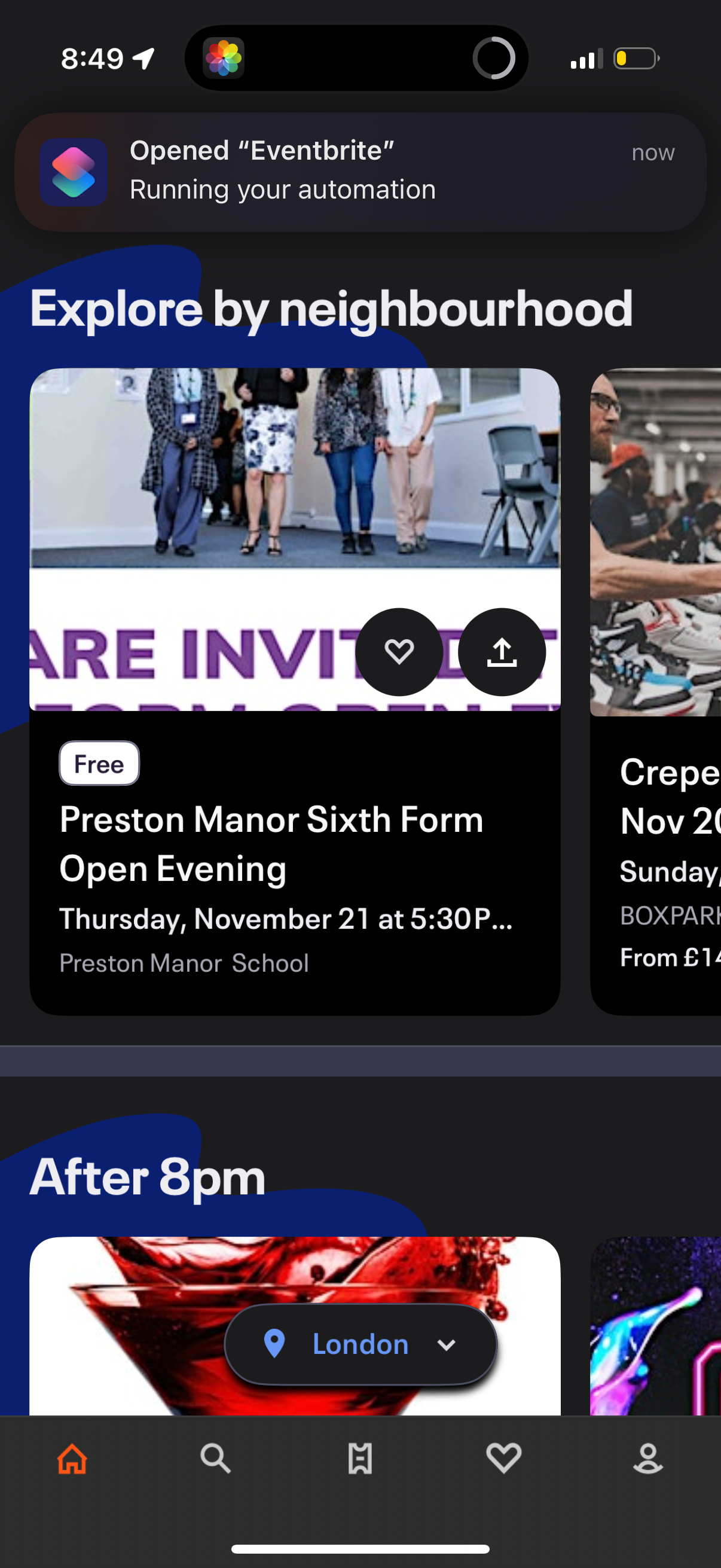
Screens from real, in-market apps, tracked by Lazyweb Research.
Eventbrite1206 × 2622opens the full image 
Picturethis1206 × 2622opens the full image 
Goodreads1206 × 2622opens the full image 
Apple Fitness1170 × 2532opens the full image
The numbers
| # | Stat | Computed from |
|---|---|---|
| [1] | 2.4% (2023, 7/293) -> 3.5% (2024, 14/399) -> 3.4% (2025, 25/730); 2026 partial 10 apps excluded | ai_media_generator_prevalence_over_time |
| [2] | AI-assistant screens over same window: 2.4% -> 6.0% -> 8.8% | ai_assistant_prevalence_over_time |
Methodology
Universe: 47,578 capture-dated screenshots across 809 tracked mobile apps. Method: for each capture year, share of distinct companies whose screens carry an AI media-generator tag. Reliable window 2023-2025; partial-2026 excluded. Caveat: small base and tag-recall-bounded lower-bound estimate.
Sources
- [1]
Lazyweb Research analysis of 809 tracked apps (mobile-app corpus, 47,578 capture-dated screenshots), July 2026
Prevalence = share of companies captured each year whose screens carry an AI image/art/avatar/portrait/photo tag, deduped by company_name.
- [2]
Lazyweb Research analysis of 809 tracked apps (mobile-app corpus, 47,578 capture-dated screenshots), July 2026
AI-assistant prevalence over the same window, same method, for comparison.
Source: Lazyweb Research — proprietary analysis of real, in-market app screens. Cite as Lazyweb Research, 2026-07-07.