Should I use in-flow save offers or post-cancellation win-back?
- By Ali Abouelatta
- n = 48
- Published
- Updated
- 2 min read
- cancellation · retention · monetization · upsell · experiments
Short answer
Both appear in the field, and they operate at different moments. In-flow, discount offers dominate (30 of 48 apps, 63%) while pause and downgrade are rarely observed (0 of 48 each) source[1]source[2]. Post-cancellation, named win-back plays like Paramount+'s '1 month free' restart modal and DoorDash's post-cancel recovery banner target users at the moment of loss source[3]number[4].
In-flow discount in 63% of 48 cancel apps; named win-back modals run after cancel, July 2026.
In-flow: discount is the workhorse
On the cancel screen itself, discount/offer language appears in 30 of 48 apps (63%), while pause and downgrade are each observed in 0 of 48 source[1]source[2]. Headway's in-flow style pairs a 33% discount with loss-aversion on a 'trial expired' modal, listing the benefits the user is about to lose number[5]. In-flow, discount plus loss-aversion is the dominant observed combination.
Post-cancellation: win-back at the moment of loss
Win-back fires after the user leaves. Paramount+ shows a restart modal offering '1 month free trial' with a benefit list and a 'Restart Subscription' CTA — a resubscribe play, not an in-flow save source[3]. DoorDash A/B-tested replacing a static saved-store card with an order-cancellation recovery banner ('Your order was canceled, we'll help you find a replacement') surfaced immediately at the moment of loss number[4].
How to apply it
If you can only build one path first, in-flow discount is the well-trodden choice with the most observed prevalence source[1]. Layer win-back (free-month restart, recovery banner) as a second surface for users who complete cancellation, timing it to the moment of loss where the field places it source[3]number[4]. Pause and downgrade remain whitespace in this corpus if you want a differentiated in-flow offer source[2].
Real in-market screens
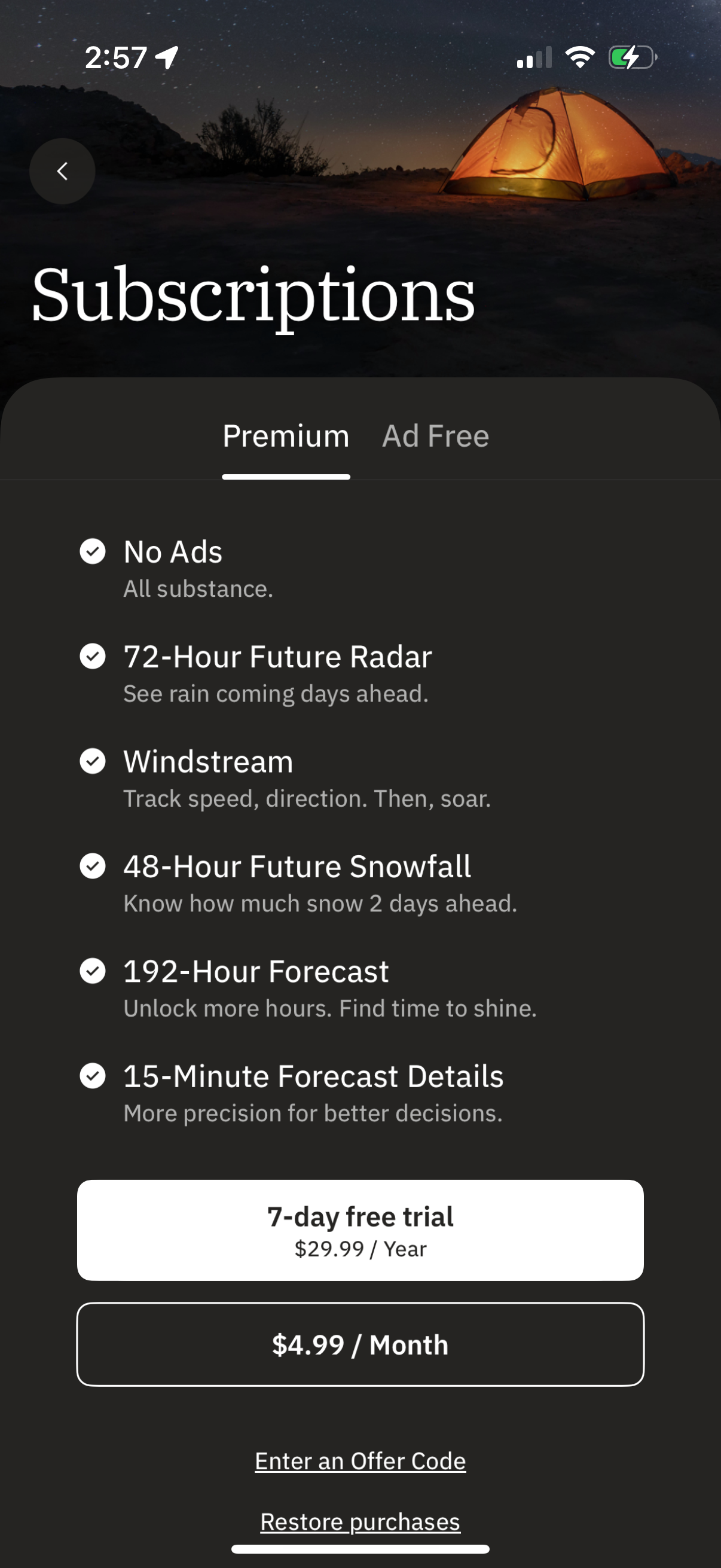
Screens from real, in-market apps, tracked by Lazyweb Research.
The Weather Channel1206 × 2622opens the full image 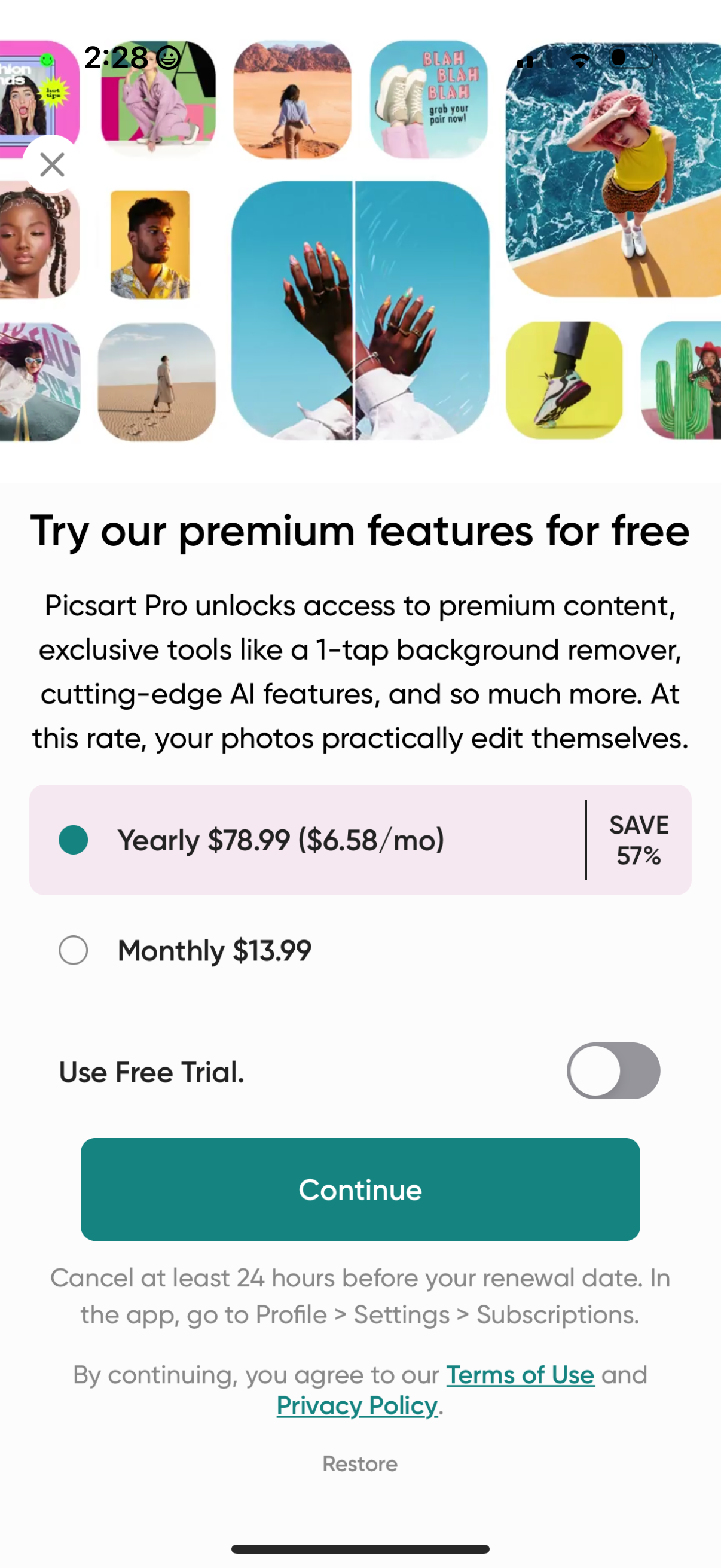
Picsart1206 × 2622opens the full image 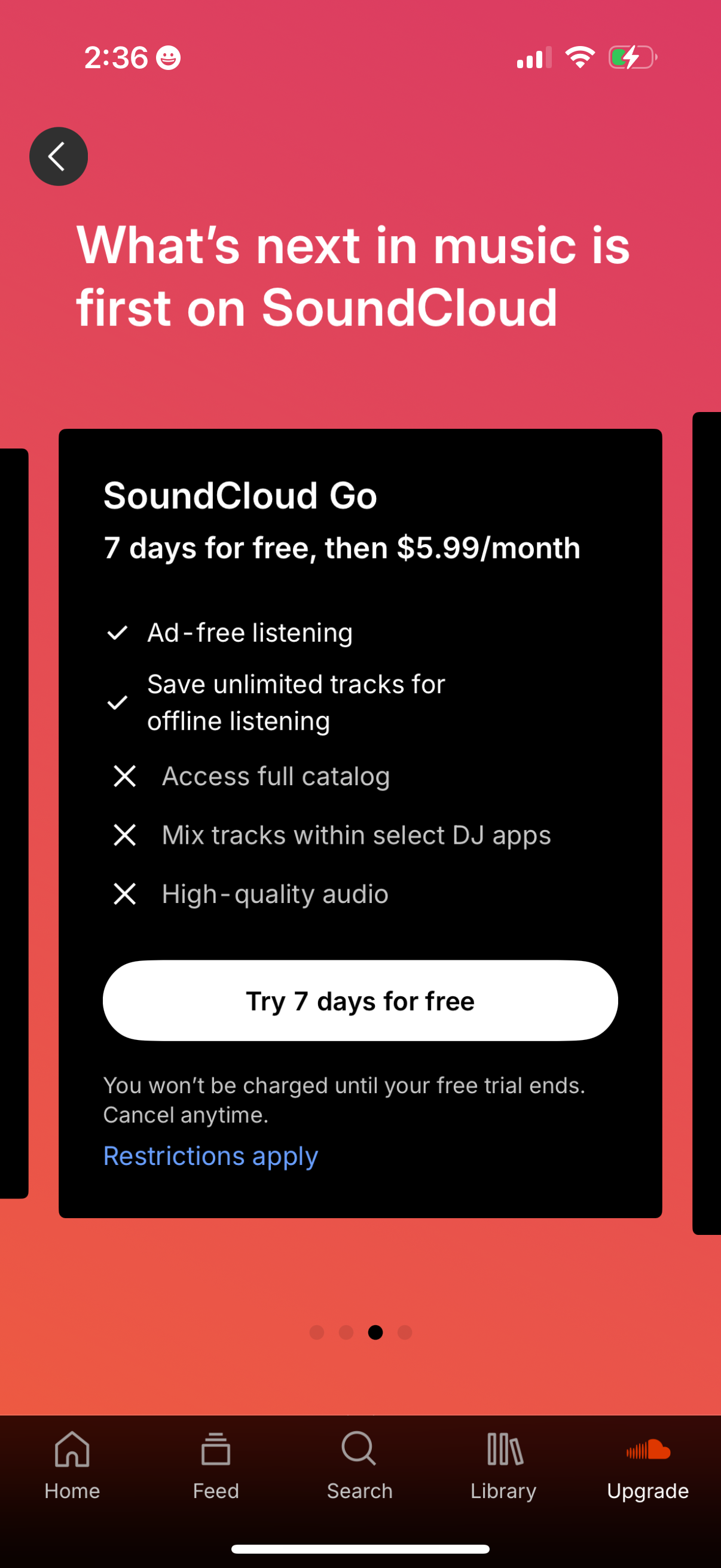
Soundcloud1206 × 2622opens the full image 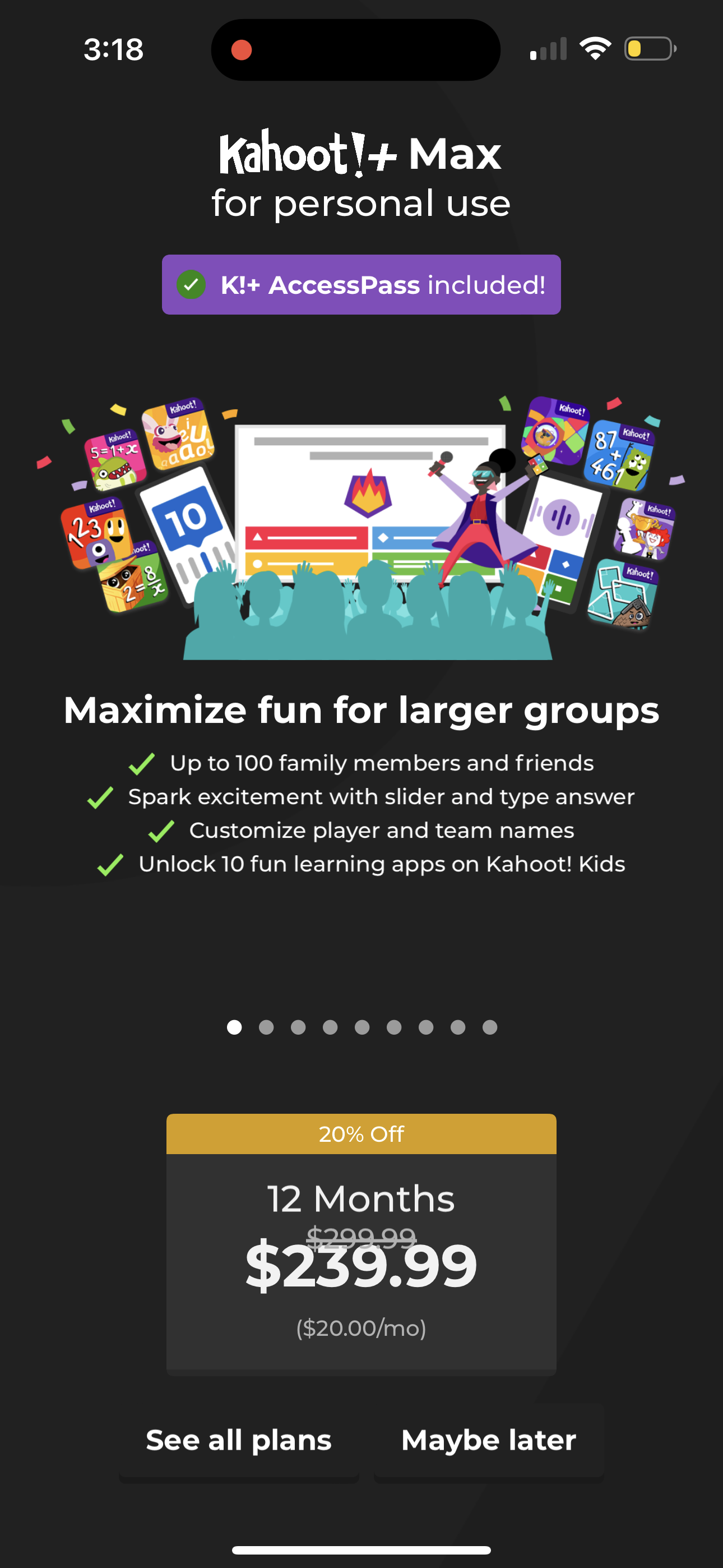
Kahoot1290 × 2796opens the full image
The numbers
| # | Stat | Computed from |
|---|---|---|
| [1] | 30 of 48 apps (63%) show in-flow discount/offer language | save_offer_offer_language |
| [2] | Pause 0/48 and downgrade 0/48 apps in-flow | save_offer_pause |
| [3] | Paramount+ win-back modal offers '1 month free trial', 'Restart Subscription' CTA | qualitative / paramount win-back-modal |
| [4] | DoorDash A/B added post-cancellation order-recovery banner | qualitative / doordash experiment |
| [5] | Headway 'trial expired' modal offers 33% discount with loss-aversion | qualitative / headway discount-to-retain |
Methodology
Universe: 48 apps with genuine cancel-intent screens (401 screenshots) plus named win-back examples, July 2026. Method: company-level keyword prevalence and named-example vision descriptions. Caveat: win-back examples are illustrative named cases, not a measured rate.
Sources
- [1]
Lazyweb Research analysis of 48 apps (genuine cancel-intent screens), July 2026
In-flow discount and pause/downgrade prevalence.
- [2]
Lazyweb Research analysis of 401 cancel-intent screenshots (48 apps), July 2026
Headway in-flow discount modal vision description.
- [3]
Lazyweb Research analysis of Paramount+ and DoorDash win-back examples, July 2026
Post-cancellation restart modal and order-recovery banner.
Source: Lazyweb Research — proprietary analysis of real, in-market app screens. Cite as Lazyweb Research, 2026-07-07.