Are pause and downgrade save offers worth building for cancellation?
- By Ali Abouelatta
- n = 48
- Published
- Updated
- 2 min read
- cancellation · retention · monetization · experiments · saas
Short answer
In captured cancel screens, pause appears in 0 of 48 apps and downgrade in 0 of 48, versus discount in 30 of 48 (63%) source[1]source[2]source[3]. So pause and downgrade are rarely observed relative to discount — open space, but unproven in this corpus. Because these are absence-in-vision-text signals, do not read the zeros as 'never used' source[2]source[3].
Pause 0/48 and downgrade 0/48 apps on cancel screens vs discount 30/48, July 2026.
Bar chart · Apps (of 48)
Apps (of 48) — The comparison
One block is about 1.1 Apps (of 48)
- Discount
- 30
- Pause
- 0
- Downgrade
- 0
The comparison
Across this corpus, discount is the only widely-observed in-flow save offer source[1]. Pause and downgrade are essentially unrepresented on captured cancel screens source[2]source[3].
Decision framing
Two honest reads. First, discount is the proven, well-trodden play — lowest execution risk if your goal is to match field norms source[1]. Second, pause and downgrade are whitespace in this dataset source[2]source[3]: because so few captured screens surface them, they could differentiate — but there is no observed prevalence here to lean on, and the 48-app denominator is modest number[4]. Validate with your own funnel before committing engineering time.
Caveats before you decide
The zeros are absence in captured vision text, not proof the product never offers pause or downgrade source[2]source[3]. The genuine-cancel-intent subset (48 apps, 401 screenshots) is deliberately narrow to avoid paywall pollution, which trims sample size number[4]number[5]. Treat all proportions here as directional.
Real in-market screens
Screens from real, in-market apps, tracked by Lazyweb Research.

The Weather Channel1206 × 2622opens the full image 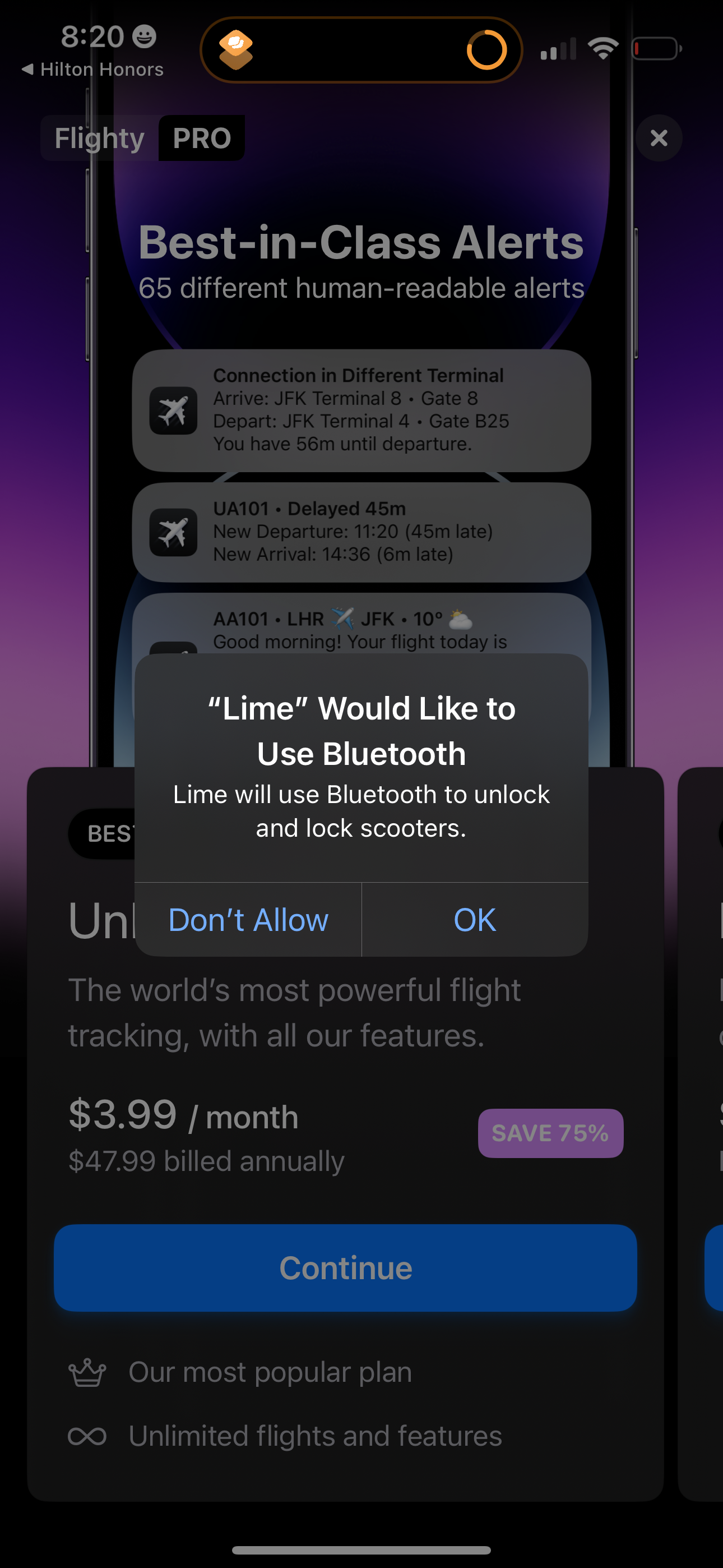
Flighty1290 × 2796opens the full image 
Uber1125 × 2436opens the full image 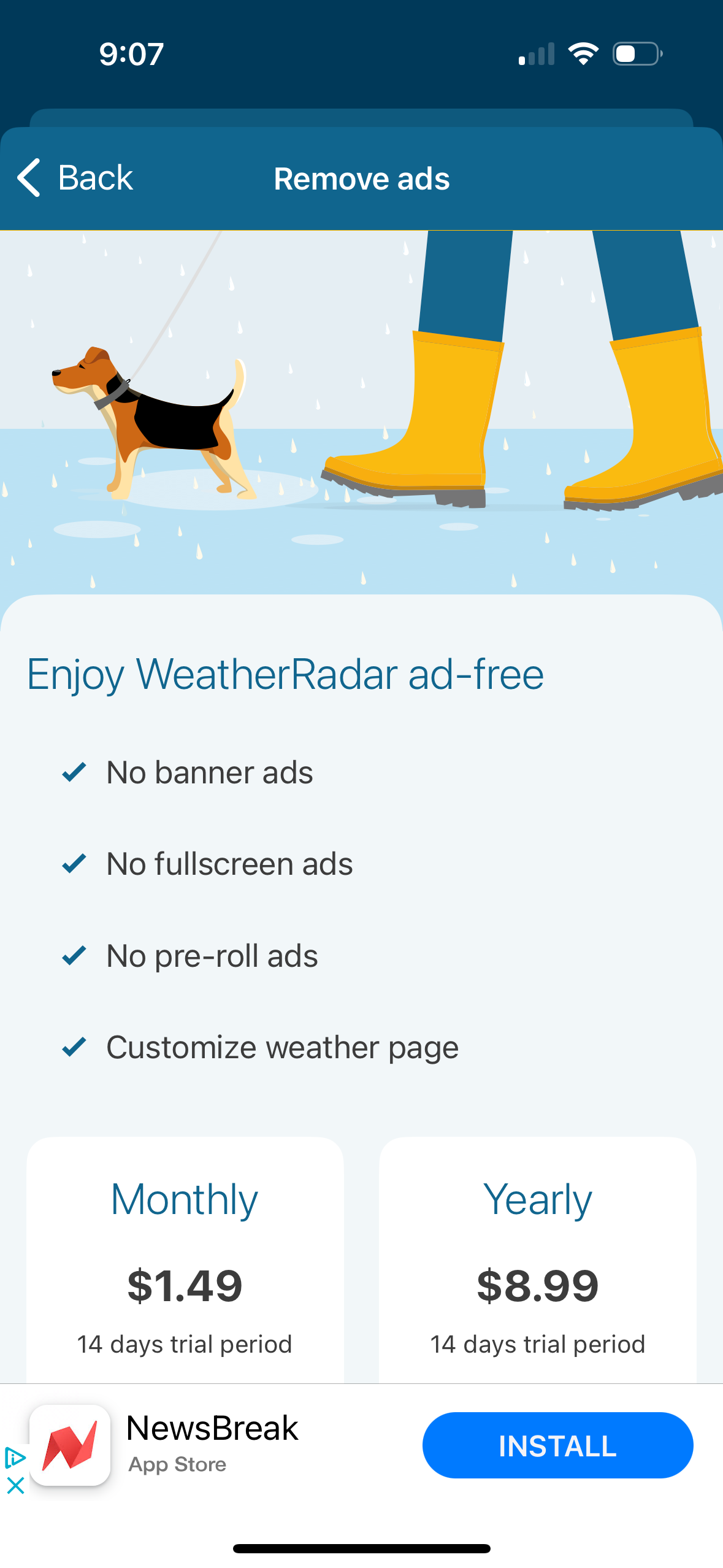
Weatherradar1179 × 2556opens the full image
The numbers
| # | Stat | Computed from |
|---|---|---|
| [1] | 30 of 48 apps (63%) show discount/offer language on cancel screens | save_offer_offer_language |
| [2] | 0 of 48 apps show pause save-offer | save_offer_pause |
| [3] | 0 of 48 apps show downgrade save-offer | save_offer_downgrade |
| [4] | 48 genuine cancel-intent apps (denominator) | genuine_cancel_intent_subset |
| [5] | 401 genuine cancel-intent screenshots across 48 apps | genuine_cancel_intent_subset |
Methodology
Universe: 48 apps with genuine cancel-intent screens (401 screenshots), July 2026. Method: company-level keyword presence in vision descriptions. Caveat: zeros mean not observed in captured text; sample is modest and directional.
Sources
- [1]
Lazyweb Research analysis of 48 apps (genuine cancel-intent screens), July 2026
Discount/offer prevalence at company level.
- [2]
Lazyweb Research analysis of 48 apps (genuine cancel-intent screens), July 2026
Pause absent in captured cancel vision text.
- [3]
Lazyweb Research analysis of 48 apps (genuine cancel-intent screens), July 2026
Downgrade absent in captured cancel vision text.
Source: Lazyweb Research — proprietary analysis of real, in-market app screens. Cite as Lazyweb Research, 2026-07-07.