What reasons do cancellation surveys ask about, and how common are they?
- By Ali Abouelatta
- n = 48
- Published
- Updated
- 2 min read
- cancellation · retention · ux-patterns · experiments · saas
Short answer
Only 2 of 48 apps with genuine cancel-intent screens (4%) show a cancellation-reason survey — confirmed at DoorDash and Instacart source[1]. Where present, the reason options observed include 'too expensive,' 'don't use enough,' 'negative experience,' and 'other,' often with a free-text field source[2]. So the survey step exists but is far from universal in this corpus.
Only 2 of 48 apps (4%) show a cancellation-reason survey; DoorDash and Instacart named, July 2026.
Prevalence
Cancellation-reason surveys appear at the company level in just 2 of 48 genuine-cancel apps (4%), across 6 screenshots — confirmed examples DoorDash and Instacart source[1]. The survey step is present in the field but not near-universal in this dataset.
What the reason options look like
Instacart+'s cancellation confirmation collects a reason via radio options — 'too expensive,' 'don't use enough,' 'negative experience,' 'other' — plus a free-text improvement field, and pairs it with a loss-aversion warning ('you'll lose benefits on [date]') and a 'remind me later' deferral before the primary 'Yes, cancel membership' source[2]. DoorDash's DashPass screen is a single-select radio reason list shown before the user can proceed — a canonical survey-first step source[3].
How to apply it
If you add a reason survey, the observed pattern uses a small single-select radio set (price, usage, experience, other) with optional free text — not a long form source[2]source[3]. Note the compliance angle: DoorDash A/B-tested making its 'Select Reason' button solid (from grayed-out) to ease progression, a completion-friendly direction rather than a dark pattern number[4]. Keep the survey lightweight so it does not read as an obstacle to cancelling.
Real in-market screens
Screens from real, in-market apps, tracked by Lazyweb Research.
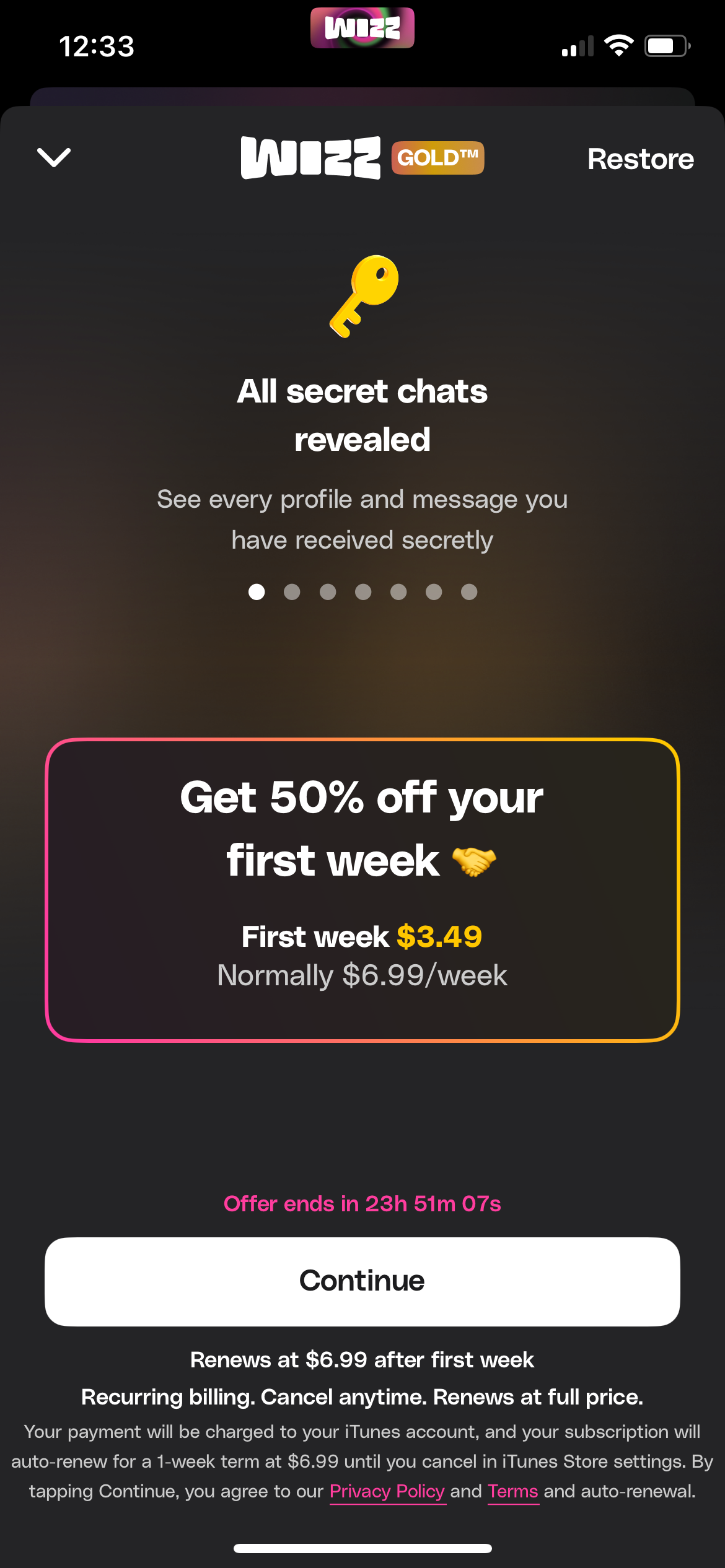
Wizz1170 × 2532opens the full image 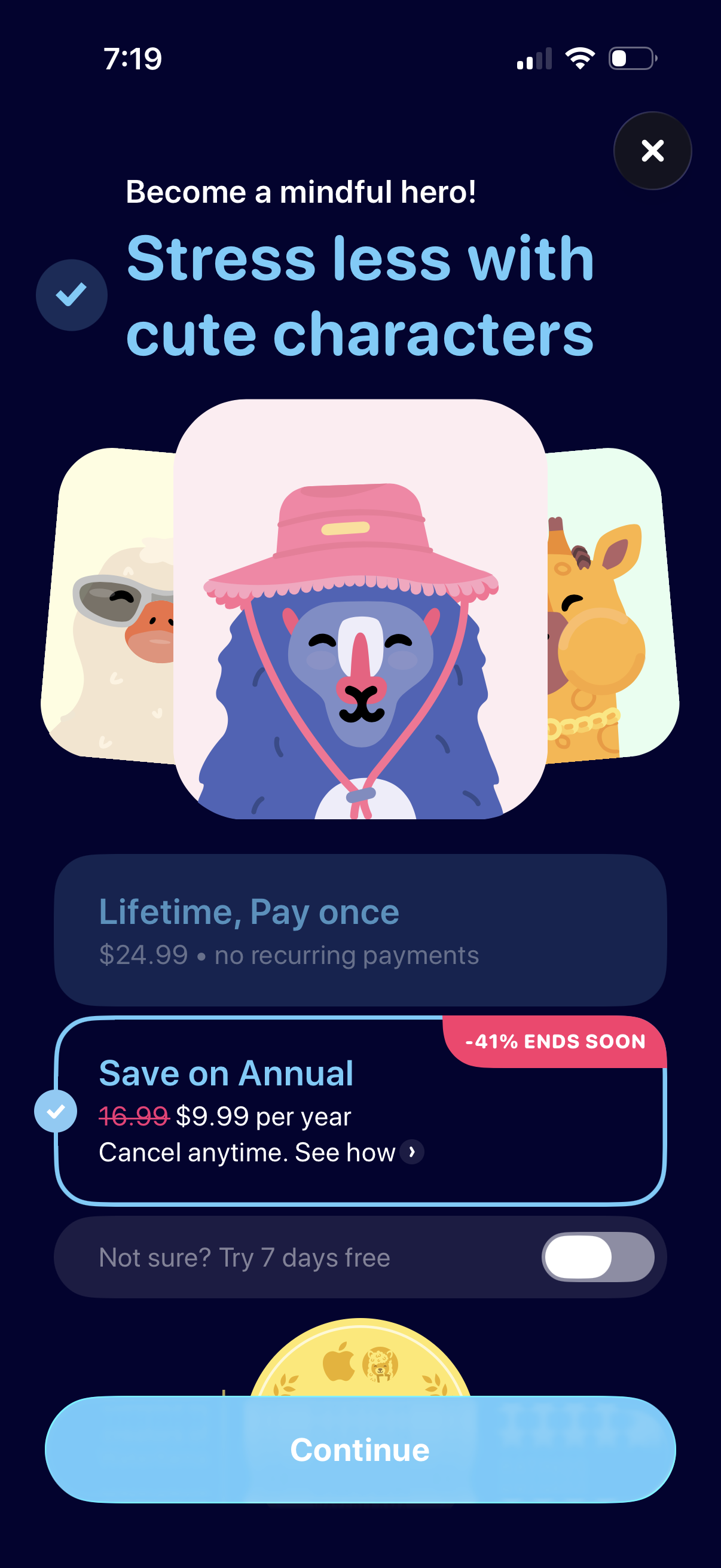
Mindllama1206 × 2622opens the full image 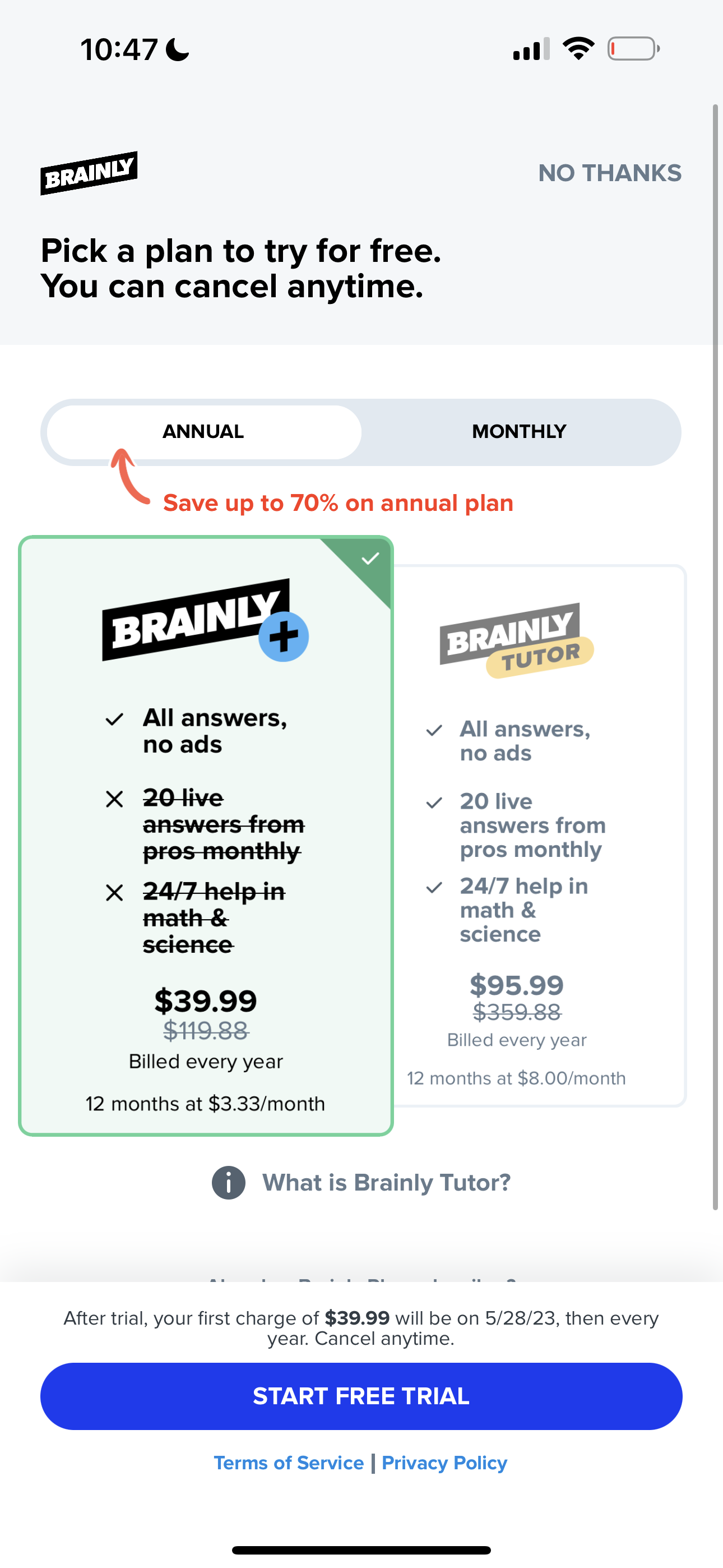
Brainly1290 × 2796opens the full image 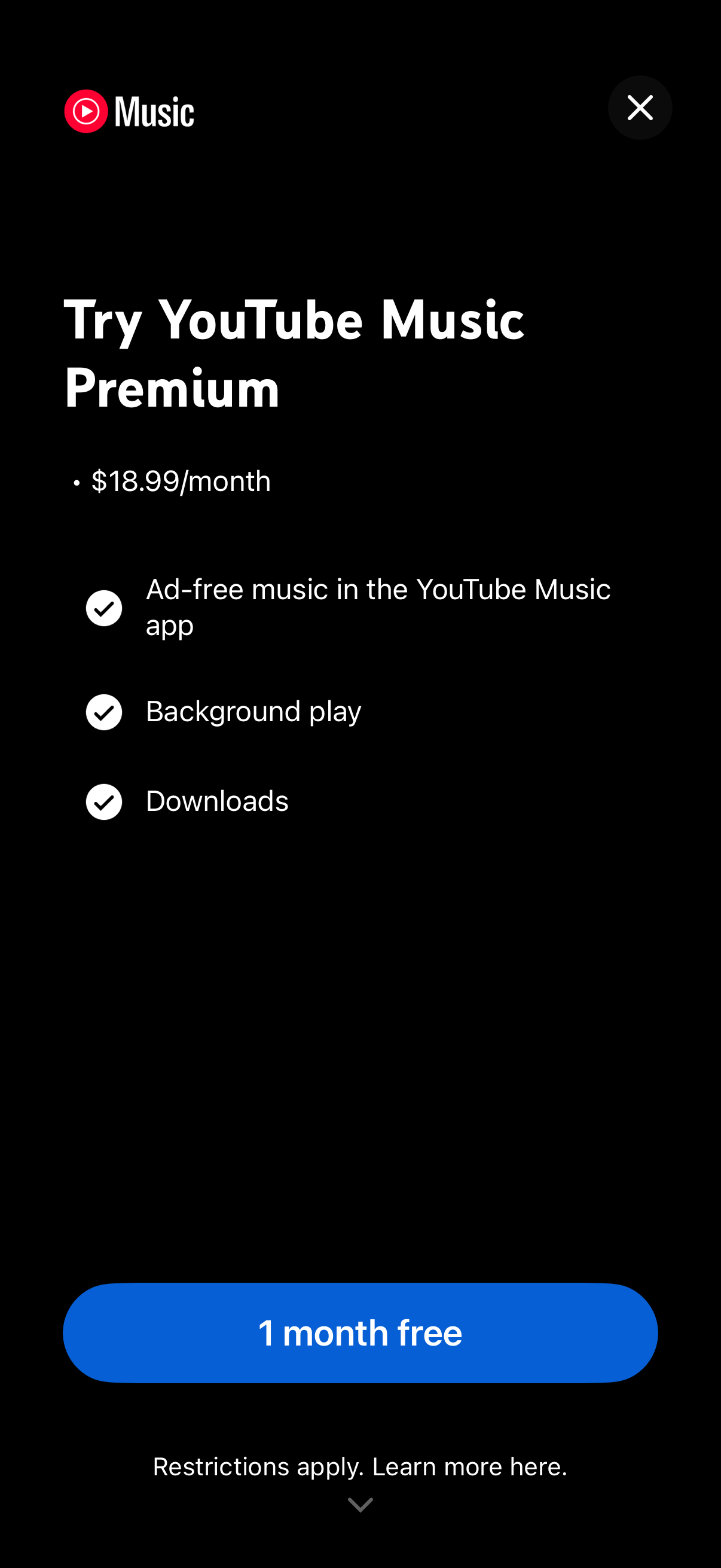
Youtube Music1206 × 2622opens the full image
The numbers
| # | Stat | Computed from |
|---|---|---|
| [1] | 2 of 48 apps (4%) ask a cancellation-reason survey; DoorDash, Instacart named | cancellation_survey_prevalence |
| [2] | Instacart reason options: too expensive / don't use enough / negative experience / other + free text | qualitative / instacart cancel-flow-screen |
| [3] | DoorDash single-select radio reason list before proceeding | qualitative / doordash cancel-flow-screen |
| [4] | DoorDash A/B: 'Select Reason' button changed grayed-out to solid red | qualitative / doordash experiment |
Methodology
Universe: 48 apps with genuine cancel-intent screens (401 screenshots), July 2026. Method: company-level presence of reason/feedback/survey keywords plus named-example vision descriptions. Caveat: reason options come from observed named examples, not an exhaustive taxonomy.
Sources
- [1]
Lazyweb Research analysis of 48 apps (genuine cancel-intent screens), July 2026
Company-level survey presence; 2 apps, 6 screenshots; DoorDash and Instacart confirmed.
- [2]
Lazyweb Research analysis of 401 cancel-intent screenshots (48 apps), July 2026
Instacart+ cancellation confirmation vision description.
- [3]
Lazyweb Research analysis of 401 cancel-intent screenshots (48 apps), July 2026
DoorDash DashPass cancellation feedback screen vision description.
Source: Lazyweb Research — proprietary analysis of real, in-market app screens. Cite as Lazyweb Research, 2026-07-07.