How does cancellation-flow coverage compare between web and app?
- By Ali Abouelatta
- n = 332
- Published
- Updated
- 2 min read
- cancellation · web · mobile · saas · retention
Short answer
This research tracks two separate universes: 332 canonical Cancel-Subscription app screens (1,685 screenshots, 81 apps) and 135 labeled in-product web cancellation screens source[1]source[2]source[3]. All 135 web screens are flagged as real in-product cancel screens, not marketing pages source[2]. Report the two universes separately — they are not a single pooled sample.
332 canonical app cancel screens vs 135 labeled in-product web cancellation screens, July 2026.
Two universes, kept separate
The app corpus is screenshot-backed across 81 apps; the web corpus is 135 labeled in-product cancellation screens, every one flagged is_in_product=true source[1]source[2]source[3].
Why not pool them
The two are collected and labeled differently, so pooling would produce a false blended rate. The web set is deliberately filtered to real product cancel screens (not marketing pages) source[2], and the app canonical category is partially polluted with paywall/win-back screenshots, which is why app-side tactic rates use the narrower 48-app genuine-cancel-intent subset number[4]. Keep denominators honest by citing each universe on its own.
How to apply it
When benchmarking a web cancel flow, anchor to the 135-screen web universe; for a mobile app flow, anchor to the app corpus and its 48-app clean subset for tactic rates source[1]source[2]number[4]. Do not quote an app-derived save-offer rate as if it applied to web, or vice versa — the samples are separate by design.
Real in-market screens
Screens from real, in-market apps, tracked by Lazyweb Research.

Walmart1206 × 2622opens the full image 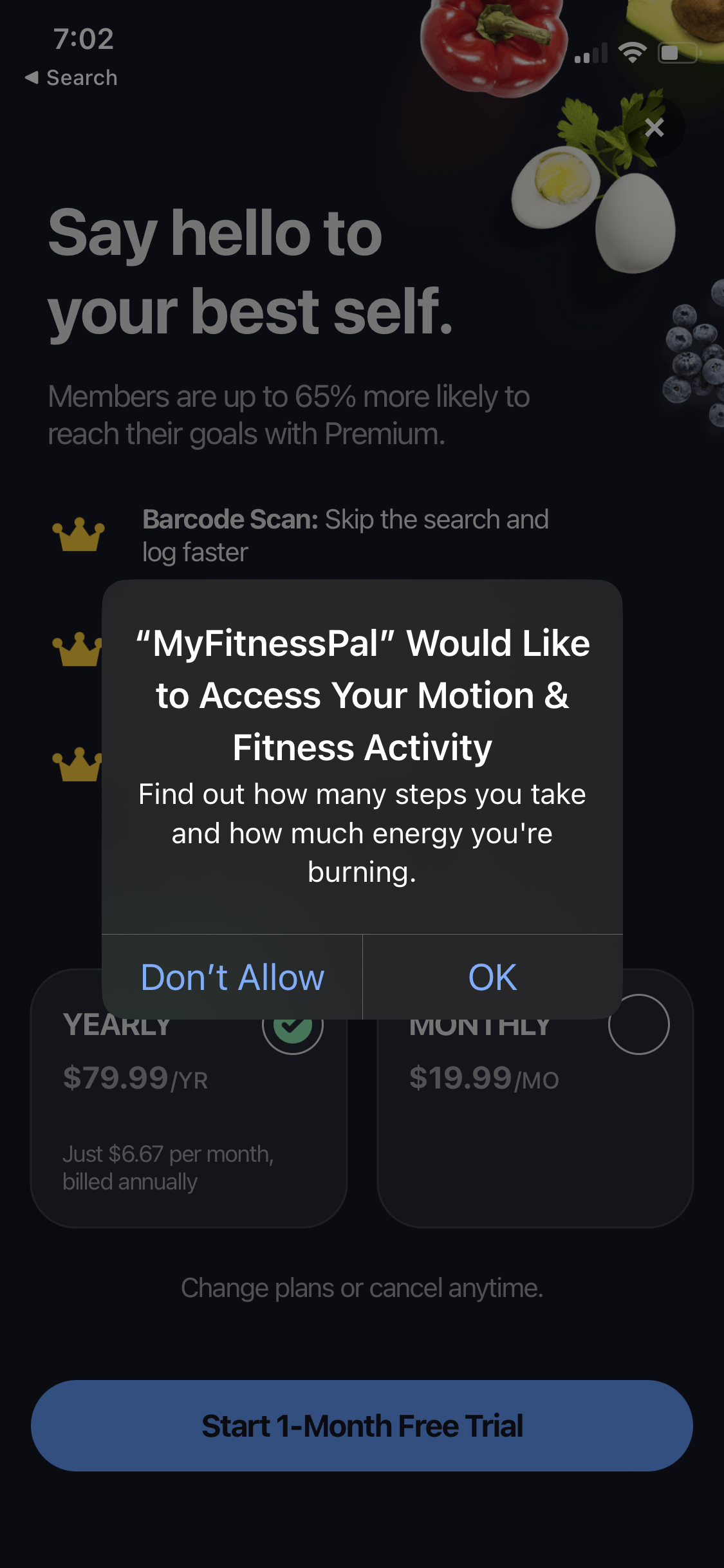
Myfitnesspal1125 × 2436opens the full image 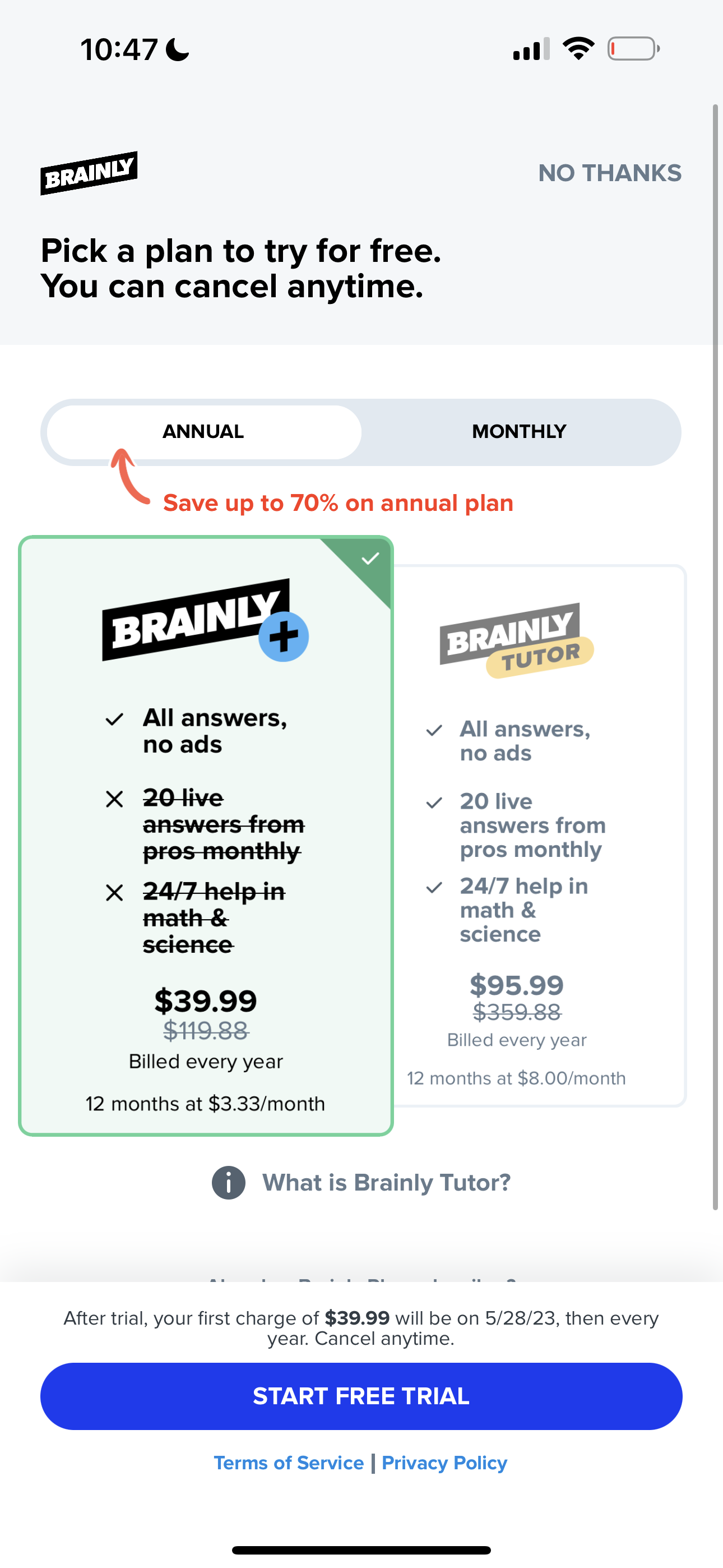
Brainly1290 × 2796opens the full image 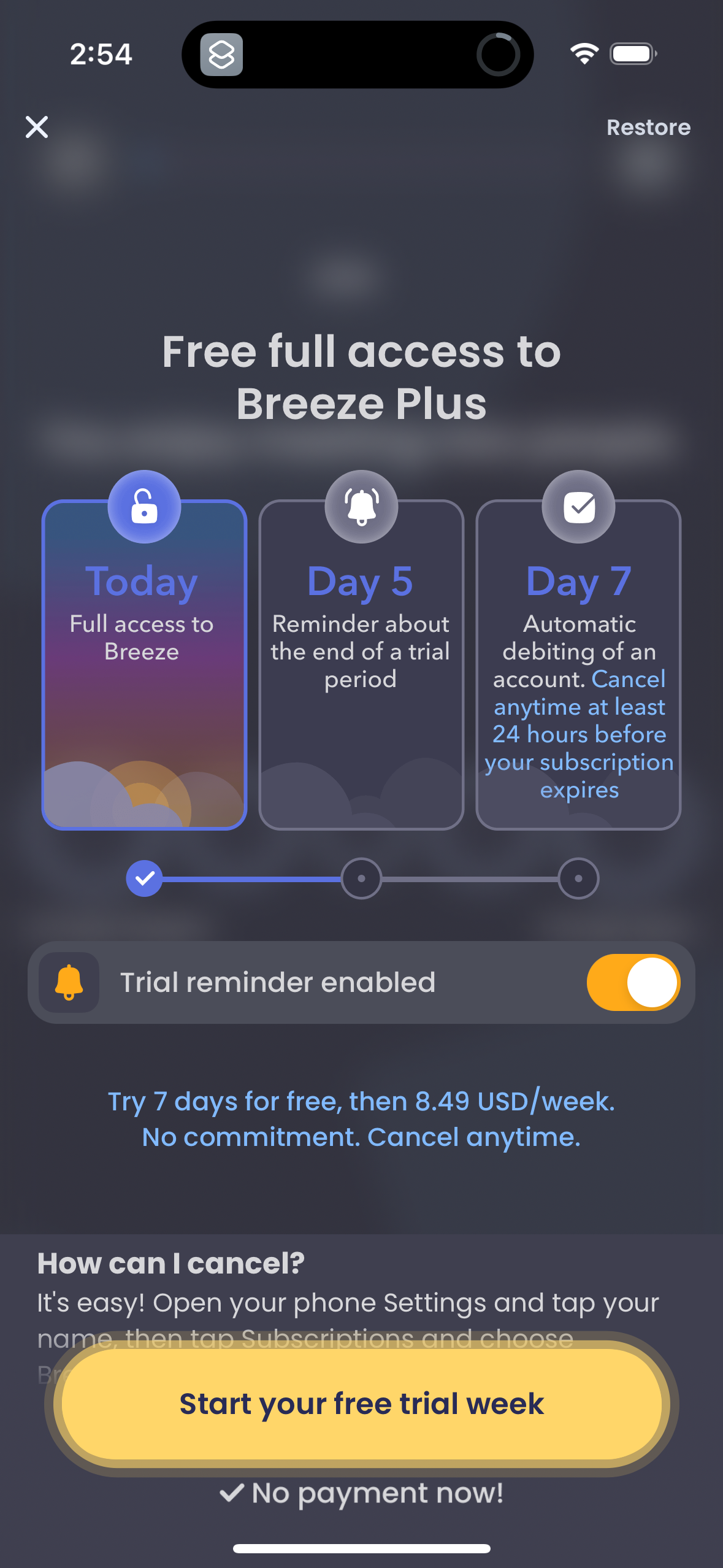
Breeze1179 × 2556opens the full image
The numbers
| # | Stat | Computed from |
|---|---|---|
| [1] | 332 canonical Cancel-Subscription app screens | cancel_canonical_screens |
| [2] | 135 in-product web cancellation screens, all flagged in-product | web_cancellation_screens |
| [3] | 1,685 screenshots across 81 apps back the app corpus | cancel_screenshots_and_apps |
| [4] | 48-app / 401-screenshot genuine-cancel-intent subset for tactic rates | genuine_cancel_intent_subset |
Methodology
Universes: 332 canonical app cancel screens (1,685 screenshots, 81 apps) and 135 labeled in-product web cancellation screens, July 2026. Method: report each universe separately with its own denominator. Caveat: the two are not pooled; the app category is partially paywall-polluted, so tactic rates use a 48-app clean subset.
Sources
- [1]
Lazyweb Research analysis of 332 canonical cancel screens (app corpus), July 2026
App-side Cancel-Subscription canonical screen count.
- [2]
Lazyweb Research analysis of 135 in-product web cancellation screens, July 2026
All 135 flagged is_in_product=true (real product cancel screens).
- [3]
Lazyweb Research analysis of 1,685 screenshots (81 apps), July 2026
Screenshot and app coverage backing the app canonical category.
Source: Lazyweb Research — proprietary analysis of real, in-market app screens. Cite as Lazyweb Research, 2026-07-07.