What Is The Most Common Dismiss Button Copy On Paywalls?
- By Ali Abouelatta
- n = 4,406
- Published
- Updated
- 2 min read
- paywall · monetization · ux-patterns · mobile · upsell
Short answer
Across 4,406 paywall CTA rows tracked by Lazyweb Research, 'not now' is the most common dismissal copy at 59 CTAs across 14 companies, ahead of 'no thanks' (51/13) and 'maybe later' (27/13) source[1]. Among the 196 dismiss-role CTAs specifically, 'not now' (56) and 'no thanks' (41) again lead, with 'cancel' (40) close behind source[2]. Literal X/close text is rare — only 7 CTA rows — because the X lives in the screen chrome, not the button list source[1].
'Not now' is the most common paywall dismissal copy — 59 CTAs across 14 companies of 4,406 rows, Lazyweb Research, July 2026.
Bar chart · CTAs
CTAs — The leaderboard
One block is about 2.1 CTAs
- not now
- 59
- no thanks
- 51
- maybe later
- 27
- dismiss
- 15
- skip
- 12
- literal X / close
- 7
The leaderboard
| Dismissal copy | CTAs | Companies |
|---|---|---|
| not now | 59 | 14 |
| no thanks | 51 | 13 |
| maybe later | 27 | 13 |
| dismiss | 15 | 6 |
| skip | 12 | 10 |
| literal X / close | 7 | 4 |
Counts are CTA-text pattern matches across all 4,406 rows source[1]. The n=1 'continue without upgrading' variant is dropped as too thin source[1].
Dismiss-role subset
If you restrict to the 196 CTAs actually labeled dismiss-role, the ranking shifts slightly: 'not now' 56, 'no thanks' 41, 'cancel' 40, 'maybe later' 26, 'dismiss' 15, 'skip' 10 source[2]. The prominence of 'cancel' (40) in this subset reflects cancellation and exit-intent screens where the opt-out is framed as cancelling an action source[2].
How to apply it and caveats
If you want the corpus-standard wording, 'not now' and 'no thanks' are the safe defaults — both appear across the most companies source[1]. 'skip' spreads across 10 companies on only 12 CTAs, so it is a common single-use pattern on onboarding paywalls source[1]. Caveats: these are frequency counts, not conversion tests; and dismiss prevalence overall is a lower bound because 39% of CTAs are unlabeled source[1]source[2].
Real in-market screens
Screens from real, in-market apps, tracked by Lazyweb Research.

Disney1125 × 2436opens the full image 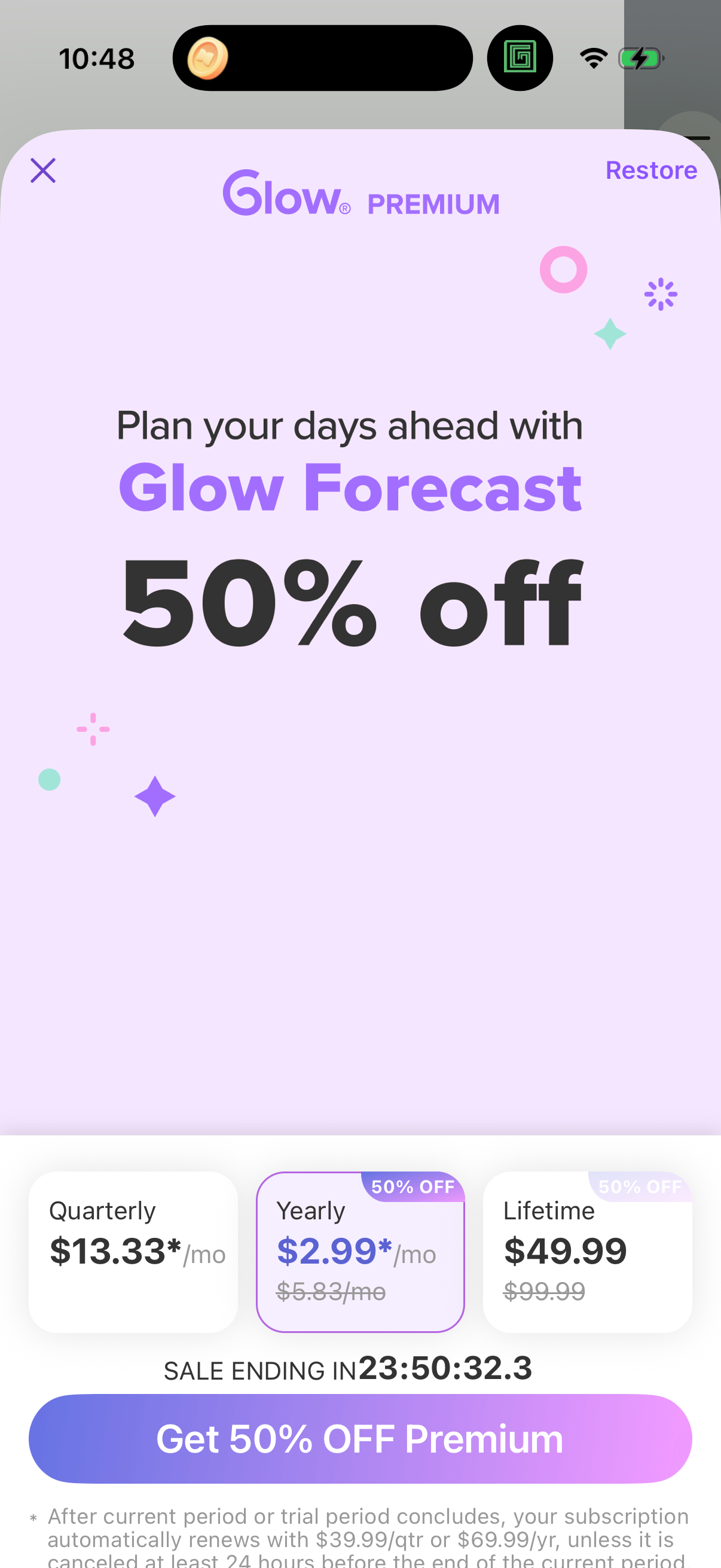
Glow1206 × 2622opens the full image 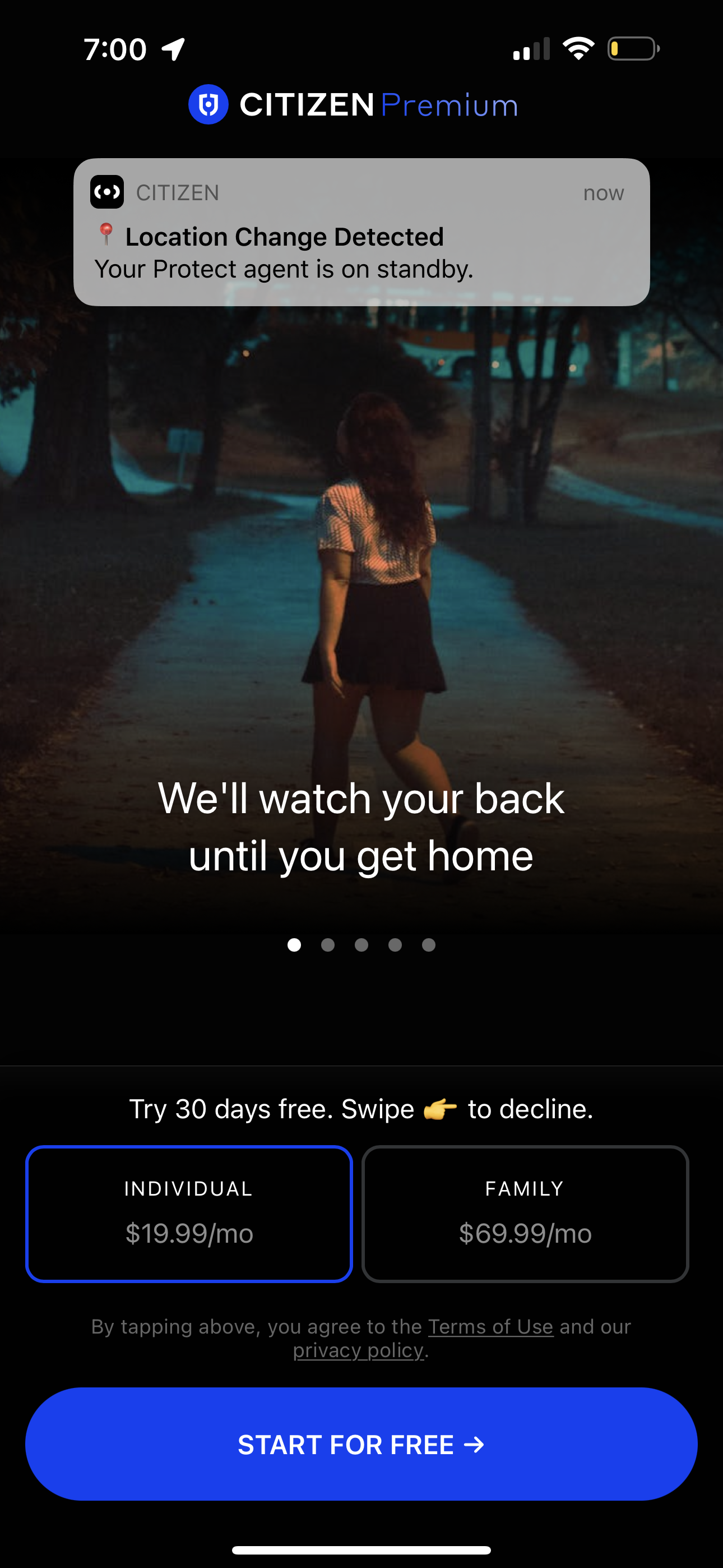
Citizen1290 × 2796opens the full image 
Lyft1179 × 2556opens the full image
The numbers
| # | Stat | Computed from |
|---|---|---|
| [1] | not now 59/14, no thanks 51/13, maybe later 27/13, dismiss 15/6, skip 12/10, X/close 7/4 | dismiss_copy_leaderboard (4,406 CTA rows) |
| [2] | dismiss-role subset: not now 56, no thanks 41, cancel 40, maybe later 26, dismiss 15, skip 10 | dismiss_copy_leaderboard (196 dismiss-role CTAs) |
Methodology
Copy frequencies come from CTA-text pattern matching over 4,406 rows and the 196 dismiss-role subset. Frequency, not lift; the thin 'continue without upgrading' variant is dropped. July 2026.
Sources
- [1]
Lazyweb Research analysis of 4,406 paywall CTA rows (mobile app corpus, 252 companies), July 2026
Dismissal copy by CTA-text pattern match; n=1 'continue without upgrading' variant excluded.
- [2]
Lazyweb Research analysis of 196 dismiss-role paywall CTAs (mobile app corpus, 64 companies), July 2026
Top texts within the dismiss-role subset; 'cancel' appears on exit-intent/cancellation screens.
Source: Lazyweb Research — proprietary analysis of real, in-market app screens. Cite as Lazyweb Research, 2026-07-07.