How Many Paywalls Use A 'Maybe Later' Text Link Instead Of An X?
- By Ali Abouelatta
- n = 2,708
- Published
- Updated
- 2 min read
- paywall · monetization · ux-patterns · mobile · design
Short answer
Of 2,708 mobile paywall screens tracked by Lazyweb Research, 193 (7.1%) use a 'Maybe later'-style text link as their exit, across 62 companies — the second most common visible exit after the X source[1]. A tappable X (517 screens) outnumbers the text-link pattern by about 2.7 to 1 source[1]. The most common dismissal wording overall is 'not now' (59 CTAs), ahead of 'no thanks' (51) and 'maybe later' (27) source[2].
193 of 2,708 paywall screens (7.1%) exit via a 'Maybe later' text link across 62 companies — Lazyweb Research, July 2026.
Bar chart · CTAs
CTAs — Which wording apps pick
One block is about 2.1 CTAs
- not now
- 59
- no thanks
- 51
- maybe later
- 27
- dismiss
- 15
- skip
- 12
The finding
The 'Maybe later' text-link pattern — a low-prominence worded opt-out such as 'not now', 'no thanks', 'maybe later', or 'skip' — appears as the classified exit on 193 screens (7.1%) across 62 companies source[1]. In the precedence taxonomy it sits below the visible X, so these are screens where a text link is the strongest visible exit source[1].
Which wording apps pick
| Dismissal copy | CTAs | Companies |
|---|---|---|
| not now | 59 | 14 |
| no thanks | 51 | 13 |
| maybe later | 27 | 13 |
| dismiss | 15 | 6 |
| skip | 12 | 10 |
Counts are CTA-text matches across all 4,406 CTA rows source[2]. 'not now' leads on volume; 'skip' is spread across the most companies relative to its volume source[2].
How to apply it and caveats
A text link is the softer of the two mainstream exits: it keeps the primary CTA visually dominant while still giving a worded way out, which teardown notes associate with lower perceived coercion source[3]. If you want minimal exit prominence, 'not now' or 'maybe later' are the corpus-standard phrasings source[2]. Caveats: text-link counts are lower bounds, and the copy leaderboard is pattern-matched, not lift-tested source[2]source[3].
Real in-market screens
Screens from real, in-market apps, tracked by Lazyweb Research.

Zoom1125 × 2436opens the full image 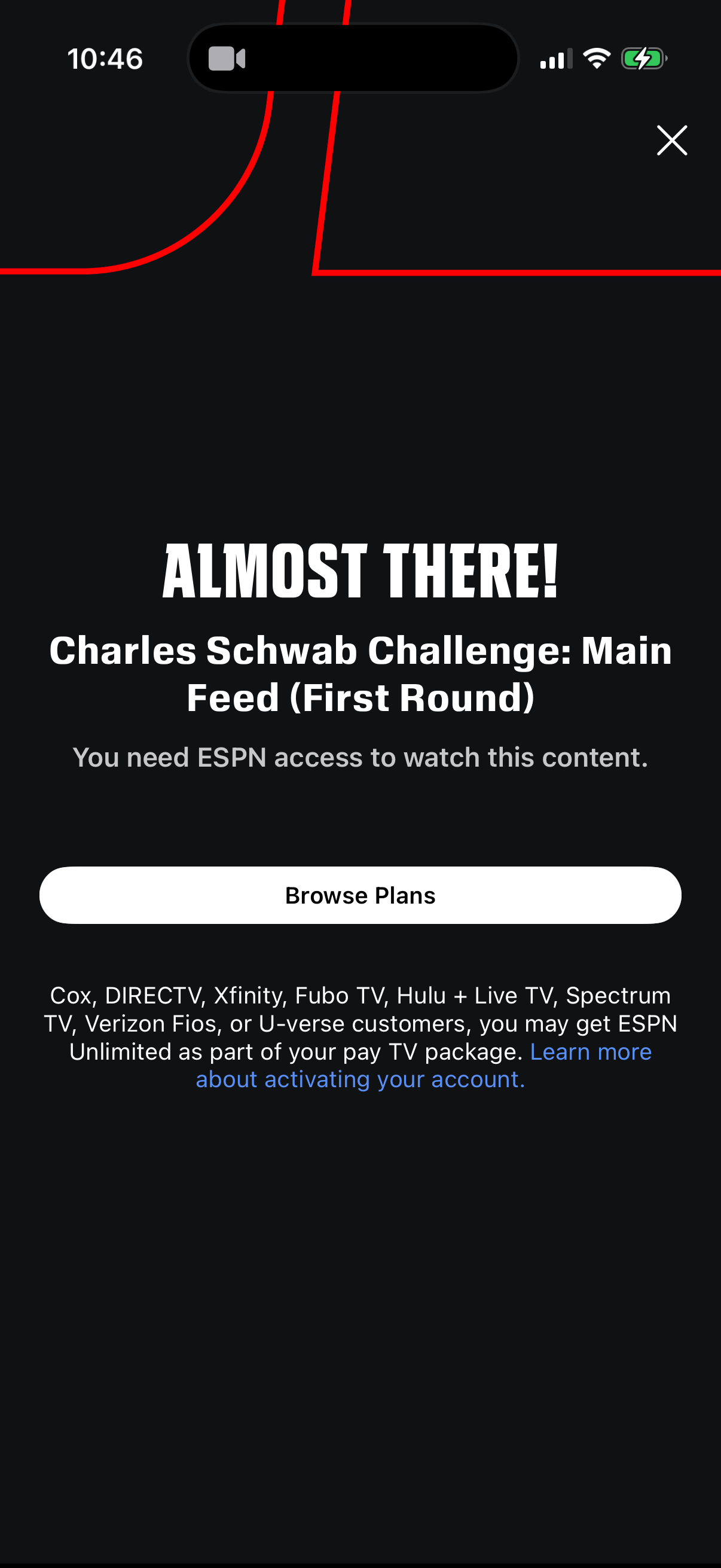
Espn1206 × 2622opens the full image 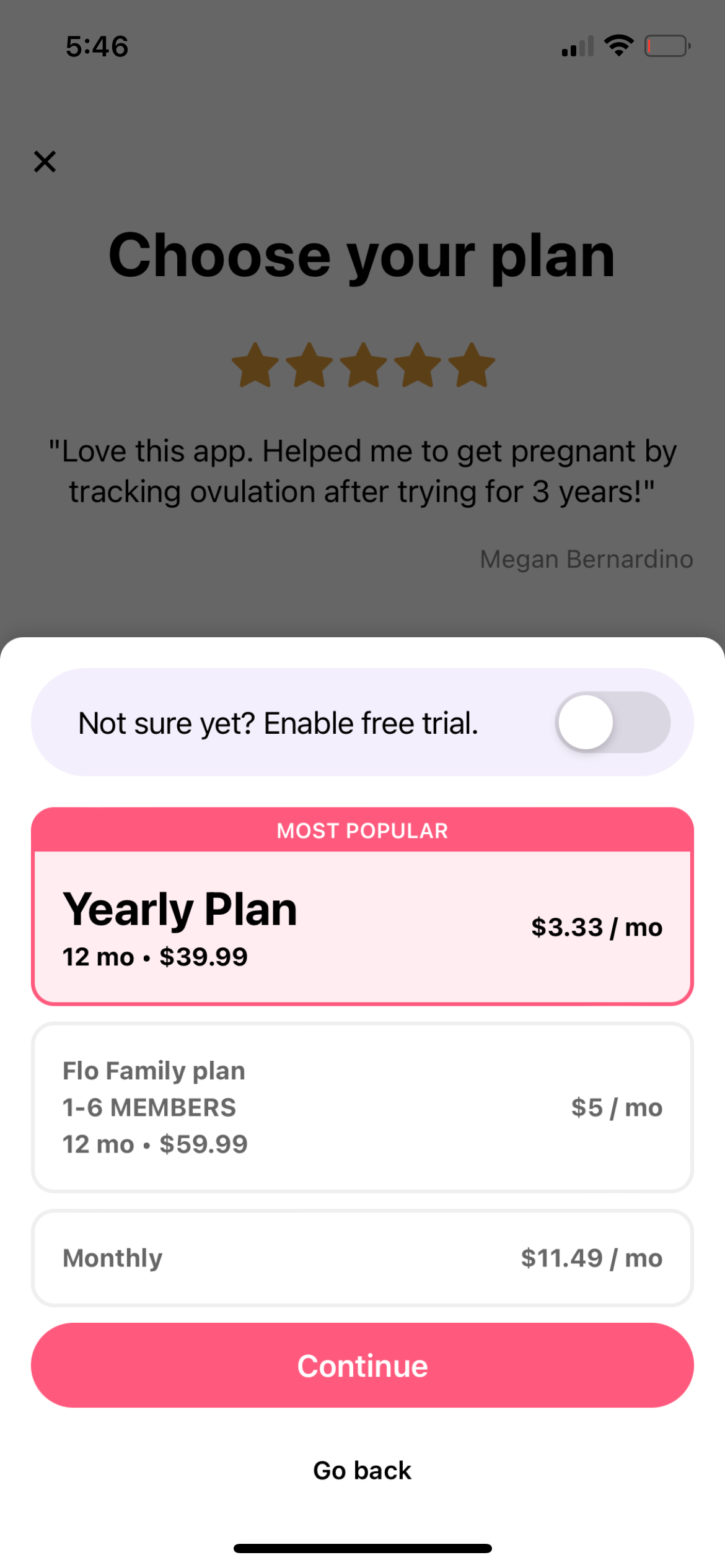
Flo1170 × 2532opens the full image 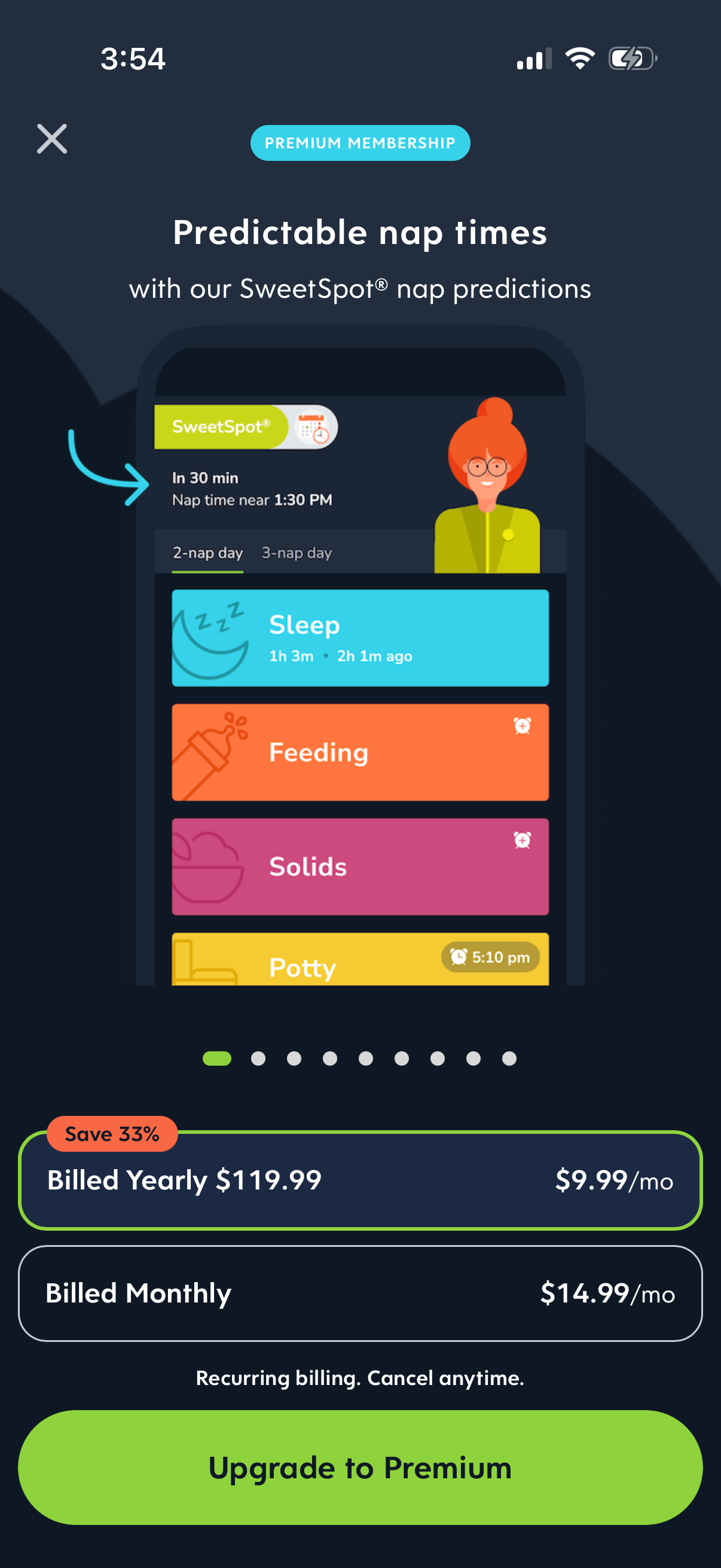
Huckleberry1206 × 2622opens the full image
The numbers
| # | Stat | Computed from |
|---|---|---|
| [1] | 193 text-link screens (7.1%) / 62 companies; X 517 screens | exit_type_taxonomy text-link and visible-X branches |
| [2] | not now 59/14, no thanks 51/13, maybe later 27/13, dismiss 15/6, skip 12/10 | dismiss_copy_leaderboard (CTA-text pattern match, 4,406 rows) |
| [3] | qualitative teardown: exit link linked to lower perceived coercion | qualitative: soundcloud, ai-chatbot learnings |
Methodology
Text-link screen counts come from the exit taxonomy over 2,708 screens; copy frequencies come from CTA-text matching over 4,406 rows. Teardown learnings are inferred rationale, not measured lift. July 2026.
Sources
- [1]
Lazyweb Research analysis of 2,708 paywall screens (mobile app corpus, 62 companies with text-link exit), July 2026
Text-link bucket in the mutually exclusive exit taxonomy; a lower bound.
- [2]
Lazyweb Research analysis of 4,406 paywall CTA rows (mobile app corpus), July 2026
Dismissal-copy leaderboard by CTA-text pattern match; the 'continue without upgrading' n=1 variant is excluded.
- [3]
Lazyweb Research qualitative paywall teardowns (mobile app corpus), July 2026
Observed UI changes with LLM-inferred rationale; never measured lift.
Source: Lazyweb Research — proprietary analysis of real, in-market app screens. Cite as Lazyweb Research, 2026-07-07.