How Do Apps Let Users Exit The Paywall — X Button, 'Maybe Later', Or Not At All?
- By Ali Abouelatta
- n = 2,708
- Published
- Updated
- 2 min read
- paywall · monetization · ux-patterns · mobile · design
Short answer
Across 2,708 mobile paywall screens tracked by Lazyweb Research, the most common visible exit is an X/close button (517 screens, 120 companies), followed by a 'Maybe later'-style text link (193 screens, 62 companies) and a restore-only escape (151 screens, 56 companies); 1,847 screens (68.2%) offer no visible exit source[1]. When apps do give a way out, a tappable X outnumbers a text link by about 2.7 to 1 source[1].
Among 2,708 paywall screens, a visible X (517) outnumbers a 'Maybe later' text link (193) by roughly 2.7 to 1 — Lazyweb Research, July 2026.
Bar chart · Share
Share — The exit taxonomy
One block is about 2.4%
- Visible X / close button
- 19.1%
- 'Maybe later' text link
- 7.1%
- Restore-only escape
- 5.6%
- No visible exit (hard)
- 68.2%
The exit taxonomy
Each of 2,708 screens is placed in exactly one bucket, with a visible X taking precedence source[1]:
| Exit type | Screens | Companies | Share |
|---|---|---|---|
| Visible X / close button | 517 | 120 | 19.1% |
| 'Maybe later' text link | 193 | 62 | 7.1% |
| Restore-only escape | 151 | 56 | 5.6% |
| No visible exit (hard) | 1,847 | 229 | 68.2% |
The three visible-exit buckets sum to 861 screens (31.8%) source[1].
Where the X signal comes from
The visible-X count is driven by vision descriptions, not button text: only 7 CTA rows are literally 'X' or 'close', while 601 of 2,706 screens with a vision description (22.2%) have a close/X control explicitly described source[2]. That is why every visible-X figure should be read as an extraction-based lower bound source[2].
How to apply it and caveats
If you want the lightest-touch soft paywall, the corpus default is a corner X — it is the single most common exit and reads as standard iOS/Android behavior source[1]. A 'Maybe later' link is the second option and appears on 62 companies source[1]. Restore-only is not really an exit for new users; it is a purchase-recovery link that happens to be the only escape on 151 screens source[1]. Caveat: these are what-shipped counts, never lift measurements source[1].
Real in-market screens
Screens from real, in-market apps, tracked by Lazyweb Research.

Nyt Cooking1206 × 2622opens the full image 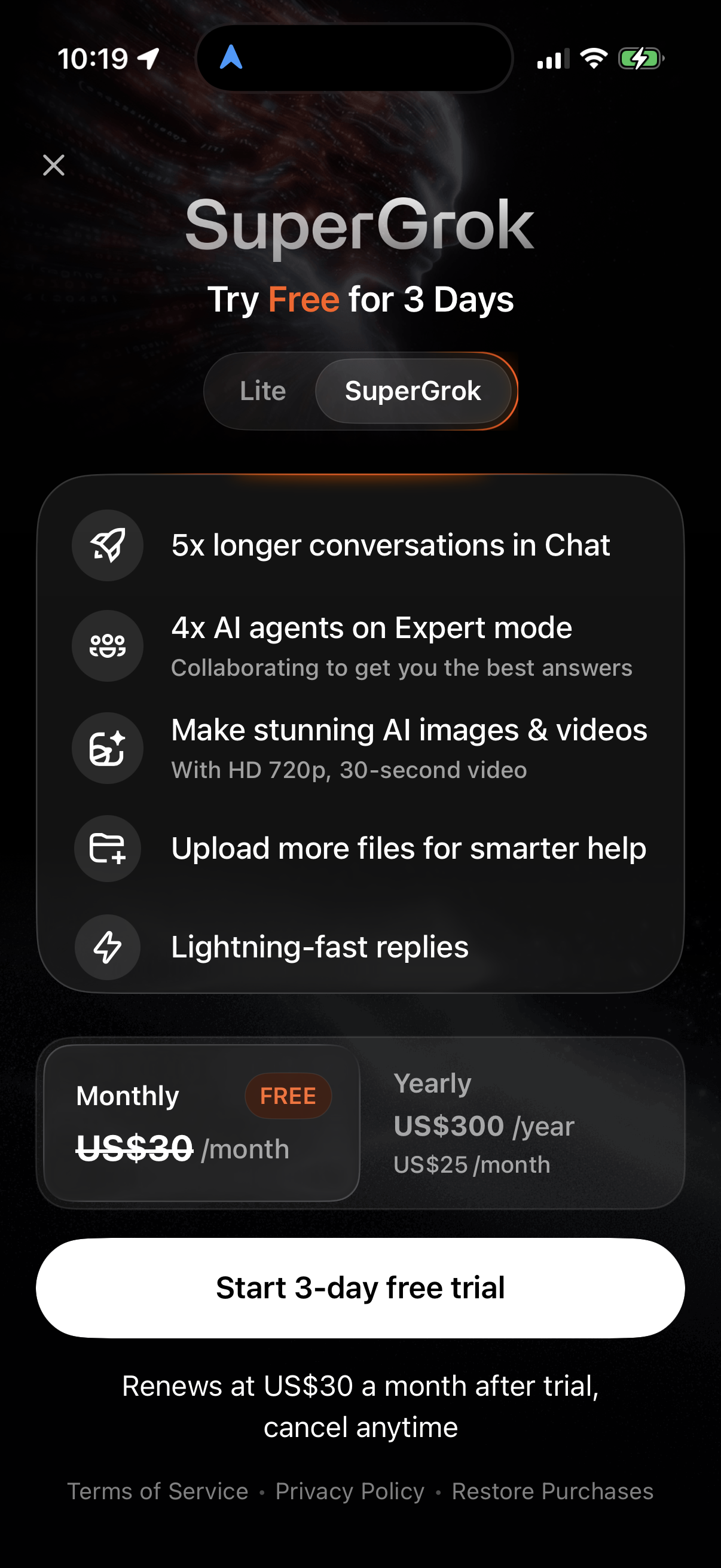
Grok1206 × 2622opens the full image 
Ladder1206 × 2622opens the full image 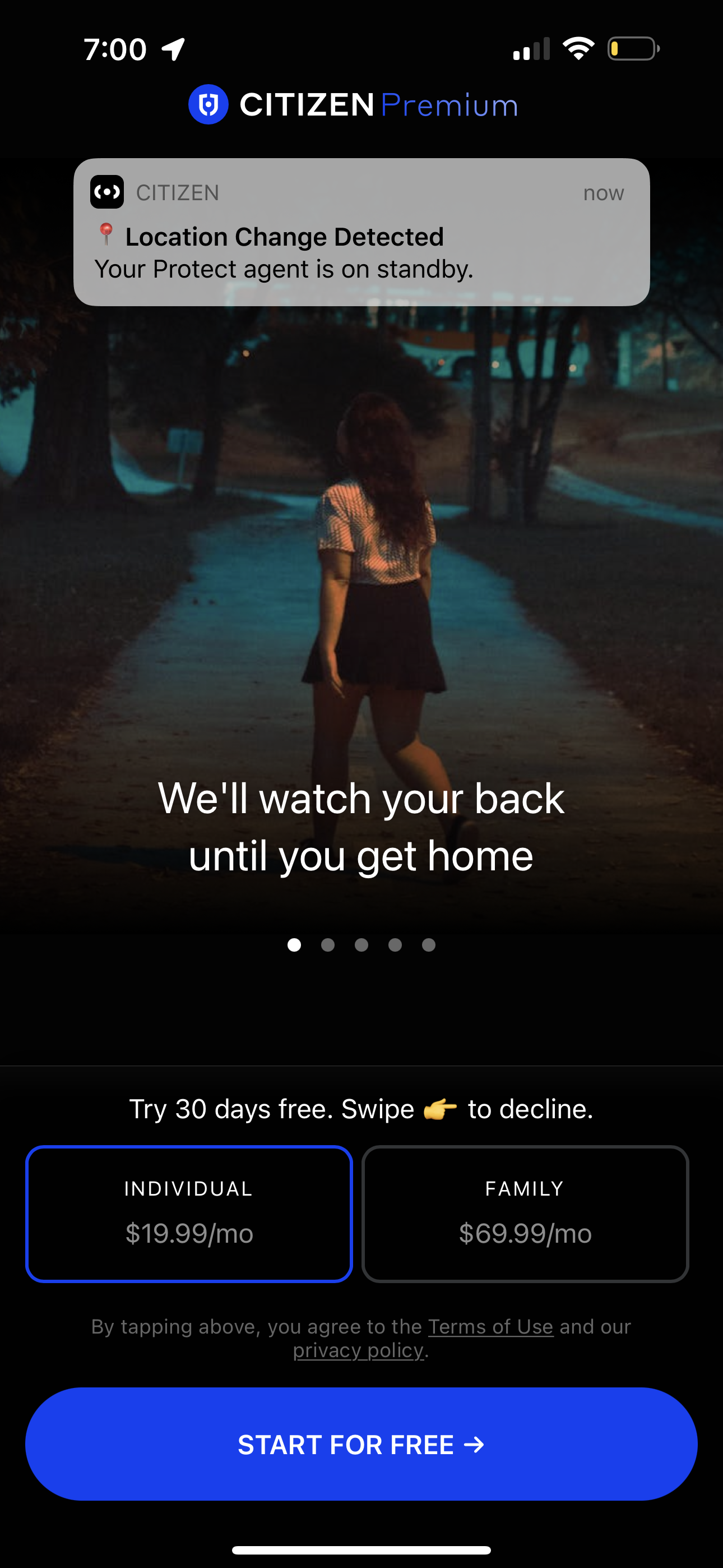
Citizen1290 × 2796opens the full image
The numbers
| # | Stat | Computed from |
|---|---|---|
| [1] | X 517 (120 cos) | text link 193 (62) | restore-only 151 (56) | no exit 1,847 (229) | exit_type_taxonomy |
| [2] | 601 of 2,706 vision-described screens (22.2%); only 7 literal X CTA rows | vision_close_mentions: 601/2,706; dismiss_copy_leaderboard literal X/close = 7 |
Methodology
Universe is 2,708 paywall screens (2,706 with a vision description). Screens are bucketed into one exit type; the visible-X signal relies mostly on vision-description regex, so it undercounts. July 2026.
Sources
- [1]
Lazyweb Research analysis of 2,708 paywall screens (mobile app corpus, 252 companies), July 2026
Mutually exclusive exit taxonomy with visible-X precedence; extraction-based lower bounds.
- [2]
Lazyweb Research analysis of 2,706 vision-described paywall screens (mobile app corpus), July 2026
Close/X control detected via vision-description regex; CTA text almost never contains a literal X.
Source: Lazyweb Research — proprietary analysis of real, in-market app screens. Cite as Lazyweb Research, 2026-07-07.