What is the most common primary brand color in modern design systems?
- By Ali Abouelatta
- n = 519
- Published
- Updated
- 2 min read
- design · ux-patterns · landing-page · saas · web
Short answer
Blue is the single most common primary brand hue: 34.1% of 519 audited design systems with a brand color use it source[1]. Add neutral black/gray marks (18.9%) and just those two buckets cover 53% of all products source[1]. Red (14.6%) is a distant third; purple, orange, pink and yellow are each under 8% source[1].
34% of 519 audited design systems use a blue primary brand color, July 2026.
Bar chart · Share
Share — The brand-hue distribution
One block is about 1.2%
- Blue
- 34.1%
- Neutral / gray-black
- 18.9%
- Red
- 14.6%
- Teal / cyan
- 8.5%
- Green
- 7.7%
- Purple / indigo
- 7.1%
- Orange
- 4.0%
- Pink / magenta
- 3.1%
- Yellow
- 1.9%
The brand-hue distribution
Primary brand hue, bucketed from the first brand-group color per system source[1].
| Hue | Systems | Share |
|---|---|---|
| Blue | 177 | 34.1% |
| Neutral / gray-black | 98 | 18.9% |
| Red | 76 | 14.6% |
| Teal / cyan | 44 | 8.5% |
| Green | 40 | 7.7% |
| Purple / indigo | 37 | 7.1% |
| Orange | 21 | 4.0% |
| Pink / magenta | 16 | 3.1% |
| Yellow | 10 | 1.9% |
Blue plus neutral together account for 53% of the corpus source[1].
How to apply it
Blue is the safe, trust-signaling default — which is exactly why it is also the crowded one. If differentiation matters, the under-served buckets are orange (4%), pink (3%) and yellow (2%) source[1]. Neutral black brands (Uber's Midnight Ink is the archetype) are a strong, premium-feeling alternative that reads as intentional rather than colorless source[2].
Caveats
Hue is derived by converting the first brand hex to HSL and bucketing, so colors near boundaries (indigo vs blue vs purple) can shift bucket — treat buckets as approximate source[1]. One of 520 systems lacks a brand-group color, giving the 519 denominator.
Real in-market screens
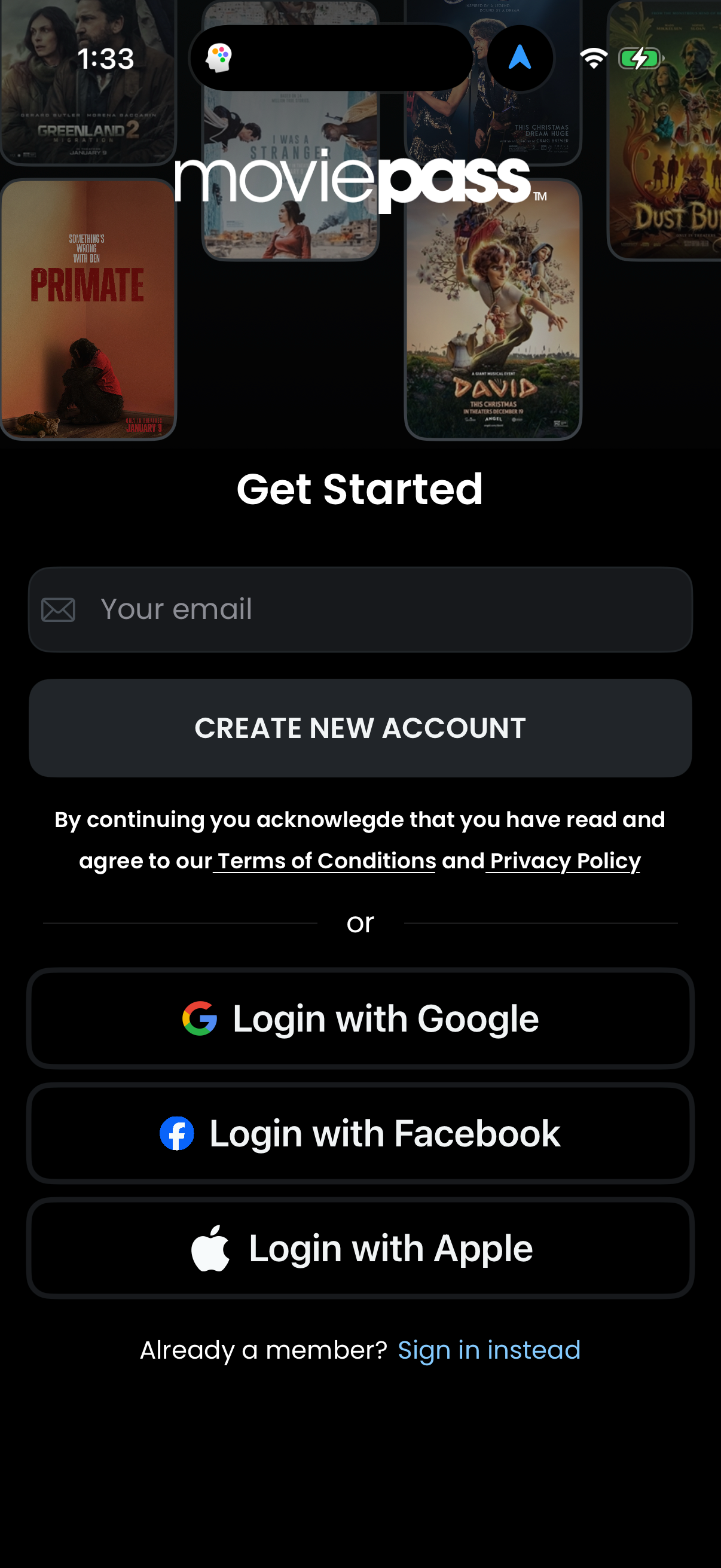
Screens from real, in-market apps, tracked by Lazyweb Research.
Moviepass1206 × 2622opens the full image 
Google1206 × 2622opens the full image 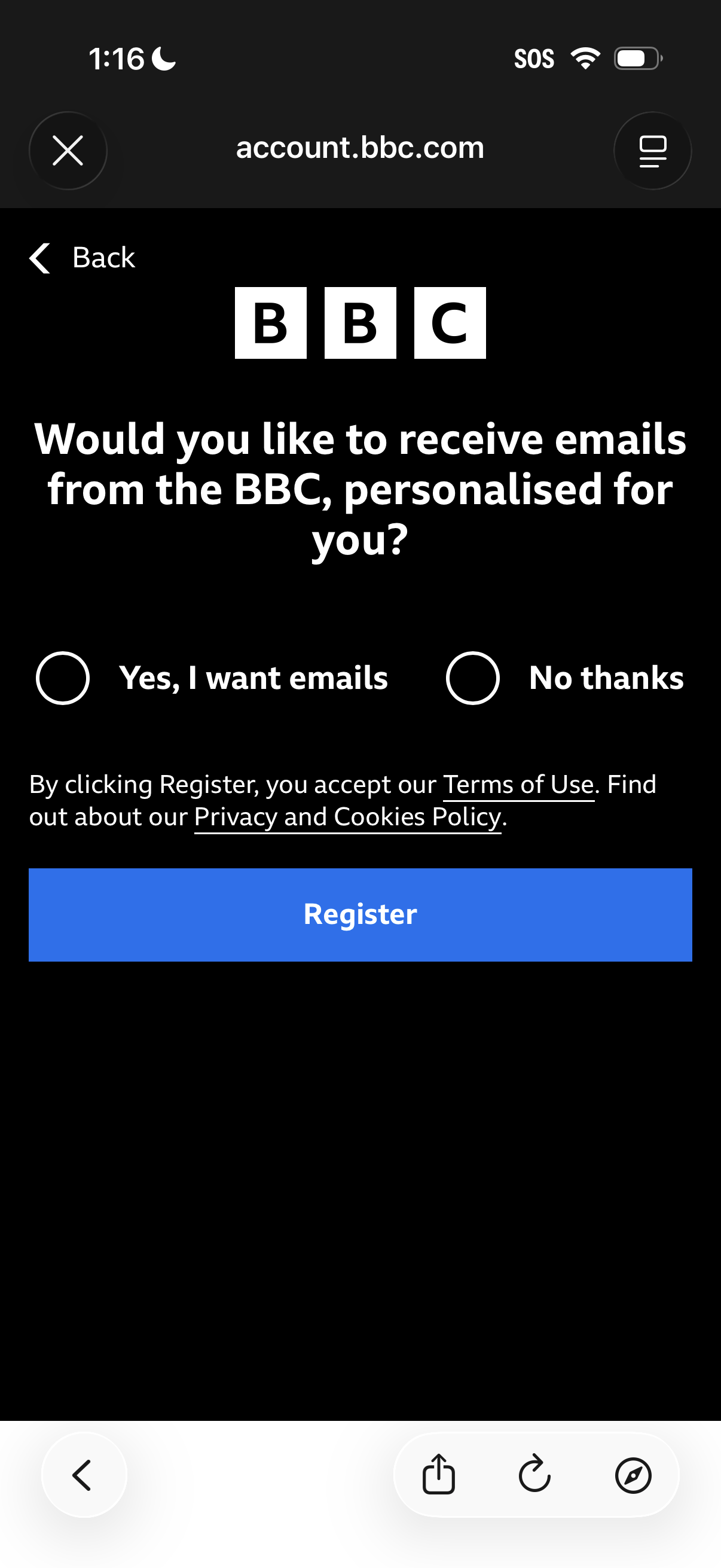
Bbc1206 × 2622opens the full image 
Finch602 × 1308opens the full image
The numbers
| # | Stat | Computed from |
|---|---|---|
| [1] | blue 34.1% (177), neutral 18.9% (98), red 14.6% (76) of 519 | primary_brand_hue_overall |
| [2] | Uber: pure-black (#000000) neutral brand mark | qualitative:uber |
Methodology
Universe: 519 audited design systems carrying a brand-group color, within the 520-system corpus. Method: convert first brand hex to HSL hue and bucket. July 2026 snapshot; buckets near boundaries are approximate.
Sources
- [1]
Lazyweb Research analysis of 519 design systems (systems with a brand color), July 2026
Primary brand hue bucketed from first brand-group hex converted to HSL hue; 519 of 520 systems have a brand color.
- [2]
Lazyweb Research analysis of 520 design systems (audited design_systems corpus), July 2026
Uber #000000 'Midnight Ink' as the neutral/black brand-hue archetype — an example row.
Source: Lazyweb Research — proprietary analysis of real, in-market app screens. Cite as Lazyweb Research, 2026-07-07.