Do most products use a system font or a custom typeface?
- By Ali Abouelatta
- n = 488
- Published
- Updated
- 2 min read
- design · ux-patterns · web · saas · landing-page
Short answer
The platform system stack wins, but only just: 56.4% of 488 audited design systems with a primary font use a native stack (SF Pro, system-ui, Roboto, etc.) versus 43.6% on a custom/branded typeface source[1]. Among named webfonts, Inter leads (36 systems), then Roboto (14) and Poppins (10) source[2].
56% of 488 audited design systems use a system/native font stack; Inter is the top named webfont at 36 systems, July 2026.
Bar chart · Systems
Systems — The most common named fonts
One block is about 4.7 Systems
- System (generic)
- 132
- SF Pro
- 76
- Inter
- 36
- System sans
- 23
- Roboto
- 14
- Poppins
- 10
- SF Pro Text
- 9
- Arial
- 7
System vs custom
| Font class | Systems | Share |
|---|---|---|
| System / native stack | 275 | 56.4% |
| Custom / branded font | 213 | 43.6% |
The system stack's edge is real but modest — nearly half of products invest in a branded typeface source[1].
The most common named fonts
Collapsing native stacks, the leading individually-named families are source[2]:
| Font | Systems |
|---|---|
| System (generic) | 132 |
| SF Pro | 76 |
| Inter | 36 |
| System sans | 23 |
| Roboto | 14 |
| Poppins | 10 |
| SF Pro Text | 9 |
| Arial | 7 |
Inter is the default 'custom' choice — if you want a branded-but-neutral sans that reads as modern-SaaS, it is the safe pick; Poppins signals friendlier/consumer source[2].
Caveats
SF Pro, system-ui, -apple-system, Segoe, Roboto, Google Sans and Amazon Ember are all collapsed into 'system/native stack' source[1]. 32 of 520 systems (6%) carry no primary-role font and are excluded, giving the 488 denominator source[1].
Real in-market screens
Screens from real, in-market apps, tracked by Lazyweb Research.
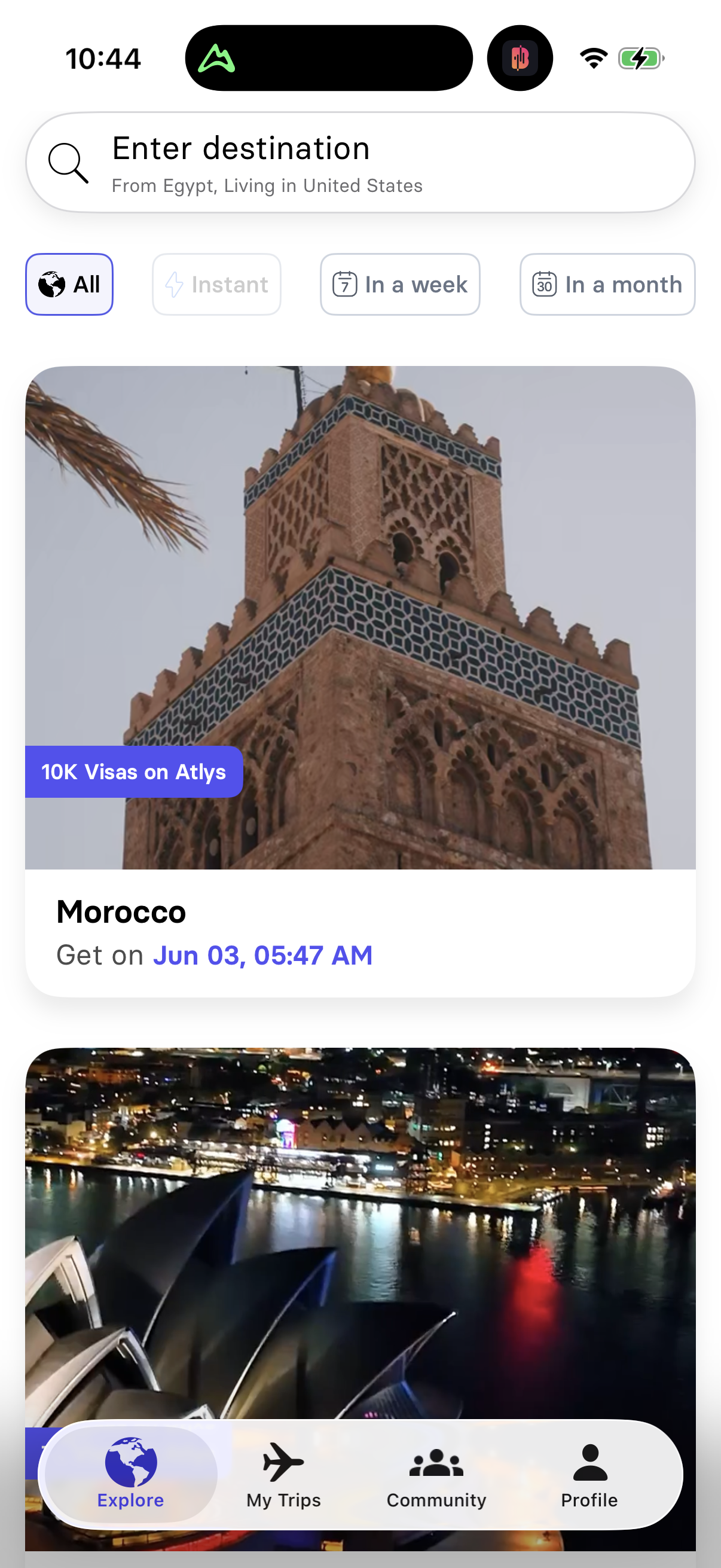
Atlys1206 × 2622opens the full image 
Beli1179 × 2556opens the full image 
Raycast1206 × 2622opens the full image 
Whatnot602 × 1308opens the full image
The numbers
| # | Stat | Computed from |
|---|---|---|
| [1] | system 56.4% (275) vs custom 43.6% (213) of 488 | primary_font_class |
| [2] | Inter 36, Roboto 14, Poppins 10, SF Pro 76, system 132 of 488 | top_primary_fonts |
Methodology
Universe: 488 audited design systems with a primary-role font, within the 520-system corpus. Method: classify first primary font as system stack vs custom, and count named families. July 2026 snapshot; native stacks are grouped and font values are LLM-extracted.
Sources
- [1]
Lazyweb Research analysis of 488 design systems (systems with a primary font), July 2026
System/native stack vs custom typeface classification; 488 of 520 systems carry a primary-role font.
- [2]
Lazyweb Research analysis of 488 design systems (systems with a primary font), July 2026
Most common primary font families, one per design system, lowercased.
Source: Lazyweb Research — proprietary analysis of real, in-market app screens. Cite as Lazyweb Research, 2026-07-07.