What percent of mobile apps show a notification permission primer screen?
- By Ali Abouelatta
- n = 809
- Published
- Updated
- 2 min read
- notifications · onboarding · mobile · ux-patterns · design
Short answer
39.9% of tracked apps (323 of 809) show a notification permission or priming surface source[1]. That makes the notification primer a majority-of-the-serious-onboarders pattern but not universal: roughly 3 in 5 tracked apps have no captured priming screen. If you gate the OS prompt behind a primer, you are in line with ~40% of the corpus, not an outlier.
323 of ~800 tracked apps (39.9%) show a notification permission primer screen — Lazyweb Research, July 2026.
Bar chart · Value
Value — The finding
One block is about 28.9 Value
- Apps with a notification primer
- 323
- Denominator (apps with screens)
- 809
- Prevalence
- 39.9%
- Canonical notification-permission screens
- 75
The finding
Across 809 tracked mobile apps, 323 (39.9%) surface a notification permission or priming screen source[1]. As a canonical screen-category cut, notification-permission screens account for 75 canonical screens across the corpus number[2] — a stricter, screen-level count that corroborates the tag-based prevalence.
| Metric | Value |
|---|---|
| Apps with a notification primer | 323 |
| Denominator (apps with screens) | 809 |
| Prevalence | 39.9% |
| Canonical notification-permission screens | 75 |
How to apply it
A primer before the OS prompt is a mainstream, defensible pattern — you are matching ~40% of tracked apps, not inventing something source[1]. Because the raw iOS prompt is one-shot, the primer's job is to pre-qualify: only fire the real prompt after a user says yes to your soft ask. If you ship one, you are squarely inside the observed norm; if you skip it, you are also with the ~60% majority, so treat this as a conversion decision, not a compliance one.
Caveats
Prevalence is a lower bound: it only counts primers Lazyweb captured (median 41 screens/app), so real adoption is likely higher source[1]. Tags are 15-25 LLM-generated synonym phrases per screenshot, deduped by company, so ILIKE matching can over- or under-count. The 75 canonical screens are SCREEN counts across 23,407 canonical screens — do not divide by 809 number[2].
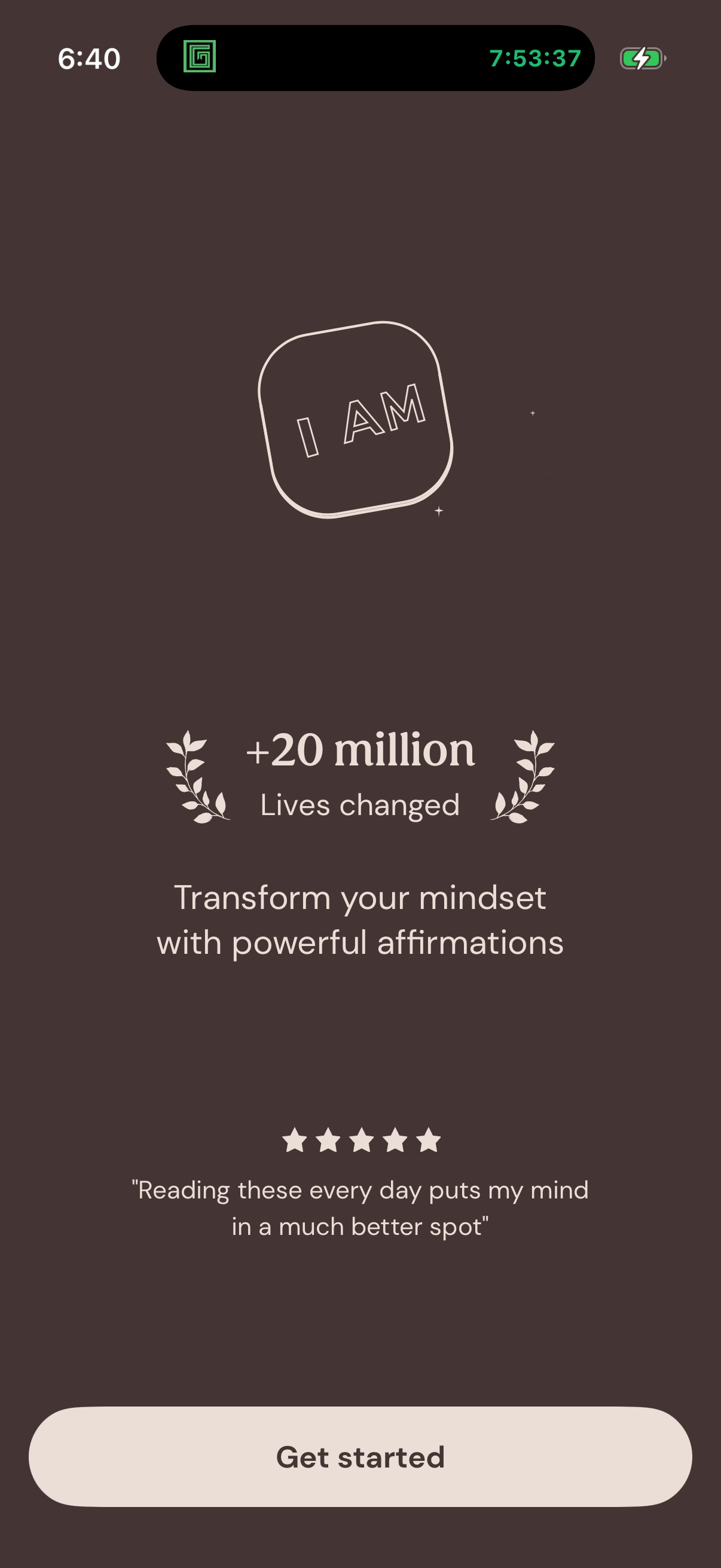
Real in-market screens
Screens from real, in-market apps, tracked by Lazyweb Research.
Iam1206 × 2622opens the full image 
Facetune1290 × 2796opens the full image 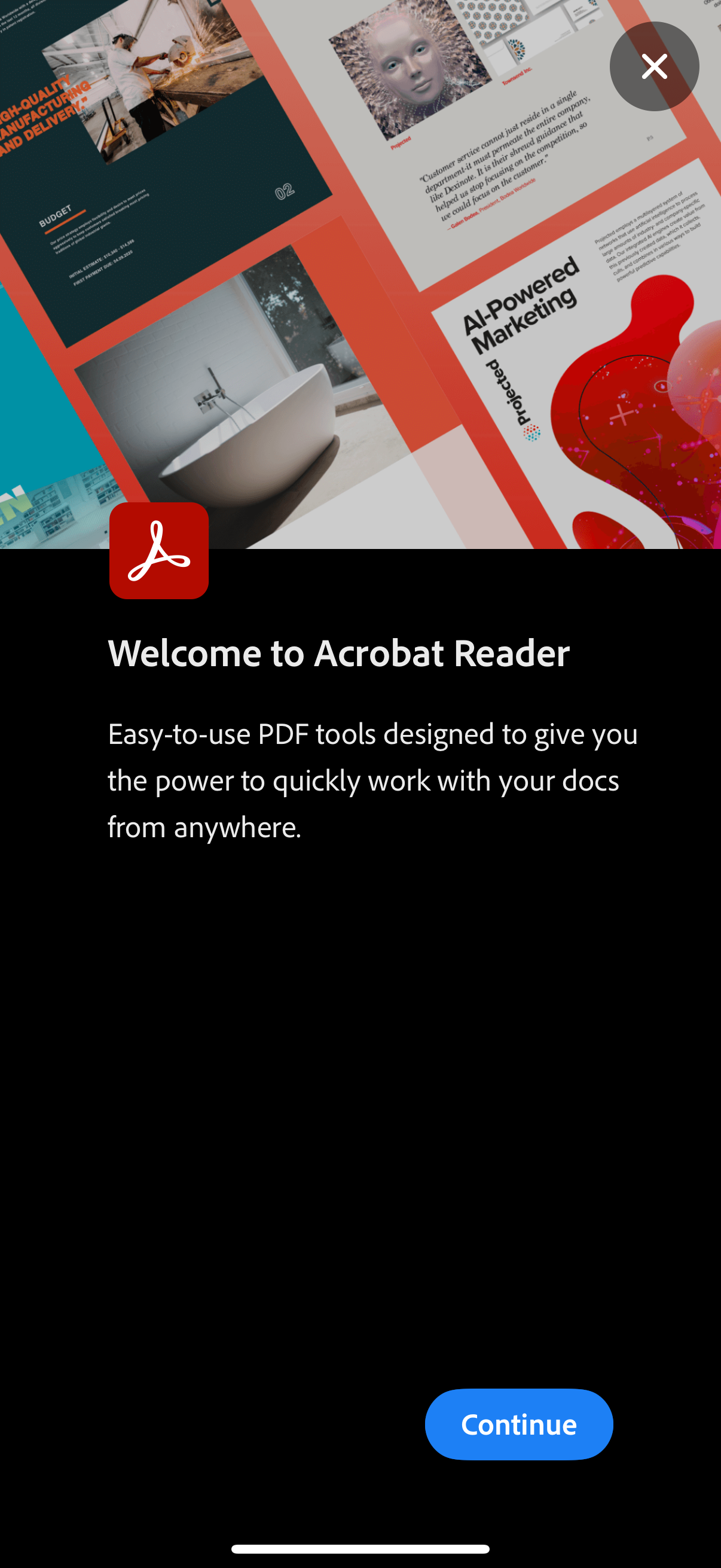
Acrobat1206 × 2622opens the full image 
Shine1206 × 2622opens the full image
The numbers
| # | Stat | Computed from |
|---|---|---|
| [1] | 39.9% (323 of 809) | prevalence_notification_primer: 323/809 |
| [2] | 75 canonical notification-permission screens | canonical_category_census.notification_permission_screens |
Methodology
Universe: 809 apps with >=1 captured screen (751 tagged). Method: COUNT(DISTINCT company_name) where any tag matches notification-priming phrases; canonical screens from sc_canonical. July 2026. Caveat: lower bound; captured screens only.
Sources
- [1]
Lazyweb Research analysis of 809 mobile apps (809 mobile apps with >=1 captured screen; 751 with tag data; median 41 screens/app), July 2026
Prevalence = COUNT(DISTINCT company_name) over LLM synonym tags; denominator is 809 tracked apps (reported conservatively over all apps-with-screens, not the 62,376-row companies table). Lower bound: only reflects screens Lazyweb captured (median 41/app).
Source: Lazyweb Research — proprietary analysis of real, in-market app screens. Cite as Lazyweb Research, 2026-07-07.