What Are Companies A/B Testing In Web Signup And Lead Forms?
- By Ali Abouelatta
- n = 37
- Published
- Updated
- 2 min read
- signup · web · landing-page · ux-patterns · experiments · design
Short answer
Across 37 form experiments tracked by Lazyweb Research (all web, out of 2,160 area-annotated experiments), the form is the least-tested major area but the highest by model-assigned impact, averaging 3.84/5 source[1]. It also has the highest high-impact share of any area: 86.5% of form annotations (32 of 37) scored 4+/5 source[2]. The recurring move is turning a self-classification decision into a single input field that does the routing source[3].
FORM is the least-tested major area at 37 of 2,160 annotations (1.8%) yet the highest-impact by model score at 3.84/5, with 86.5% of its edits scored high-impact — Lazyweb Research, July 2026.
The finding: fewest tests, highest model impact
FORM is web-only in the corpus: all 37 annotations across 36 experiments sit on web pages source[1]. It is the smallest major area at 1.8% of the 2,160 annotations, yet its average model-assigned impact of 3.84/5 is the highest of any area with n>=30, and 86.5% of its annotations (32 of 37) were scored high-impact — the highest high-impact share in the whole dataset source[1]source[2]. The read: form changes are rare but, when detected, consistently rated as meaningful source[1].
The observed pattern: the input does the routing
Two representative moves: adding an inline 'Enter delivery address' field as the primary hero action while demoting sign-in to a secondary pill, and collapsing three persona cards (admins/teachers/students) into one 'Enter your school email or invite code' field with a single Get started button source[3].
| Move | What it replaces | Inferred rationale |
|---|---|---|
| Inline address field in hero | sign-in-first gating | show local supply before auth to build intent |
| Single email/invite input | three persona chooser cards | the input routes the user, no self-classification |
Both trade a decision step for a working input source[3].
How to apply it
If your page opens with a chooser (persona cards, plan menus, sign-in vs sign-up), test replacing it with one input that both starts the flow and routes the user source[3]. The observed logic is that an early, low-commitment input builds intent that auth-first gating kills source[3]. Given how rarely forms are tested in the corpus, this may be an under-exploited lever for web signup flows source[1].
Caveats
The 3.84/5 average rests on just 37 annotations, all web — present it as a relative model-scored ranking with the n shown, never as measured lift source[4]. All examples are single observed before/after diffs with inferred rationale source[4]. Web cuts are absolute counts only per Lazyweb Research's rules source[4].
Real in-market screens
Screens from real, in-market apps, tracked by Lazyweb Research.

Pinterest1290 × 2796opens the full image 
Taskrabbit1206 × 2622opens the full image 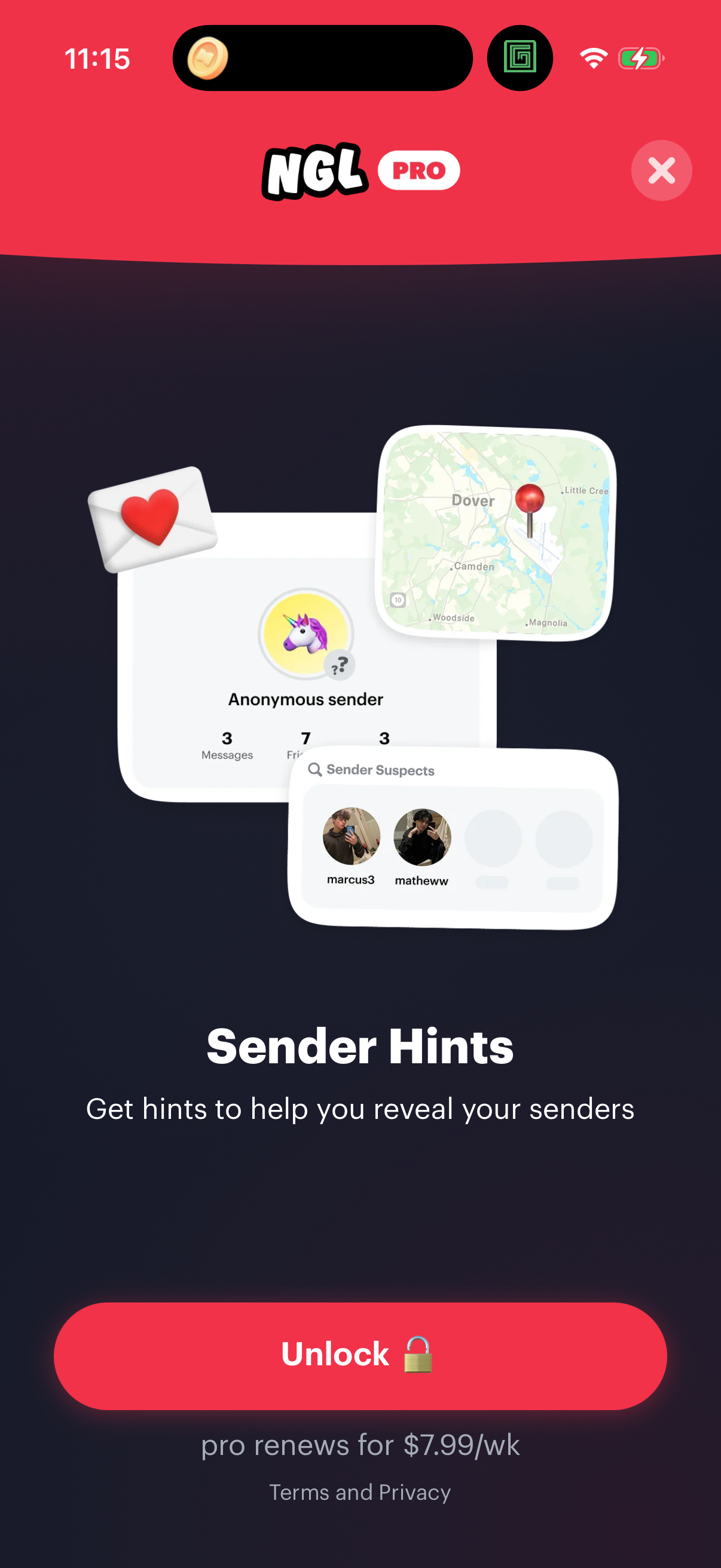
Ngl1206 × 2622opens the full image 
United1206 × 2622opens the full image
The numbers
| # | Stat | Computed from |
|---|---|---|
| [1] | 37 FORM annotations (1.8% of 2,160), avg impact 3.84/5 (highest of n>=30 areas), avg confidence 3.73, 36 experiments, all web | area_FORM |
| [2] | FORM high-impact (4+/5) share 86.5% (32 of 37) — highest of all areas | high_impact_share_by_area |
| [3] | Observed moves: DoorDash added an inline delivery-address field and demoted sign-in; Soundtrap collapsed three persona cards into one email/invite-code field | qualitative FORM doordash, soundtrap |
| [4] | All 37 FORM annotations are web; impact is a model-assigned 1-5 score on observed diffs, not measured lift | smallSampleWarnings; universe |
Methodology
Universe is 37 FORM annotations (all web) within 2,160 area-level annotations over 1,126 detected experiments in the ~800 tracked-apps corpus. Areas and rationale are LLM-inferred from observed before/after screenshots; impact is a model-assigned 1-5 score, July 2026; n is small so treat as relative ranking.
Sources
- [1]
Lazyweb Research analysis of 37 web form experiments (~800 tracked apps), July 2026
FORM annotations within 2,160 area-level annotations over 1,126 detected experiments.
- [2]
Lazyweb Research analysis of high-impact-share by area (n>=30 areas), July 2026
Share scored impact 4+/5 by the model; relative ranking only.
- [3]
Lazyweb Research analysis of 2,160 annotated UI experiments (~800 tracked apps), July 2026
Named examples are individual observed diffs with LLM-inferred rationale.
- [4]
Lazyweb Research analysis of 365 web experiments (~800 tracked apps), July 2026
Web is thin; n=37 impact figure is a relative model score, not measured lift.
Source: Lazyweb Research — proprietary analysis of real, in-market app screens. Cite as Lazyweb Research, 2026-07-07.
Explore the evidence
- Full 45-frame August 2026 capture
- Three captured screens · August 2026