What Screen Usually Comes Right Before the Onboarding Paywall?
- By Ali Abouelatta
- n = 40
- Published
- Updated
- 2 min read
- paywall · onboarding · design · ux-patterns · monetization
Short answer
Across 40 onboarding flows with a paywall tracked by Lazyweb Research, the screen immediately before the first paywall is a generic onboarding screen in 28 of 40 flows source[1]. Named exceptions are value-reveal screens such as plan-ready, summary, and choose-plan-intro, plus the ATT prompt source[1]. The pattern is a value recap, then the paywall.
In 28 of 40 paywalling onboarding flows the screen before the paywall is a generic onboarding screen, Lazyweb Research, July 2026.
The finding
In 28 of 40 onboarding flows with a paywall, the screen directly preceding the first paywall is categorized as a generic onboarding screen source[1]. Among the named exceptions, the preceding screen is a personalized-plan reveal — categories like 'info-plan-ready', 'info-summary', and 'choose-plan-intro' — or an ATT (App Tracking Transparency) prompt source[1]. Qualitatively this supports a 'value recap, then paywall' structure.
What precedes the paywall
| Preceding screen type | Flows |
|---|---|
| Generic onboarding screen | 28 of 40 |
| Named value-reveal or ATT screens | remainder |
The reveal screens (plan ready, summary, choose-plan-intro) are the pattern designers most often use to justify the offer right before it appears source[1].
How to apply it
The corpus suggests a deliberate lead-in: show the user their personalized plan or a summary of what they have set up, then present the paywall. If you are designing an onboarding paywall, place a value-recap or plan-reveal screen immediately before it rather than jumping straight from a neutral step into the offer. This mirrors the reveal-then-paywall sequence seen in the named exceptions source[1].
Caveats
This is a qualitative categorization over 40 flows; the 28-of-40 'generic onboarding' bucket is broad and includes screens that may still function as value builds source[1]. It describes prevalence, not conversion lift.
Real in-market screens
Screens from real, in-market apps, tracked by Lazyweb Research.

Polymarket1206 × 2622opens the full image 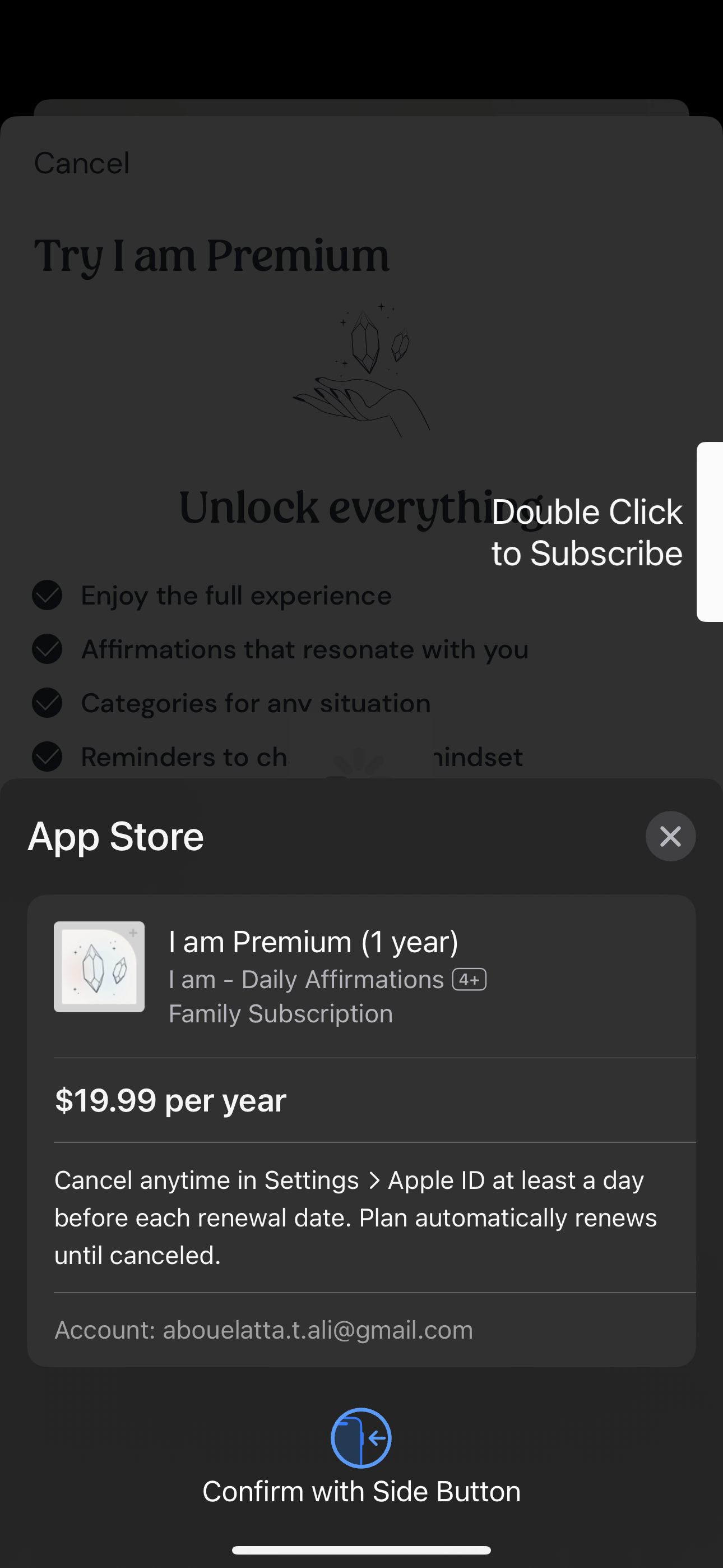
Iam1290 × 2796opens the full image 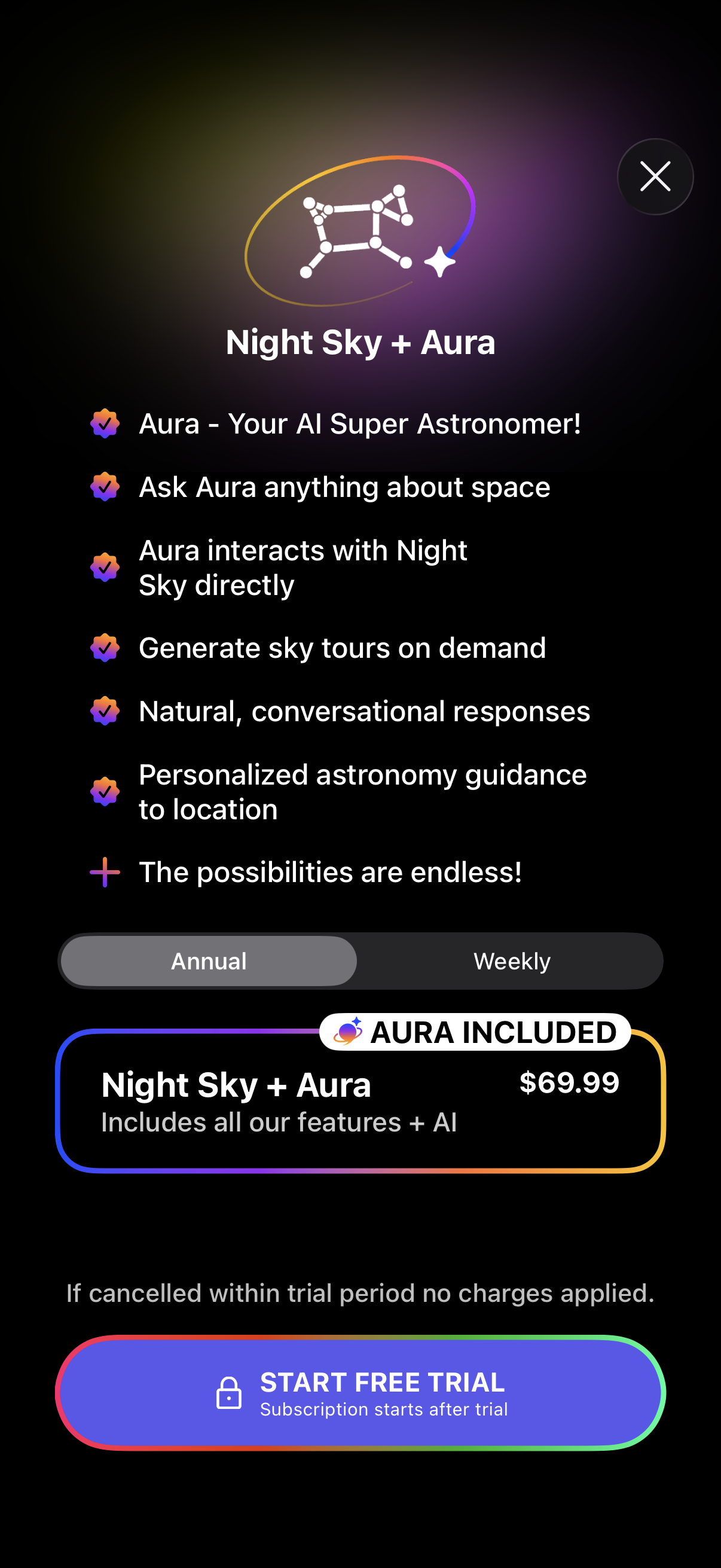
Night Sky1206 × 2622opens the full image 
Apple Fitness1179 × 2556opens the full image
The numbers
| # | Stat | Computed from |
|---|---|---|
| [1] | preceding screen generic in 28/40; exceptions: plan-ready, summary, choose-plan-intro, att-prompt | qualitative |
Methodology
Universe: 40 onboarding flows with a paywall across ~800 tracked apps, July 2026; preceding-screen categories read from the step before the first paywall. Caveat: qualitative, broad 'onboarding' bucket, no conversion data.
Sources
- [1]
Lazyweb Research qualitative review of 40 onboarding flows (~800 tracked apps), July 2026
Screen-category of the step immediately preceding the first paywall across the 40 paywalling flows.
Source: Lazyweb Research — proprietary analysis of real, in-market app screens. Cite as Lazyweb Research, 2026-07-07.