Are blurred-preview paywalls actually a common gating pattern?
- By Ali Abouelatta
- n = 809
- Published
- Updated
- 2 min read
- paywall · upsell · ux-patterns · mobile · design
Short answer
No. Across 809 tracked apps, a tightened blurred-premium-preview pattern matched just 1 app / 3 screenshots — not enough to publish a prevalence.source[1] Raw %blur% matching is almost entirely loading-overlay blur, not premium teasers, which is why it's rejected.source[1] By contrast, lock-icon gating (12%, 94 apps) and unlock CTAs (20%, 159 apps) are genuinely widespread, so don't assume blur is a standard convention.source[1]
Blurred-preview premium gating matched only 1 app / 3 screenshots across 809 tracked apps — Lazyweb Research, July 2026.
Bar chart · Apps
Apps — Finding: blur is not a measurable convention here
One block is about 5.7 Apps
- Blurred premium preview
- 1
- Lock-icon gating
- 94
- Unlock CTA
- 159
Finding: blur is not a measurable convention here
The blurred-preview mechanic was deliberately dropped from prevalence reporting. The tightened tag pattern for premium-teaser blur matched exactly 1 company and 3 screenshots, because raw %blur% is dominated by loading-overlay blur rather than intentional premium teasers.source[1]
| Mechanic | Apps | Publishable prevalence? |
|---|---|---|
| Blurred premium preview | 1 | No — too small |
| Lock-icon gating | 94 | Yes (12%) |
| Unlock CTA | 159 | Yes (20%) |
How to apply
If you want to gate with a visual teaser, don't justify it with 'everyone blurs premium content' — the corpus can't support that claim. Reach instead for the patterns that are demonstrably common: a lock icon on the gated item plus an unlock CTA. Blur can still be a fine tactic for your specific product, but treat it as an untested bet, not an industry default.
Caveats
This is an explicit small-sample warning in the source data: blurred-preview prevalence must not be published.source[1] The absence of a strong signal reflects both true rarity and the difficulty of distinguishing premium blur from loading blur in tags — so it's a floor, not a definitive 'nobody does this'.
Real in-market screens
Screens from real, in-market apps, tracked by Lazyweb Research.

Ai Chatbot1206 × 2622opens the full image 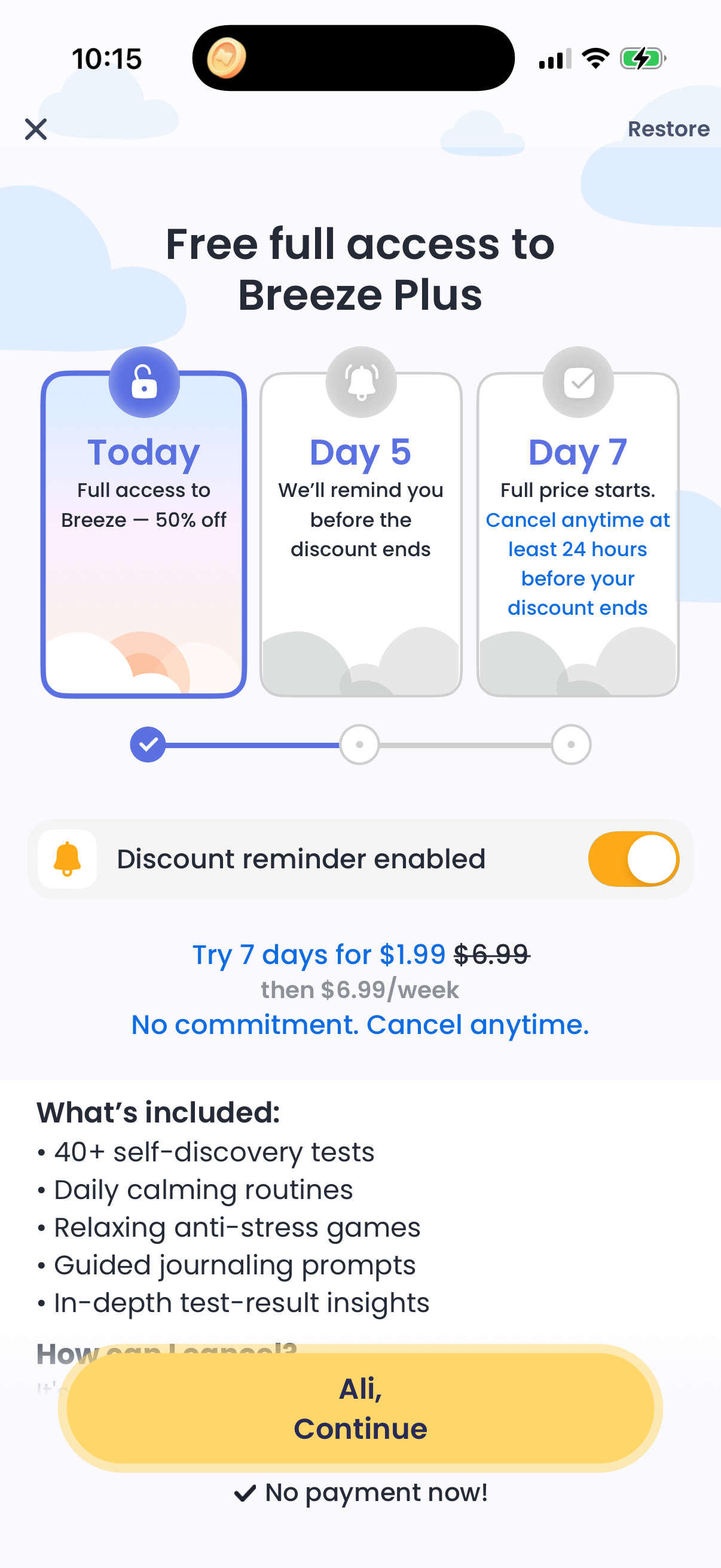
Breeze1206 × 2622opens the full image 
Klarna1206 × 2622opens the full image 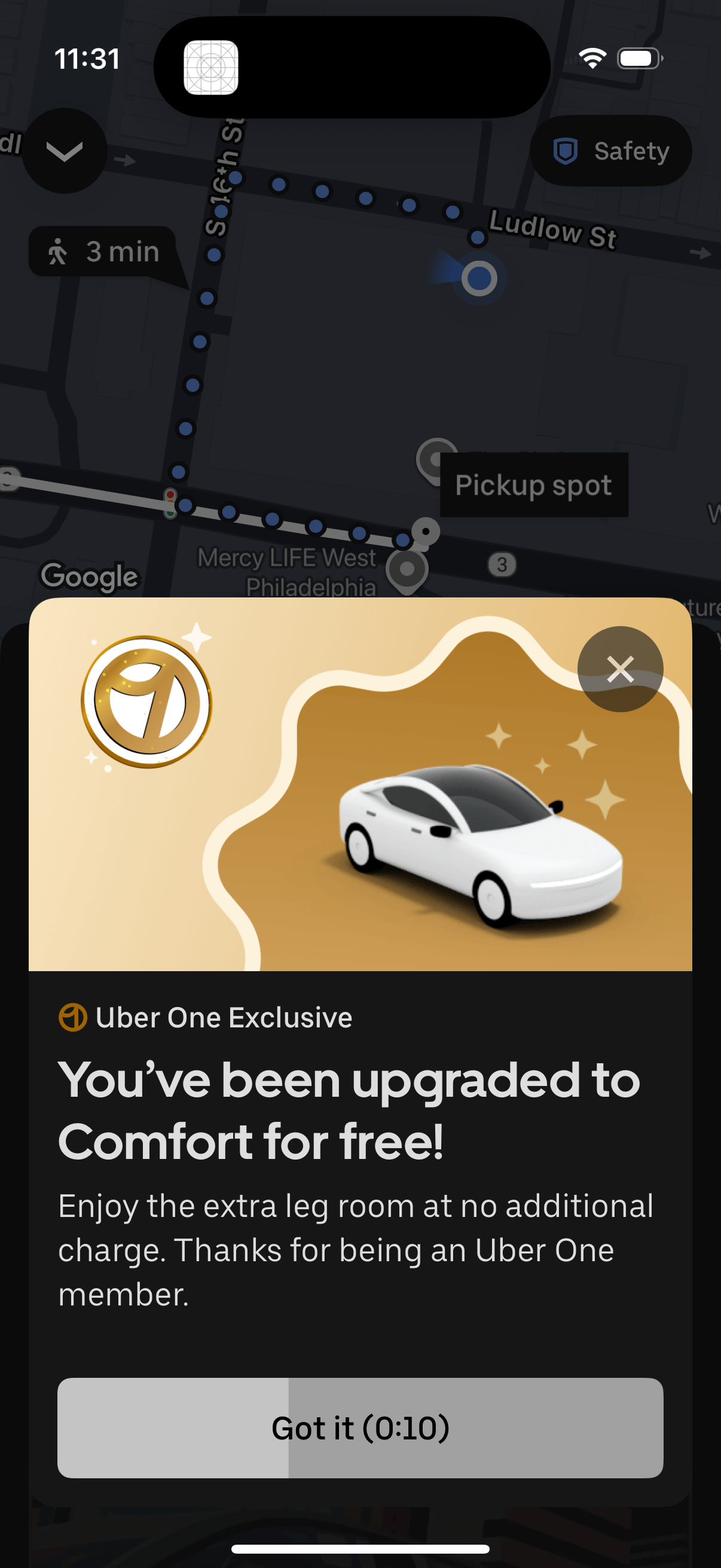
Uber1206 × 2622opens the full image
The numbers
| # | Stat | Computed from |
|---|---|---|
| 01 | 1 app / 3 screenshotss1 | smallSampleWarnings: blurred-preview tightened pattern = 1 company / 3 screenshots |
| 02 | 12% (94/809)s2 | lock_icon_gating_prevalence: 94/809 |
| 03 | 20% (159/809)s3 | unlock_cta_prevalence: 159/809 |
Methodology
Universe: 809 tracked mobile apps with 44,873 tagged screenshots. Method: app-count prevalence (COUNT DISTINCT company) over tightened LLM synonym tag patterns, July 2026. Caveat: tag-based prevalence is a lower bound; raw single-word patterns (%lock%, %usage%, %blur%) were rejected for security/media/data-usage false positives.
Sources
- [1]
Lazyweb Research analysis of 809 apps (tracked mobile app corpus with screenshots), July 2026
Prevalence deduped by COUNT(DISTINCT company_name) over 44,873 tagged screenshots; tag patterns are LLM synonym phrases (tightened after spot-checking) so every stat is a lower bound.
Source: Lazyweb Research — proprietary analysis of real, in-market app screens. Cite as Lazyweb Research, 2026-07-07.
Explore the evidence
- Full 45-frame August 2026 capture
- Three captured screens · August 2026