What Is the Earliest Apps Typically Paywall in Onboarding?
- By Ali Abouelatta
- n = 40
- Published
- Updated
- 2 min read
- paywall · onboarding · monetization · ux-patterns · experiments
Short answer
Across 40 onboarding flows with a paywall tracked by Lazyweb Research, only 1 places the first paywall in the opening third of the flow, and 0 open on a paywall source[1]. The earliest real example is Adobe at step 3 of 13 (relative position 0.23) source[2] — but that is a single-company outlier, not a pattern. Early paywalls are rare.
Only 1 of 40 paywalling onboarding flows paywalls in the opening third; the earliest is Adobe at step 3 of 13, Lazyweb Research, July 2026.
Bar chart · Total steps
Total steps — The earliest real examples
One block is about 0.5 Total steps
- Adobe
- 13
- Canva
- 8
- FaceApp
- 4
- Calm
- 7
The finding
Of the 40 onboarding flows with a paywall, exactly 1 places the first paywall at or before the one-third mark, 8 place it in the middle third, and 31 in the final third source[1]. No flow opens with a paywall source[1]. The single earliest onboarding paywall in the corpus is Adobe's, at step 3 of a 13-step flow (relative position 0.23) source[2].
The earliest real examples
| App | Total steps | First paywall step | Position |
|---|---|---|---|
| Adobe | 13 | 3 | 0.23 |
| Canva | 8 | 4 | 0.50 |
| FaceApp | 4 | 2 | 0.50 |
| Calm | 7 | 4 | 0.57 |
Even these 'early' cases give the user at least a couple of steps of context first source[2]. Adobe's step-3 paywall is flagged as an outlier, not a template source[2].
How to apply it
If you are considering an early paywall, understand you are copying the rare 1-of-40 case, not the mainstream. The corpus mainstream paywalls at a median relative position of 0.89 source[3]. An early paywall may suit products with an instant, obvious value proposition (a quick photo edit, a recognizable brand like Adobe), but it runs against what most tracked apps do.
Caveats
The early-paywall examples are single-company anecdotes, explicitly flagged as not a pattern source[2]. N is 40 flows; positions use ROW_NUMBER source[1].
Real in-market screens
Screens from real, in-market apps, tracked by Lazyweb Research.
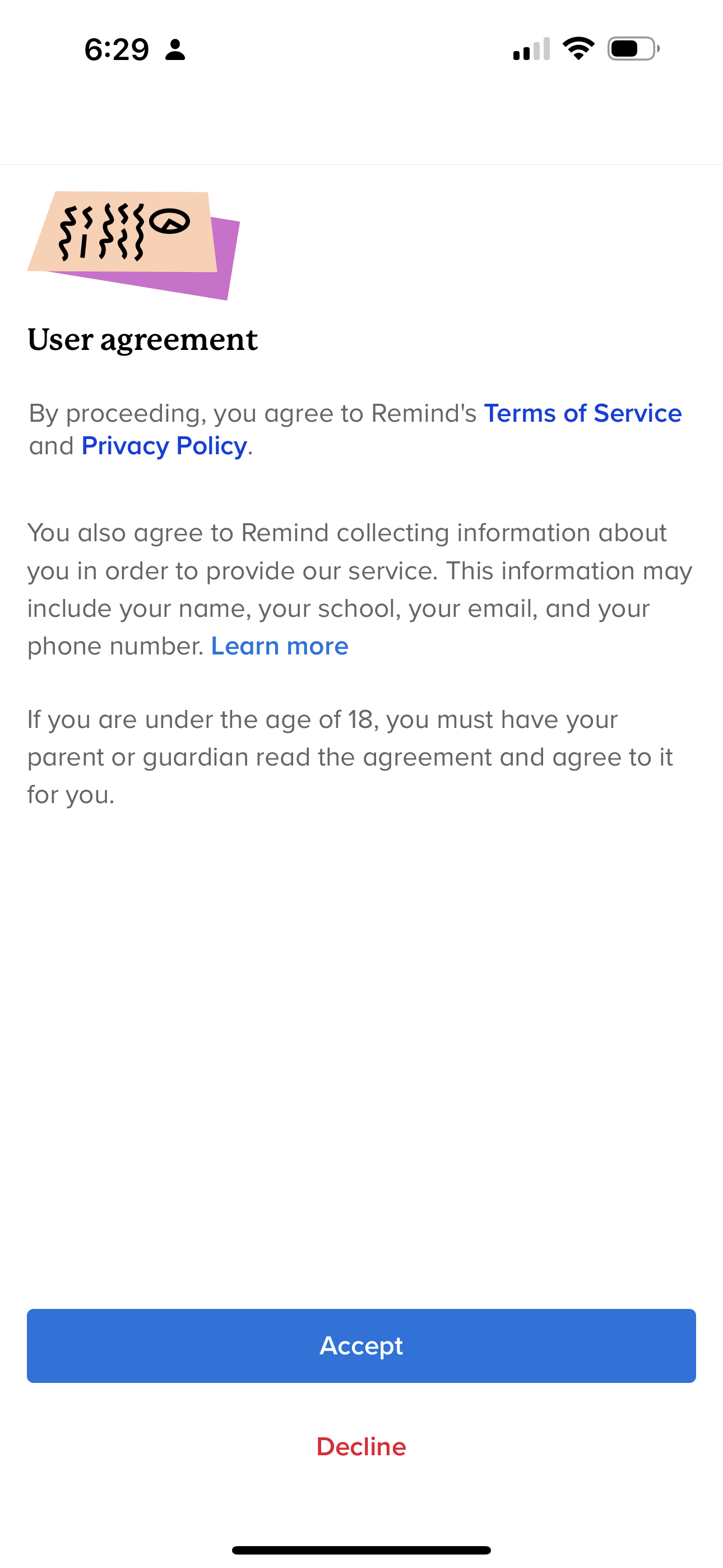
Remind1290 × 2796opens the full image 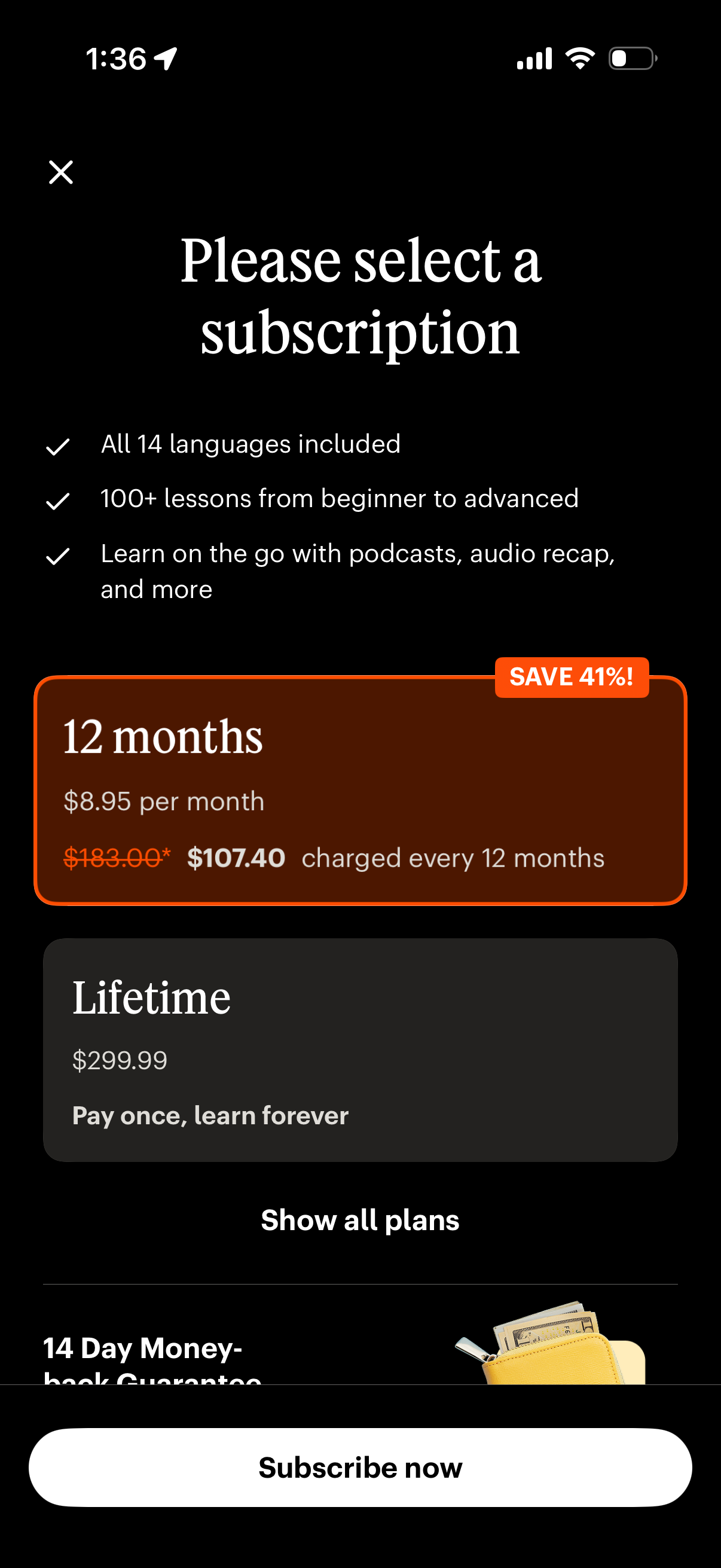
Babbel1206 × 2622opens the full image 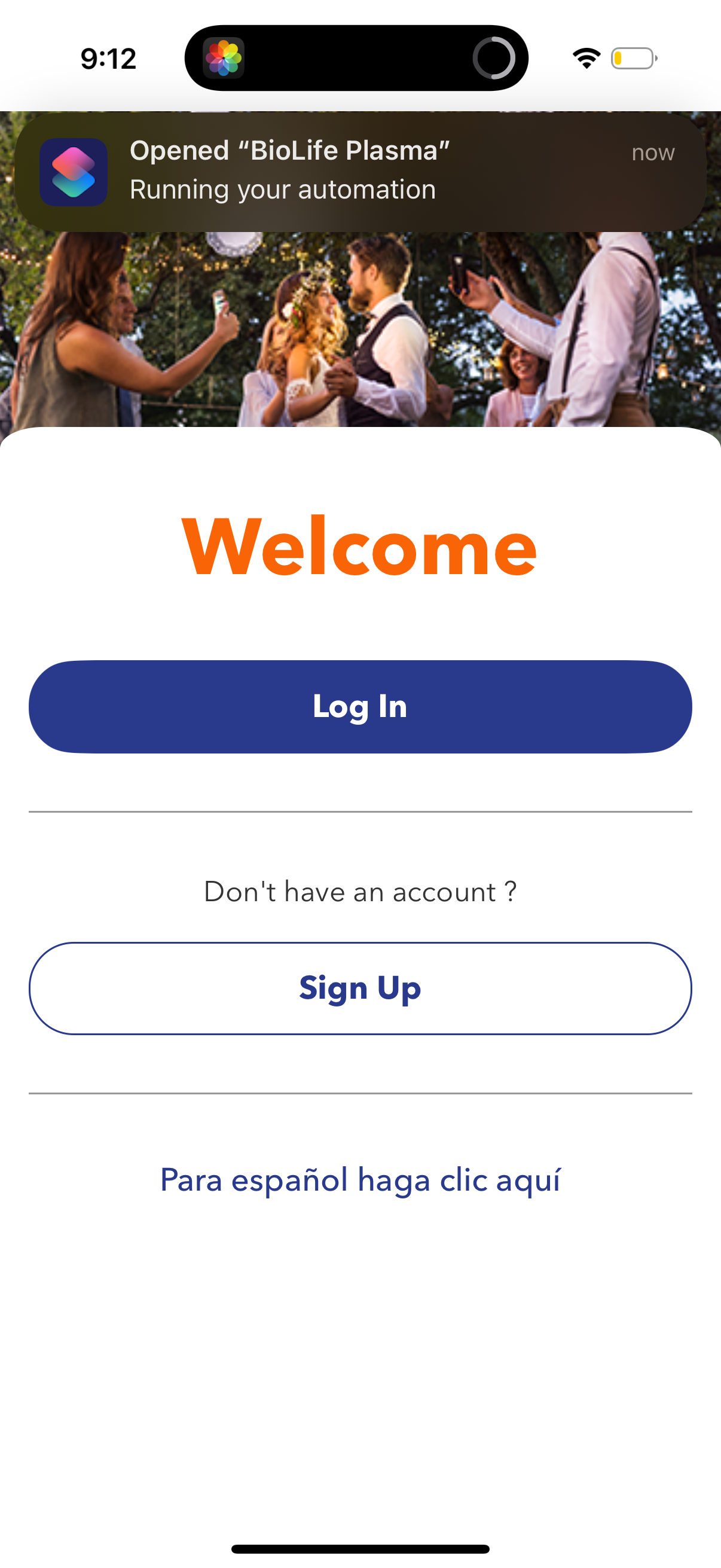
Biolife1206 × 2622opens the full image 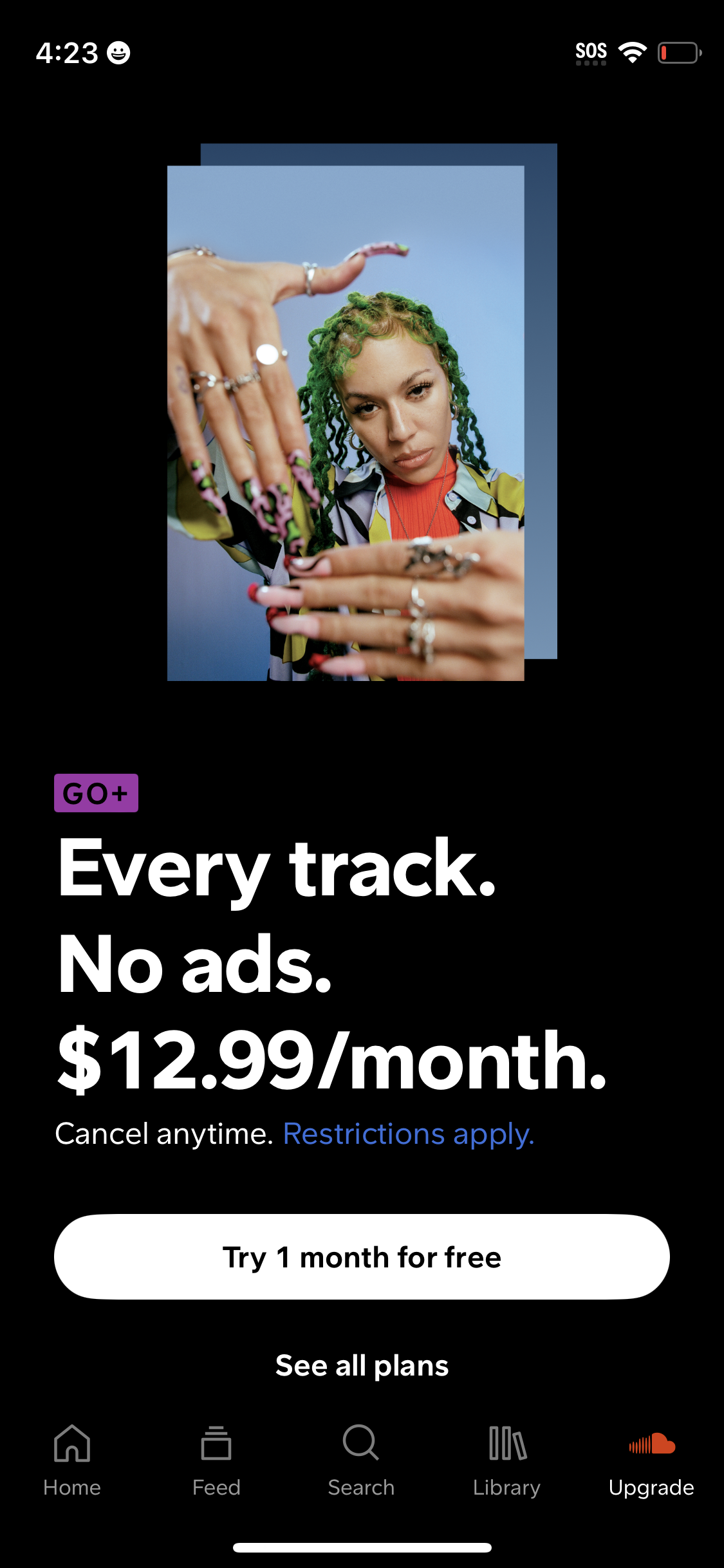
Soundcloud1125 × 2436opens the full image
The numbers
| # | Stat | Computed from |
|---|---|---|
| [1] | first third 1/40; middle 8/40; final 31/40; first step 0/40 | first_paywall_thirds_distribution |
| [2] | Adobe step 3/13 (0.23); Canva 4/8; FaceApp 2/4; Calm 4/7 | qualitative |
| [3] | median first paywall relative position 0.894 | first_paywall_relative_position |
Methodology
Universe: 40 onboarding flows with a paywall across ~800 tracked apps, July 2026; positions via ROW_NUMBER. Caveat: early examples are single-company anecdotes, not a pattern.
Sources
- [1]
Lazyweb Research analysis of 40 onboarding flows (~800 tracked apps), July 2026
Distribution of first-paywall relative position into thirds; first-step count.
- [2]
Lazyweb Research qualitative review of onboarding flows (~800 tracked apps), July 2026
Earliest per-company paywalls; Adobe step 3/13 flagged as an outlier.
- [3]
Lazyweb Research analysis of 40 onboarding flows (~800 tracked apps), July 2026
Median first-paywall relative position for the mainstream comparison.
Source: Lazyweb Research — proprietary analysis of real, in-market app screens. Cite as Lazyweb Research, 2026-07-07.