What Benefits Do Apps Promise on Notification Priming Screens?
- By Ali Abouelatta
- n = 74
- Published
- Updated
- 2 min read
- notifications · onboarding · ux-patterns · design · monetization
Short answer
Across 74 apps with a custom (non-OS-dialog) notification screen in Lazyweb Research's corpus, 'updates' is the most common benefit framing (34 apps), narrowly ahead of 'deals/offers/drops' (33), then messages/replies (19) and reminders (12) source[1]. Generic 'stay updated' language and commercial 'deals' language are effectively tied as the two dominant hooks. Order/delivery status (9) rounds out the credible patterns.
Among 74 apps with a custom notification screen, 'updates' framing appears in 34 and 'deals/offers' in 33 — nearly tied as the top hooks — Lazyweb Research, July 2026.
Bar chart · Apps
Apps — The finding
One block is about 1.2 Apps
- Updates
- 34
- Deals / offers / drops
- 33
- Messages / replies
- 19
- Reminders
- 12
- Order / delivery status
- 9
- Progress / streaks (anecdote)
- 4
The finding
Counting per-app benefit framing on custom (non-OS-dialog) notification screens across 74 apps source[1]:
| Benefit framing | Apps |
|---|---|
| Updates | 34 |
| Deals / offers / drops | 33 |
| Messages / replies | 19 |
| Reminders | 12 |
| Order / delivery status | 9 |
| Progress / streaks (anecdote) | 4 |
The top two — generic updates and commercial deals — are essentially tied and dominate the field source[1].
Named examples
Adidas frames its ask around deals, product drops, and delivery alerts source[2]. Adobe Acrobat's modal ('Allow notifications' / 'Maybe later') frames benefits as updates, new features, special offers, and tips source[2]. Airbnb's bottom-sheet lists check-in details, account activity, travel deals, and personalized recommendations source[2]. Apple Fitness leads with closing activity rings and cheering friends source[2].
How to apply it
Match the framing to your core loop: 'updates' is the safe default, but if you have a commerce or drops model, 'deals/offers' is equally well-trodden (33 apps) and more concrete. Messaging apps lean on 'messages/replies' (19), and habit or journaling apps on 'reminders' (12). Avoid vague 'stay informed' copy — the corpus favors a named, specific benefit.
Caveats
This uses the broad notification label set (74 apps with any custom notification screen), which is wider than the 65-app verified permission universe source[1]. Progress/streak framing (4 apps) is below the reporting threshold — anecdote only source[1]. Counts are per-app bool_or over regexes on captured copy, not conversion-weighted.
Real in-market screens
Screens from real, in-market apps, tracked by Lazyweb Research.
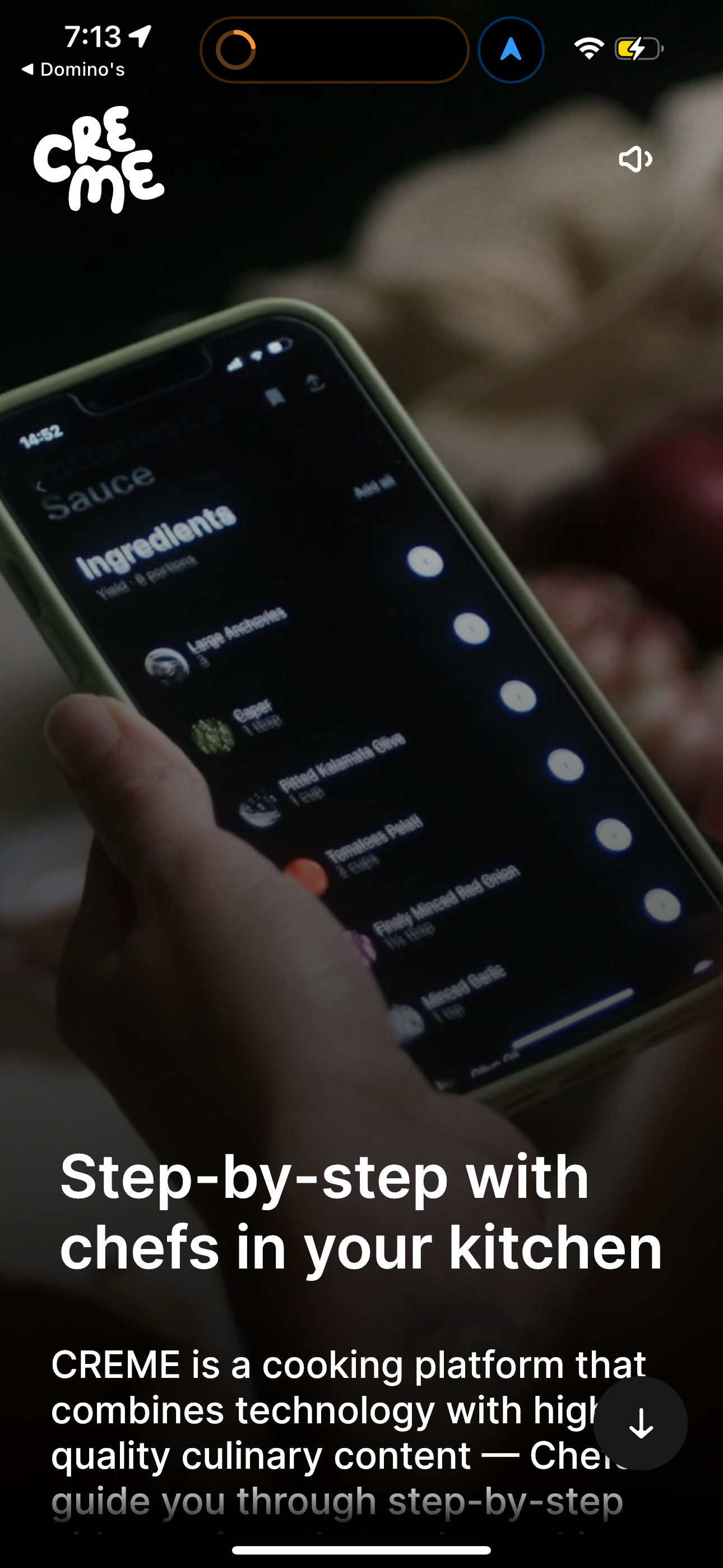
Creme1290 × 2796opens the full image 
Groundnews1170 × 2532opens the full image 
Bonvoy1206 × 2622opens the full image 
Eventbrite1170 × 2532opens the full image
The numbers
| # | Stat | Computed from |
|---|---|---|
| [1] | updates 34/74, deals 33/74, messages 19/74, reminders 12/74, order status 9/74, progress/streaks 4/74 | priming_copy_benefit_patterns: per-company bool_or of vision_description benefit regexes over non-OS-dialog notification screens |
| [2] | Named examples: Adidas, Adobe Acrobat, Airbnb, Apple Fitness | qualitative: adidas, acrobat, airbnb, apple-fitness benefit framing |
Methodology
Universe: 74 apps with a custom (non-OS-dialog) notification screen (broad label set, of 807), July 2026. Benefit framing via per-app vision-description regexes; broader than the verified 65-app set, and framing below n=8 is anecdote-only.
Sources
- [1]
Lazyweb Research analysis of 74 apps (custom notification screens, 807-app corpus), July 2026
Broad notification label set; benefit framing via vision-description regexes; progress/streaks below threshold.
- [2]
Lazyweb Research qualitative review (807-app corpus), July 2026
Adidas, Acrobat, Airbnb, Apple Fitness cited as named benefit-copy examples.
Source: Lazyweb Research — proprietary analysis of real, in-market app screens. Cite as Lazyweb Research, 2026-07-07.