Should ATT Prompts Frame Tracking as Personalization or as Better Deals?
- By Ali Abouelatta
- n = 42
- Published
- Updated
- 2 min read
- mobile · monetization · ux-patterns · onboarding
Short answer
Across 42 apps with a described ATT screen in Lazyweb Research's corpus, personalization framing (personalized ads/recommendations/shopping) appears in 23 apps (55%) versus 10 (24%) that promise better deals, offers, or discounts source[1]. Personalization is the majority frame by more than 2 to 1. Choose deals framing only if your app has a genuine commerce or savings hook.
ATT prompts use personalization framing more than twice as often as deals framing — 23 vs 10 of 42 apps — Lazyweb Research, July 2026.
The finding
Among 42 ATT apps with descriptions, 23 (55%) frame tracking as personalization and 10 (24%) frame it as better deals, offers, or discounts source[1]. These are not mutually exclusive per app, but personalization is clearly the default justification and deals the specialized commerce hook.
The two frames side by side
Back Market blends both — its explainer frames tracking as best deals plus app-improvement analytics plus relevant ads source[2]. Chewy leans personalization: tracking personalizes items, offers, and ads source[2].
How to apply it
Default to personalization — it is the corpus's dominant, low-friction frame and works for almost any app. Reach for the deals/offers angle (24% of apps) only when it is true: a retail or savings product where 'better deals' is a concrete, believable payoff. Combining both, as Back Market does, is a viable pattern for commerce apps source[2].
Caveats
Based on 42 apps with descriptions; framing is per-app regex matching on captured copy, not measured opt-in lift source[1]. An app can use both frames, so shares sum above the app count. Named examples are illustrative, not proof of superiority.
Real in-market screens
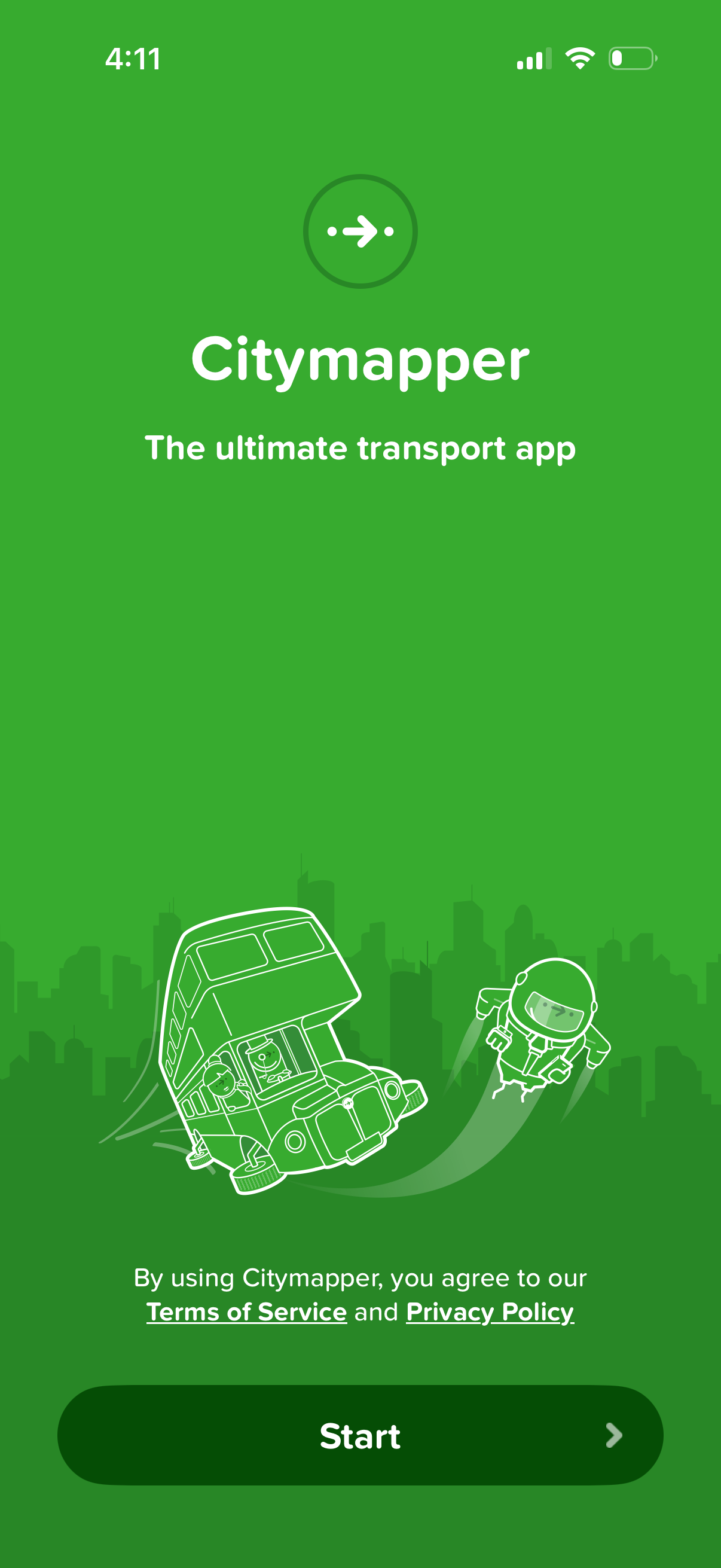
Screens from real, in-market apps, tracked by Lazyweb Research.
Citymapper1206 × 2622opens the full image 
Halo Habits1206 × 2622opens the full image 
Wsj1206 × 2622opens the full image 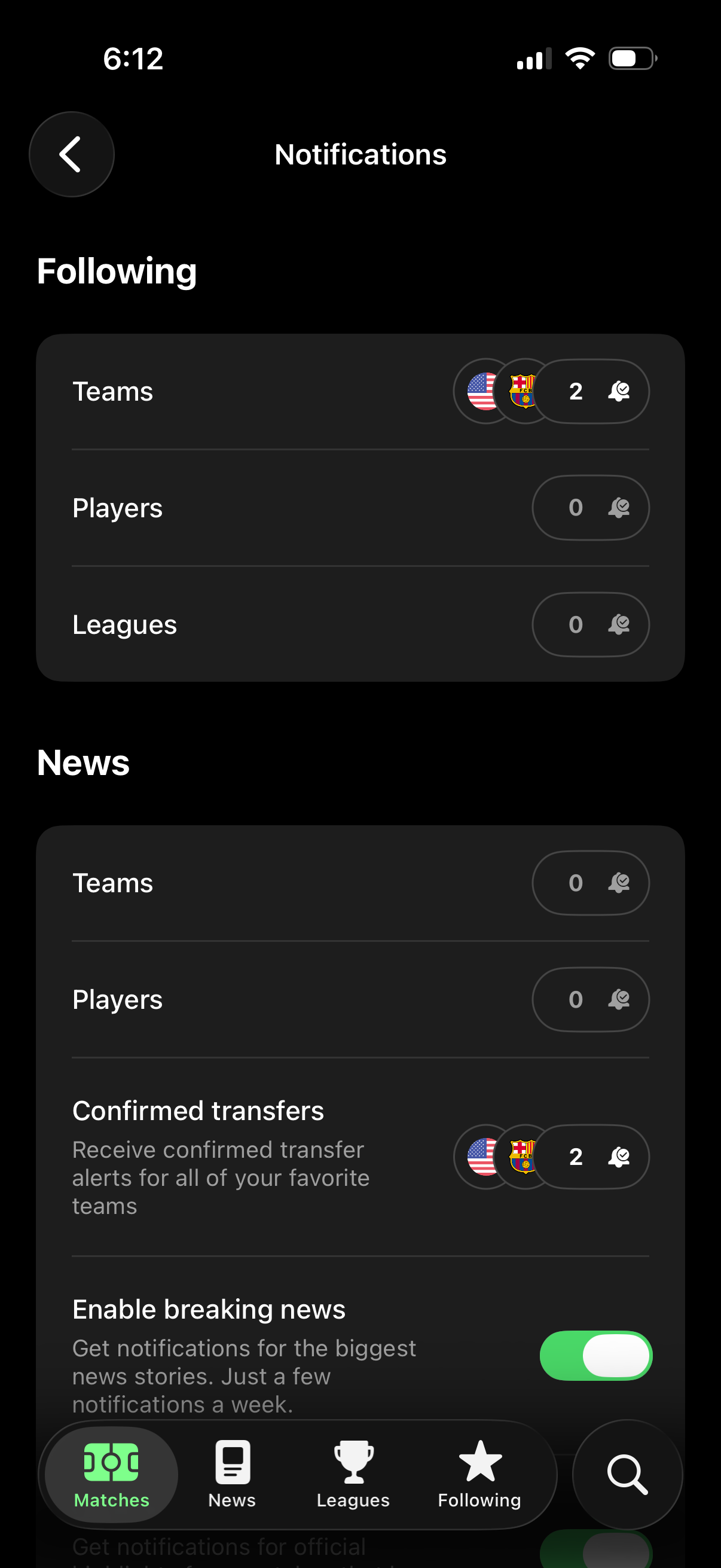
Fotmob1206 × 2622opens the full image
The numbers
| # | Stat | Computed from |
|---|---|---|
| [1] | personalization 23/42 (55%), deals/offers 10/42 (24%) | att_wording_patterns: per-company bool_or of personalization and deals regexes over ATT screen set |
| [2] | Named examples: Back Market (deals + analytics + ads), Chewy (personalizes items/offers/ads) | qualitative: backmarket, chewy ATT explainers |
Methodology
Universe: 42 apps with a described ATT screen (of 807), July 2026. Framing via per-app vision-description regexes; frames overlap, and shares describe observed copy, not opt-in lift.
Sources
- [1]
Lazyweb Research analysis of 42 apps (ATT-with-descriptions set, 807-app corpus), July 2026
Personalization and deals framing via vision-description regexes; frames not mutually exclusive.
- [2]
Lazyweb Research qualitative review (807-app corpus), July 2026
Back Market and Chewy cited as named ATT-framing examples.
Source: Lazyweb Research — proprietary analysis of real, in-market app screens. Cite as Lazyweb Research, 2026-07-07.