How Do Apps Change Price Display On Their Paywall CTAs?
- By Ali Abouelatta
- n = 381
- Published
- Updated
- 2 min read
- paywall · pricing · monetization · experiments · mobile · ux-patterns
Short answer
Price is the single most-touched theme on paywall CTA iterations: 381 of 795 detected changes (48%) from 114 companies touch price display in some way.source[1] The button itself, though, rarely carries the price — among 304 rewritten buttons, 80% (243) never show a price on either version.source[1] Apps overwhelmingly move price around the button rather than onto it.
381 of 795 detected paywall CTA changes (48%), from 114 companies, touch price display — the most common theme — Lazyweb Research, July 2026.
Bar chart · Rows
Rows — Price moves around the button, not onto it
One block is about 8.7 Rows
- Added
- 20
- Removed
- 18
- Both sides
- 23
- Neither side
- 243
The finding
Of 795 detected paywall CTA changes, 381 (48%) across 114 companies mention price, pricing, a currency symbol, or a per-month/per-year rate in what changed.source[1] That makes price display the most common thing apps touch when they iterate a paywall CTA — more common than trials, verbs, urgency, or plan order.
Price moves around the button, not onto it
Even though price is the top theme, the button usually stays price-free. Among the 304 rewritten buttons:source[1]
| Price on button | Rows |
|---|---|
| Added | 20 |
| Removed | 18 |
| Both sides | 23 |
| Neither side | 243 |
So 80% of rewrites keep the price off the button entirely, editing plan cards, monthly-equivalents, or strikethroughs instead. AccuWeather, for example, dropped its monthly price from $3.99 to $1.99 while trimming the benefit stack — a price move with the button unchanged.source[1]
How to apply it
If you only A/B the button word, you are ignoring the lever most companies actually pull. Treat the price presentation — monthly-equivalent framing, strikethrough anchors, per-week decomposition — as the primary test surface, and the button verb as secondary.source[1]
Caveats
Theme tagging is regex over LLM-written change text, so counts are approximate; 381 is a mention count, not a count of measured price tests. All rows are detected diffs, not A/B outcomes.source[1]
Real in-market screens
Screens from real, in-market apps, tracked by Lazyweb Research.
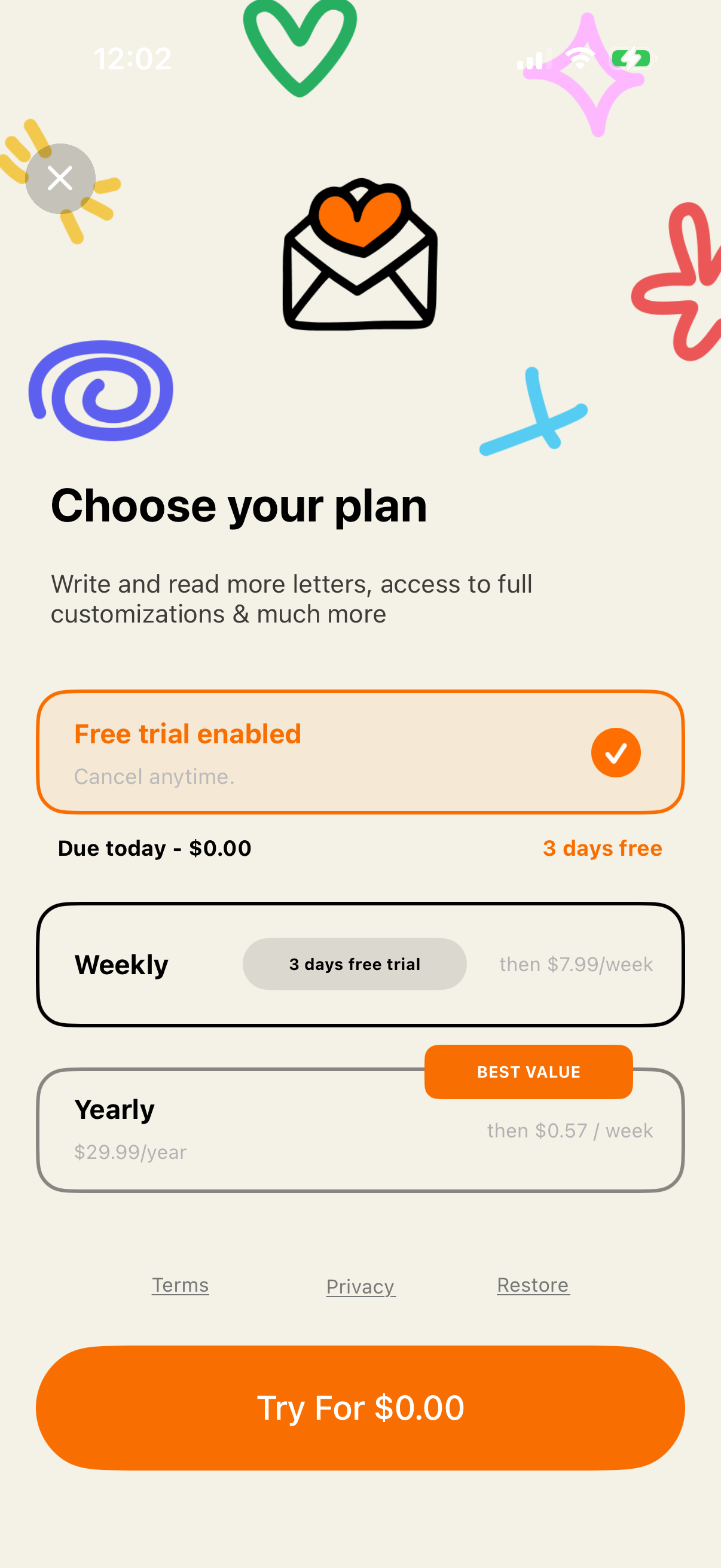
Sincerely1206 × 2622opens the full image 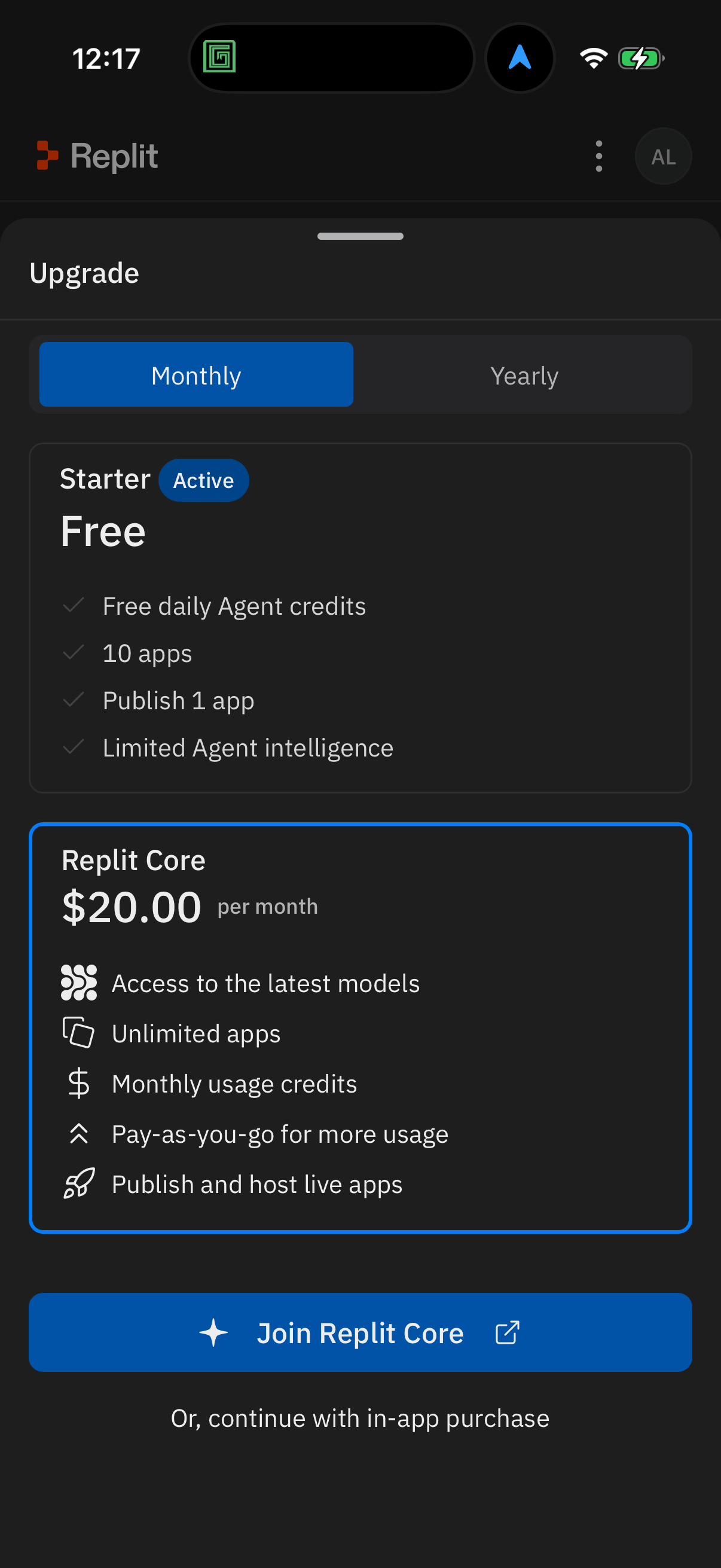
Replit1206 × 2622opens the full image 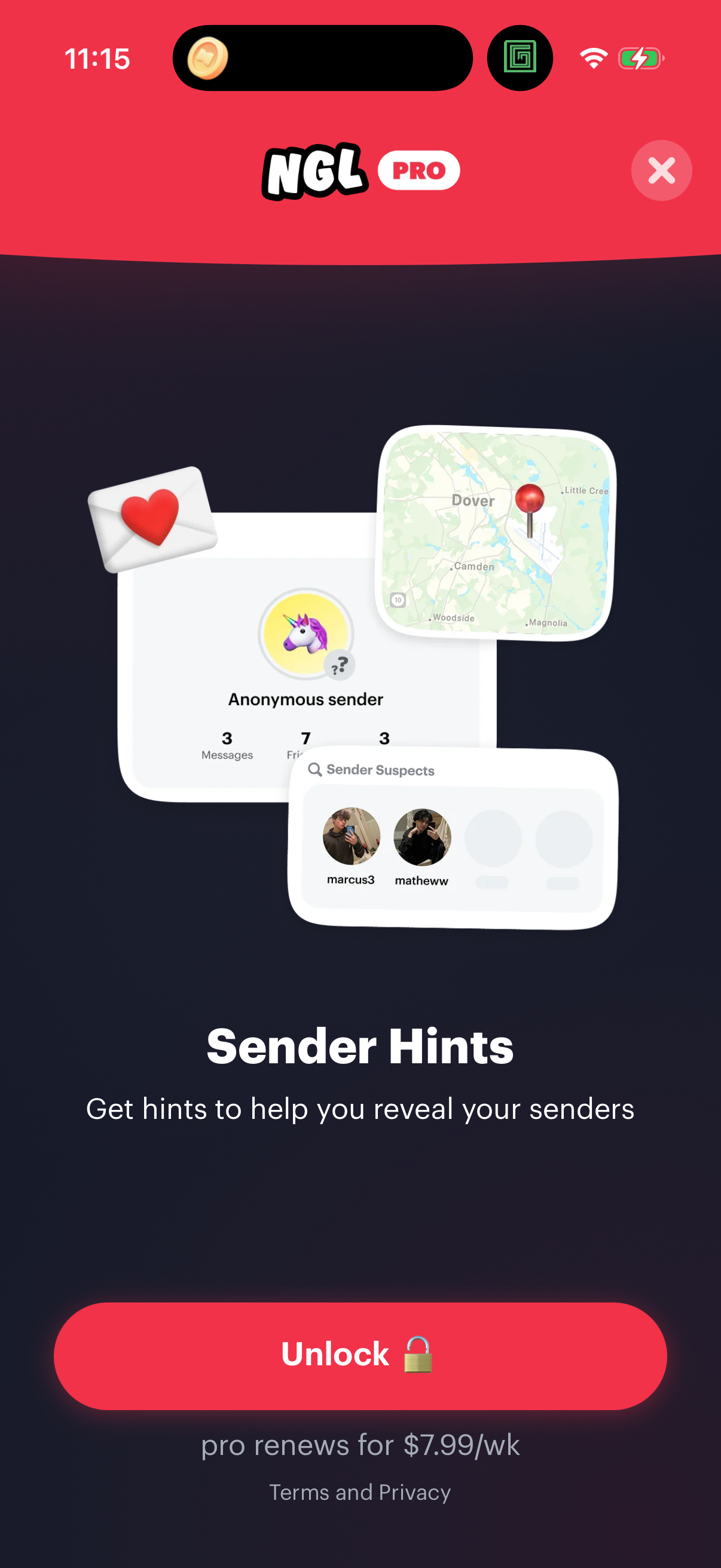
Ngl1206 × 2622opens the full image 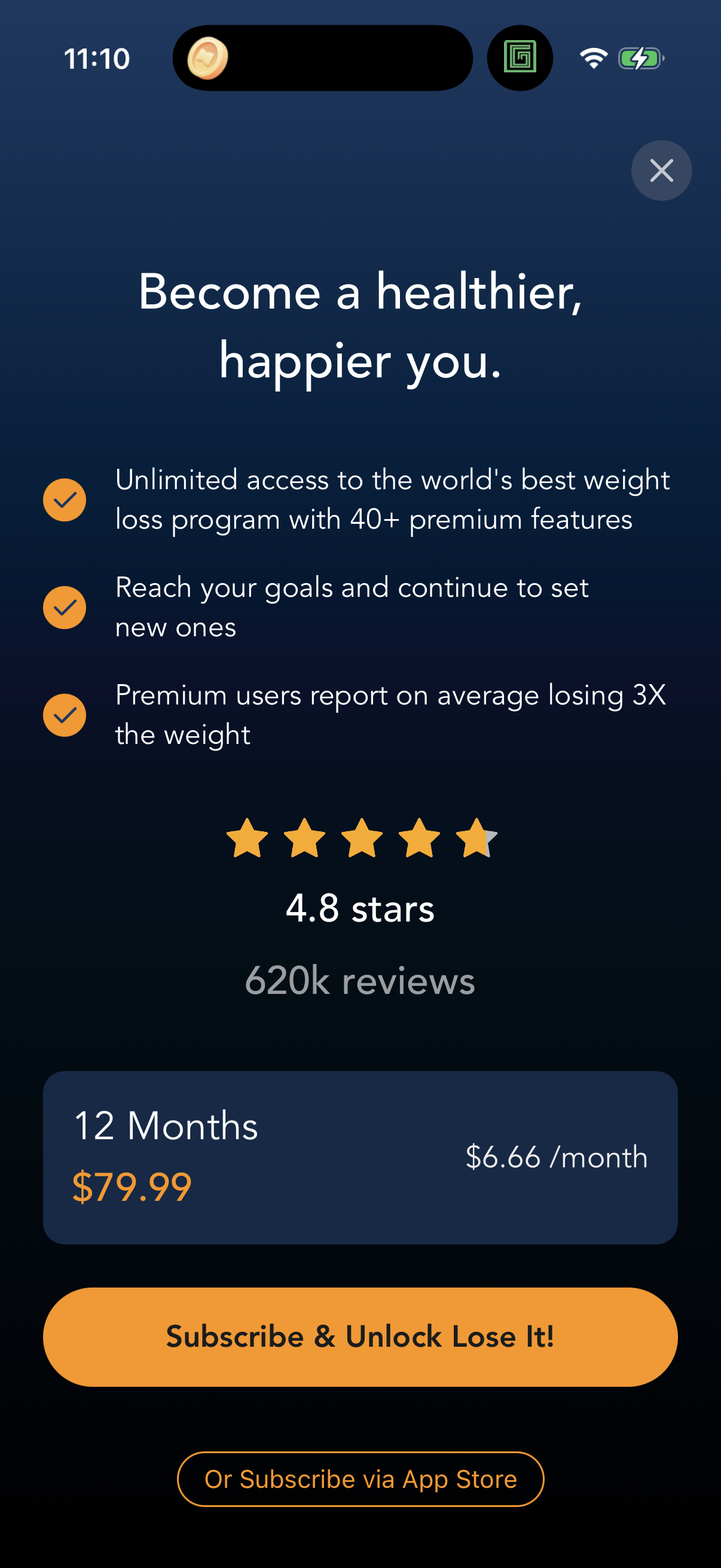
Lose It1206 × 2622opens the full image
The numbers
| # | Stat | Computed from |
|---|---|---|
| [1] | 795 | Total detected paywall CTA changes. |
| [2] | 381 (48%) | Changes whose text mentions price/pricing/currency/per-month/cost; 381/795. |
| [3] | 114 | Distinct companies in the price-display theme. |
| [4] | 304 | Rewritten buttons (before/after differ). |
| [5] | 243 (80%) | Rewrites with no price marker on either button; 243/304. |
| [6] | 20 / 18 / 23 | Price added / removed / on-both-sides among 304 rewrites. |
| [7] | $3.99 to $1.99 | AccuWeather Premium+ monthly price change (qualitative example). |
Methodology
Universe: 795 detected paywall CTA changes, July 2026; the price-display cut is 381 changes across 114 companies. Extraction: regex theme tagging over LLM change text plus button-level price detection. Key caveat: detected diffs with inferred rationale, not measured A/B lift.
Sources
- [1]
Lazyweb Research analysis of 795 detected paywall CTA changes (146 companies, 381 in the price-display theme), July 2026
Detected before/after UI diffs with LLM-inferred rationale (the 'learning' field), not measured A/B outcomes. Some cta_text rows contain descriptive annotations rather than pure button copy; theme tags are regex-over-LLM-text and approximate.
Source: Lazyweb Research — proprietary analysis of real, in-market app screens. Cite as Lazyweb Research, 2026-07-07.