How Do Apps Change the CTA Verb — Continue vs Subscribe vs Try?
- By Ali Abouelatta
- n = 104
- Published
- Updated
- 2 min read
- paywall · monetization · experiments · mobile · ux-patterns · design
Short answer
Across 795 detected paywall CTA changes, 104 (13%) from 48 companies involve the CTA verb or button label itself.source[1] When apps rewrite the button, the most common destination verb is a neutral "Continue" (34 of 304 rewrites), and the clearest published verb shift is from "Continue…" to a trial verb like "Try/Start" (8 rewrites, 7 companies).source[1] Most other verb transitions are too rare to publish individually.
104 of 795 detected paywall CTA changes (13%), from 48 companies, touch the CTA verb or button label itself — Lazyweb Research, July 2026.
Bar chart · Rows
Rows — Where the verb lands
One block is about 1.2 Rows
- continue
- 34
- subscribe
- 17
- start free trial
- 16
- try for free
- 10
The finding
Of 795 detected changes, 104 (13%) across 48 companies involve the CTA verb or button label — a "Continue"/"Next" swapped in or out, or change text that explicitly discusses button copy.source[1] It is a smaller theme than price or trials: apps touch the verb less often than they touch what surrounds it.
Where the verb lands
Among 304 rewritten buttons, the most common resulting verbs are:source[1]
| Landing verb | Rows | Companies |
|---|---|---|
| continue | 34 | 28 |
| subscribe | 17 | 11 |
| start free trial | 16 | 7 |
| try for free | 10 | 6 |
The one directional shift with enough rows to publish is "Continue…" → "Try/Start…": 8 rewrites across 7 companies moved from a generic continue action to an explicit trial verb (the reverse, Try/Start → Continue, is only 4 rows).source[1] SoundCloud's "Continue" → "Try free" is a textbook case.source[1]
How to apply it
The default landing spot is still a neutral "Continue," so a generic button is a defensible baseline, not a mistake.source[1] The evidence-backed directional move is toward naming the trial ("Try/Start") when reducing commitment anxiety is the job. Verb-to-verb transitions like "Continue → Subscribe" appear too rarely (n=1) to treat as a pattern.source[1]
Caveats
Most individual before→after verb-family cells are n<8 and are not published; only the aggregate and the Continue→Try/Start cell clear the bar. All rows are detected diffs, not measured lift.source[1]
Real in-market screens
Screens from real, in-market apps, tracked by Lazyweb Research.
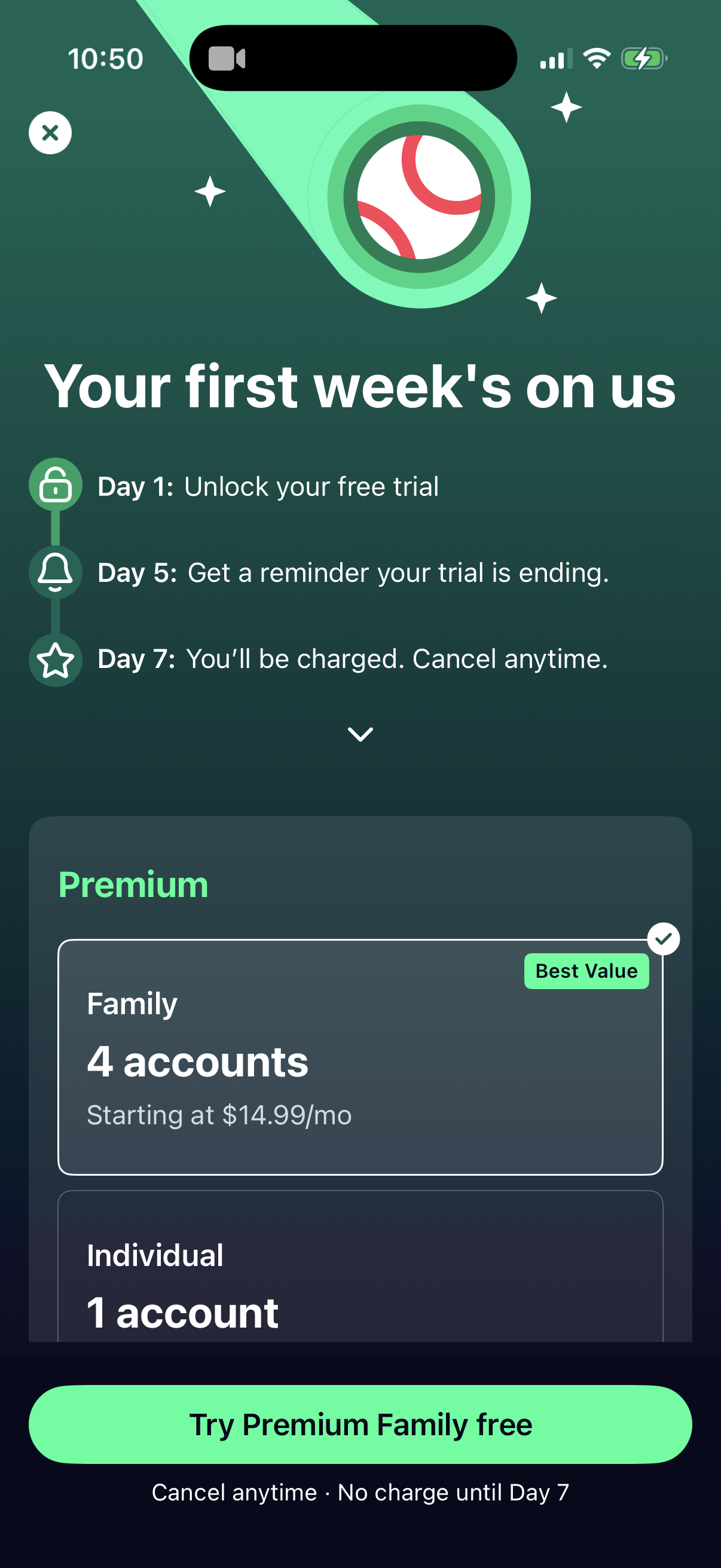
Gamechanger1206 × 2622opens the full image 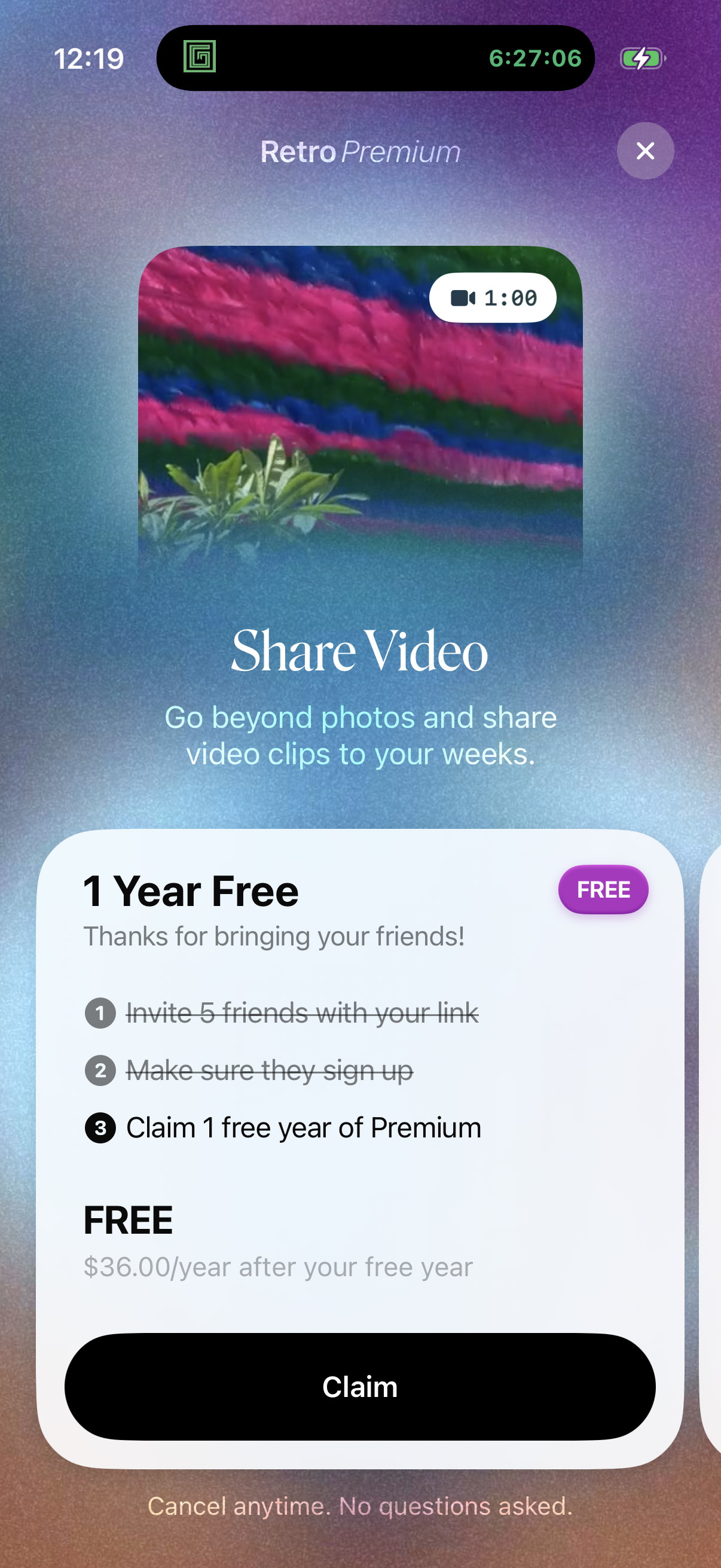
Retro1206 × 2622opens the full image 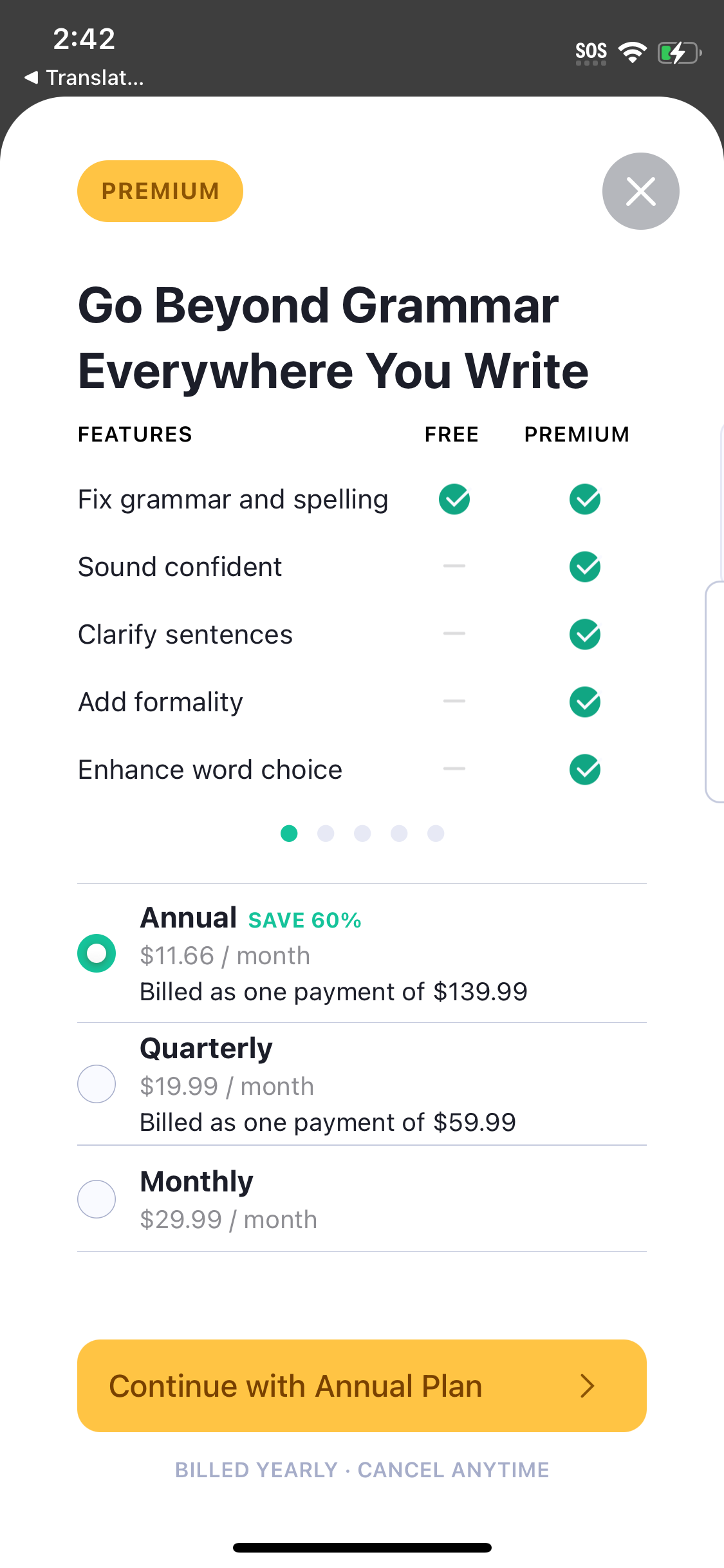
Grammarly1125 × 2436opens the full image 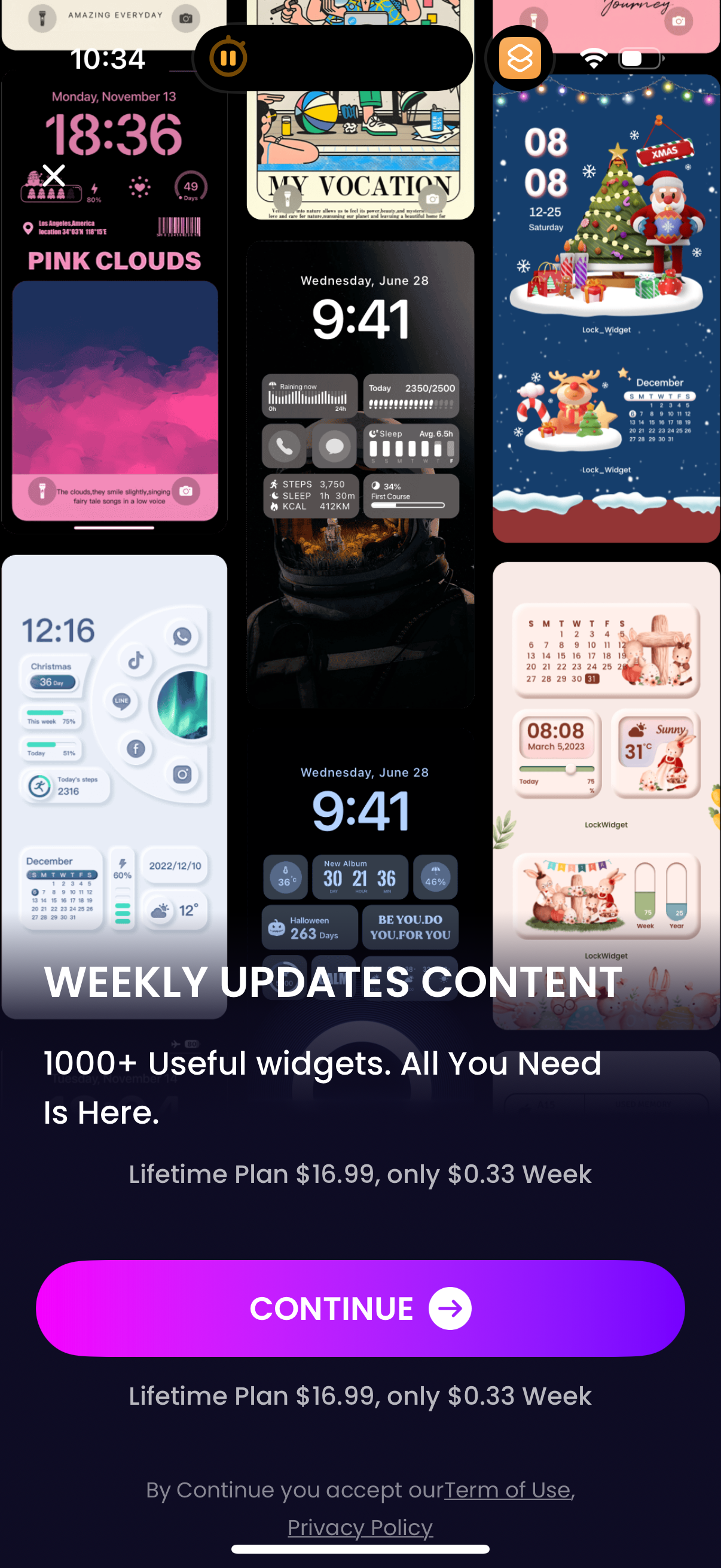
Lockwidget1206 × 2622opens the full image
The numbers
| # | Stat | Computed from |
|---|---|---|
| [1] | 795 | Total detected paywall CTA changes. |
| [2] | 104 (13%) | Changes involving CTA verb / button label; 104/795. |
| [3] | 48 | Distinct companies in the CTA-verb theme. |
| [4] | 8 rewrites / 7 companies | Buttons moving from 'Continue...' to 'Try/Start...' phrasing, among 304 rewrites. |
| [5] | 4 | Reverse direction: 'Try/Start' to 'Continue'. |
| [6] | 34 / 17 / 16 / 10 | Most common cta_text_after: continue / subscribe / start free trial / try for free (rows). |
| [7] | 304 | Rewritten buttons (before/after differ). |
Methodology
Universe: 795 detected paywall CTA changes, July 2026; the CTA-verb cut is 104 changes across 48 companies. Extraction: verb-family classification of before/after button text plus regex over LLM change text. Key caveat: most verb-transition cells are n<8 and suppressed; detected diffs, not measured A/B lift.
Sources
- [1]
Lazyweb Research analysis of 795 detected paywall CTA changes (146 companies, 104 in the CTA-verb theme), July 2026
Detected before/after UI diffs with LLM-inferred rationale (the 'learning' field), not measured A/B outcomes. Some cta_text rows contain descriptive annotations rather than pure button copy; theme tags are regex-over-LLM-text and approximate.
Source: Lazyweb Research — proprietary analysis of real, in-market app screens. Cite as Lazyweb Research, 2026-07-07.