Where do apps place the 'remove ads' upsell, and how common is it?
- By Ali Abouelatta
- n = 751
- Published
- Updated
- 2 min read
- paywall · monetization · upsell · pricing · mobile
Short answer
94 of 751 tagged apps (13%) show a remove-ads or ad-free upsell surface source[1]. On the paywall itself, 114 of 4,406 CTAs sit on an ad-removal-framed paywall where removing ads is the lead value prop, though only 3 buttons literally read 'remove ads' source[2]. The pattern is to frame ad removal in the surrounding copy and let a generic subscribe button close it.
114 of 4,406 paywall CTAs sit on an ad-removal-framed paywall as of July 2026; only 3 buttons literally say 'remove ads'.
The finding: frame it in copy, not the button
13% of tagged apps (94 of 751) show a remove-ads / ad-free upsell source[1]. On paywalls, 114 of 4,406 CTAs are framed around ad removal in the title or subtitle, but the button text itself almost never says 'remove ads' (just 3 literal instances) source[2]. The dominant pattern is a subscribe/try button under copy like 'Enjoy ad-free' rather than a button labeled with the ad-removal benefit.
Real examples of ad-removal framing
SoundCloud has 28 ad-free-framed CTAs, the highest of any app, with ad-free listening as the core upgrade hook source[3]. YouTube Music (20 ad-free CTAs) leads its subscription pitch with 'listen ad-free, offline & with your screen off' source[3]. Wattpad (18) combines a discount with ad removal ('Save 33% on Premium ad-free reading') source[3]. PlugShare, a utility, sells a low-price ad-removal-only subscription at $0.99/mo source[3]. IAM uses ad-fatigue framing directly: 'Tired of ads?' source[3].
How to apply it
Put the ad-removal promise in the paywall headline and subtitle where 114 CTAs concentrate it, and keep the button generic ('Subscribe', 'Try free') rather than 'Remove ads' source[2]. If ad removal is your entire value prop (utilities like PlugShare, WeatherRadar), a low-price single-benefit subscription is a proven shape in the corpus source[3].
Caveats
The 94-app figure is tag-derived and deduped by company, a lower bound source[1]. The 114 CTA count is a keyword match over surrounding title/subtitle across 4,406 CTAs source[2]. Named examples are illustrative, not the full set.
Real in-market screens
Screens from real, in-market apps, tracked by Lazyweb Research.

Etsy1206 × 2622opens the full image 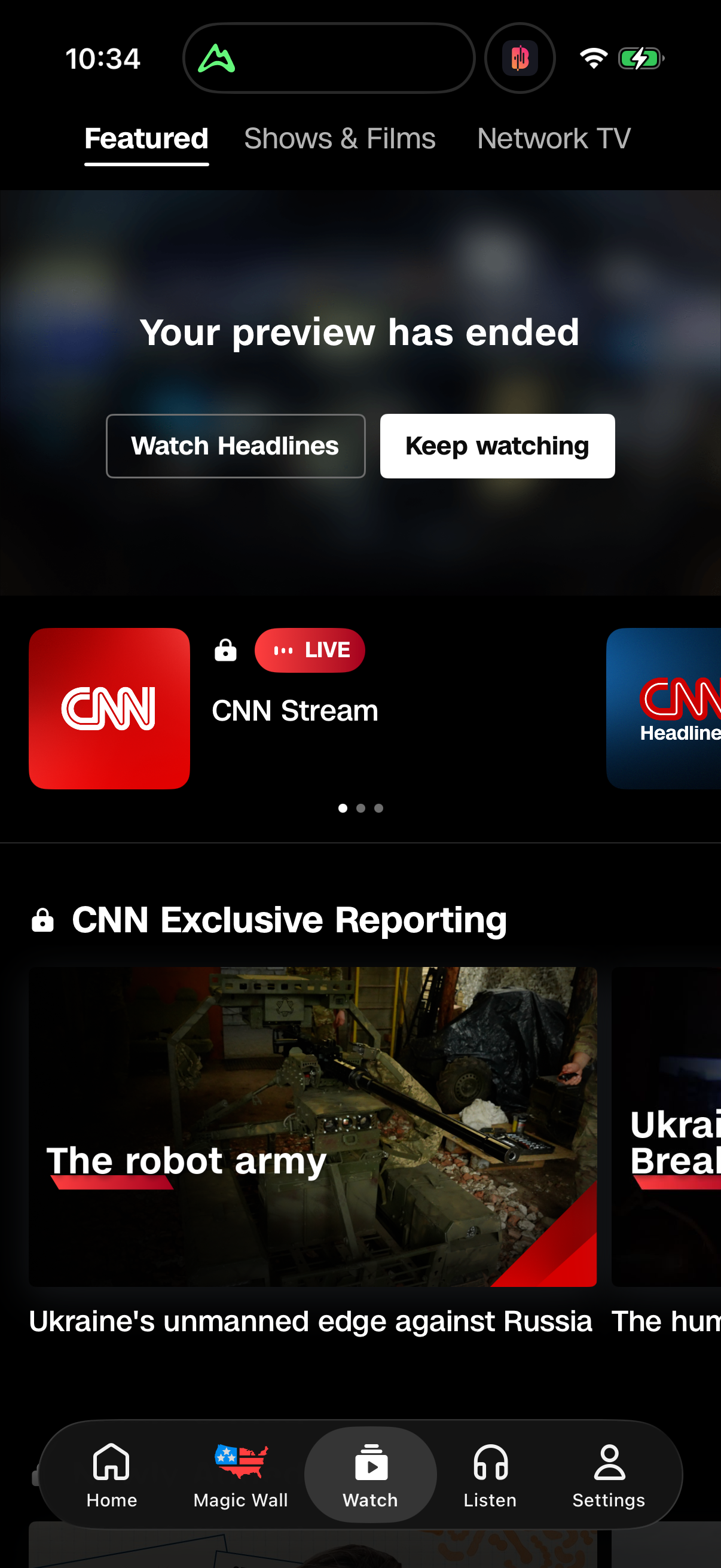
Alt1206 × 2622opens the full image 
Adidas1206 × 2622opens the full image 
Xfinity1206 × 2622opens the full image
The numbers
| # | Stat | Computed from |
|---|---|---|
| [1] | 94 of 751 tagged apps (13%) show a remove-ads / ad-free upsell | distinct companies with a screenshot tagged remove-ads/ad-free/no-ads |
| [2] | 114 of 4,406 paywall CTAs sit on an ad-removal-framed paywall; 3 buttons literally say 'remove ads' | paywall_ctas where surrounding title/subtitle matches ad-free/remove-ad/no-ads |
| [3] | SoundCloud 28, YouTube Music 20, Wattpad 18 ad-free-framed CTAs; PlugShare sells ad-removal at $0.99/mo | per-company counts of ad-free-framed paywall CTAs and captured paywall copy |
Methodology
Universe: 751 tagged apps and 4,406 paywall CTAs across ~800 tracked apps. Method: tag and surrounding-copy keyword matches, deduped by company, July 2026. Caveat: keyword-derived lower bounds; named examples illustrative.
Sources
- [1]
Lazyweb Research analysis of 751 tagged apps (~800 tracked apps), July 2026
Tag-derived remove-ads upsell prevalence, deduped by company.
- [2]
Lazyweb Research analysis of 4,406 paywall CTAs (~800 tracked apps), July 2026
Ad-removal framing matched over surrounding title/subtitle; 3 literal-button instances.
- [3]
Lazyweb Research analysis of 4,406 paywall CTAs (~800 tracked apps), July 2026
Named ad-free-framed paywall examples from captured screens.
Source: Lazyweb Research — proprietary analysis of real, in-market app screens. Cite as Lazyweb Research, 2026-07-07.