Where should social proof appear on a subscription paywall?
Put social proof next to the premium benefit it supports. Speechify paired advanced AI voices with voice-avatar imagery and a weekly-starts proof bar, making the offer feel both differentiated and widely adopted on the same decision surface.
- By Ali Abouelatta
- 3 visuals
- 1 min read
- monetization · social proof · paywall · AI
The evidence
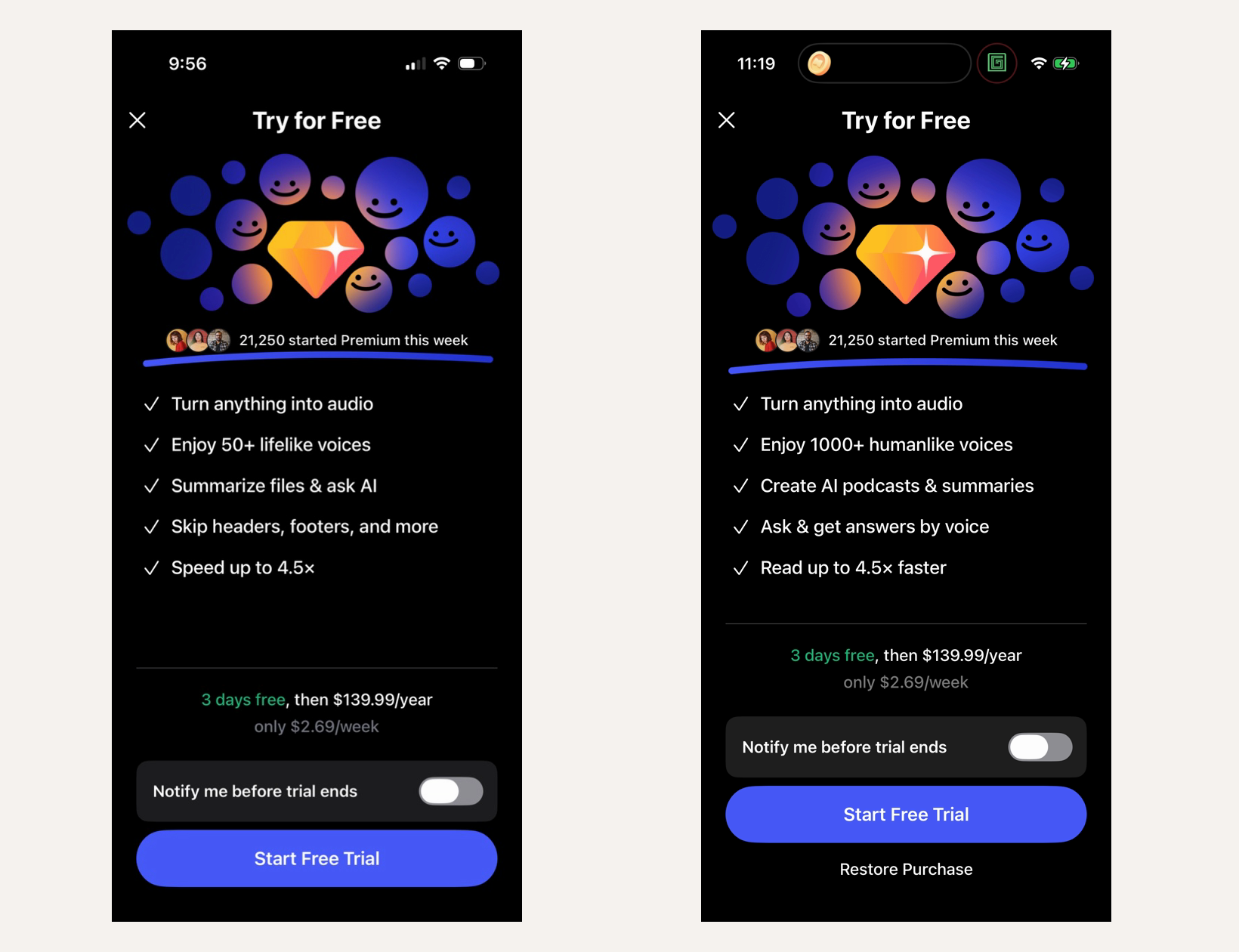
Lazyweb Research compared Speechify paywall screenshots where the experiment attached social proof directly to the premium-feature story.
What changed
- Control: a less integrated premium-feature and proof layout.
- Experiment: advanced AI voices positioning, voice-avatar imagery, and weekly-starts social proof.
- The proof moved into the same surface as the differentiated feature.
Why it matters
- Social proof works harder when it validates the exact paid feature the user is evaluating.
- For AI products, concrete feature imagery can make abstract capability claims easier to trust.
Every visual
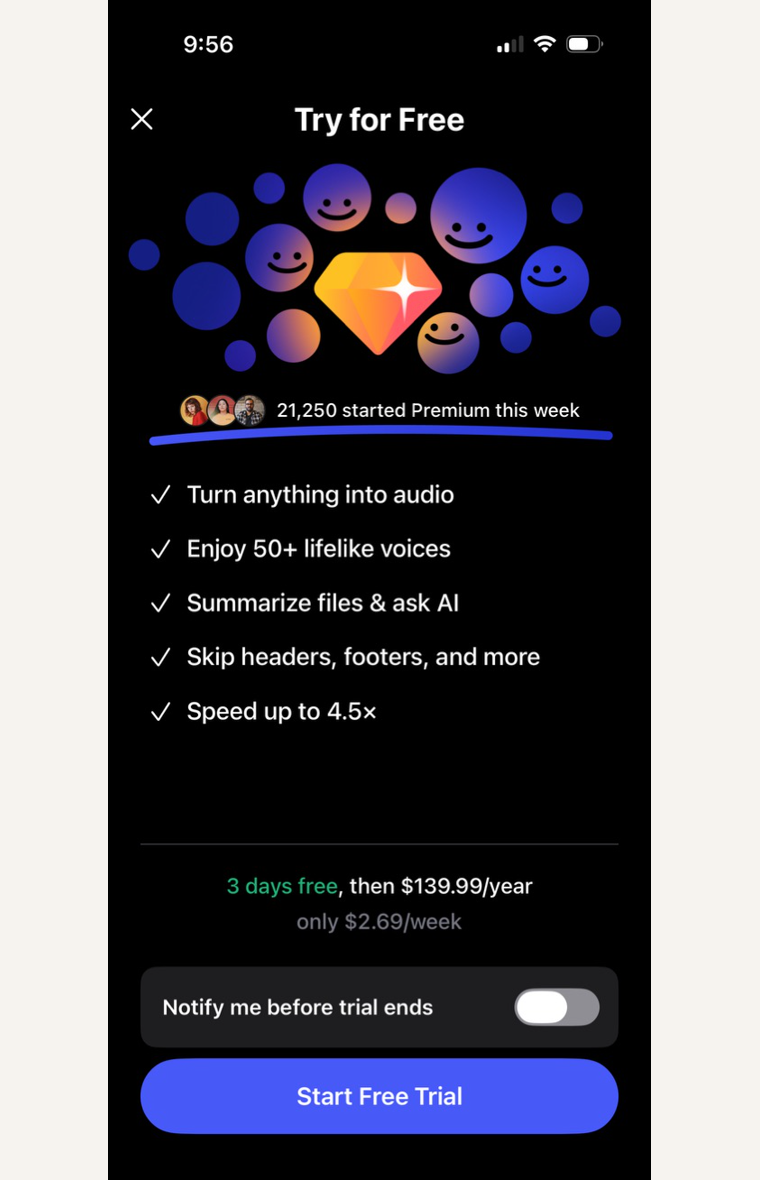
The control paywall uses a different premium presentation without pairing the core feature as tightly with adoption proof.760 × 1180opens the full image 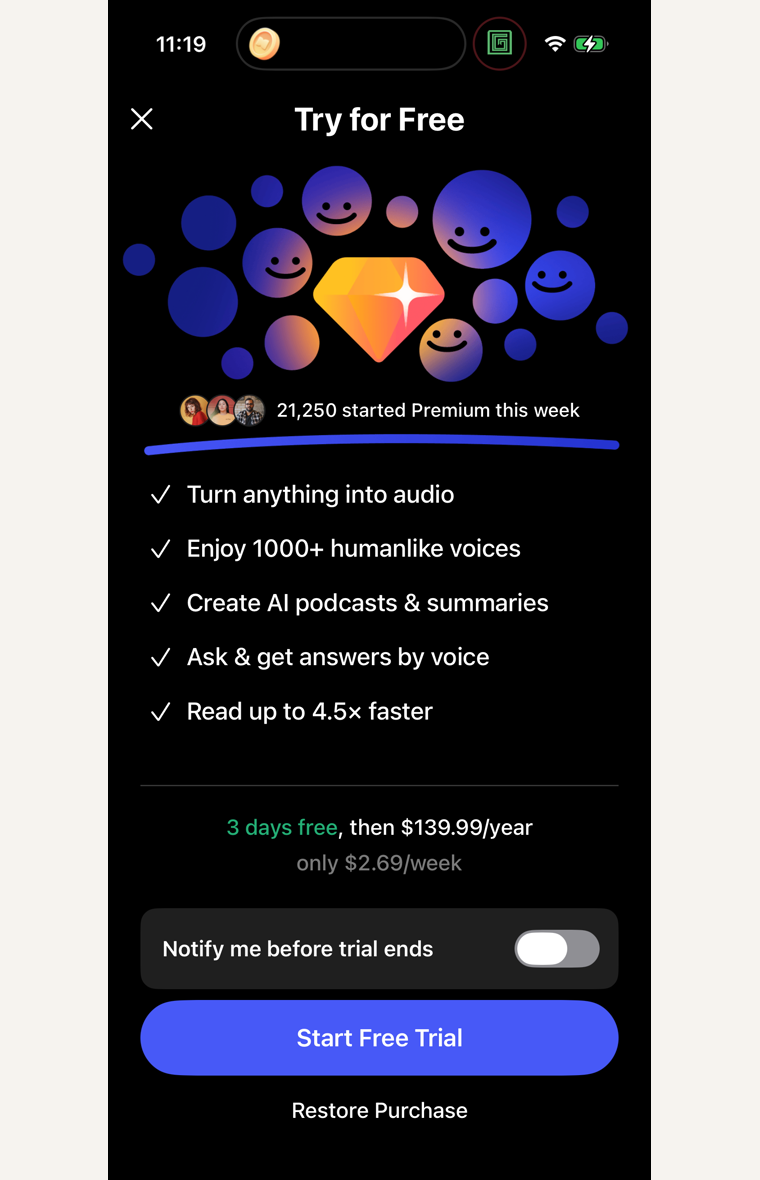
The experiment paywall emphasizes advanced AI voices, shows voice avatars, and adds a weekly-starts proof bar to support the upgrade decision.760 × 1180opens the full image
Sources
- [1]
Lazyweb Research: Most up to date mobile A/B test library tracking +1000 apps weekly.
Methodology
Product-experiment write-up by Ali Abouelatta, dated on June 2, 2026. Source links are listed below.