Single-select vs multi-select: how do apps format onboarding quiz questions?
- By Ali Abouelatta
- n = 80
- Published
- Updated
- 2 min read
- onboarding · signup · ux-patterns · design · experiments
Short answer
Of 80 apps where the select-mode is stateable, 19 use single-select and 7 use multi-select ('select all that apply') — most quiz screens don't verbalize the mode at all.source[1] Single-select dominates the stateable subset by roughly 3 to 1. Default to single-select for goal and demographic questions, and reserve multi-select for genuinely multi-answer prompts like interests.
Among 80 apps with stateable select-mode, 19 use single-select vs 7 multi-select — Lazyweb Research, July 2026.
Bar chart · Apps (of 80 stateable)
Apps (of 80 stateable) — The finding
One block is about 0.7 Apps (of 80 stateable)
- Single-select
- 19[1]
- Multi-select
- 7[1]
- Not stated
- remainder[1]
The finding
Select-mode is rarely stated in vision text, so this is a lower-bound view. Of 80 apps with detectable framing, 19 use single-select and 7 use multi-select ('select all that apply').source[1] Among apps where the mode is knowable, single-select leads roughly 3 to 1.
How to apply it
Single-select is the safe default for goal, demographic, and experience-level questions — one answer, immediate advance, minimal cognitive load. capcut's single-role choice and codeacademy-go's single experience-level pick are clean single-select examples.source[2]
Use multi-select only when the question genuinely has multiple true answers, such as interests or content preferences, and label it explicitly ('select all that apply') so users don't assume single-select and tap through. couple-joy's multiple-choice tiles show how a well-structured choice screen reads.source[3]
Caveats
The true single-vs-multi split is unknown because most quiz screens don't verbalize the mode; 19 vs 7 is only 'of apps where the mode is stateable' (26 of 80).source[1] Both counts are lower bounds. Don't extrapolate the ratio to all quiz apps — treat it as directional evidence that single-select is more common.
Real in-market screens
Screens from real, in-market apps, tracked by Lazyweb Research.
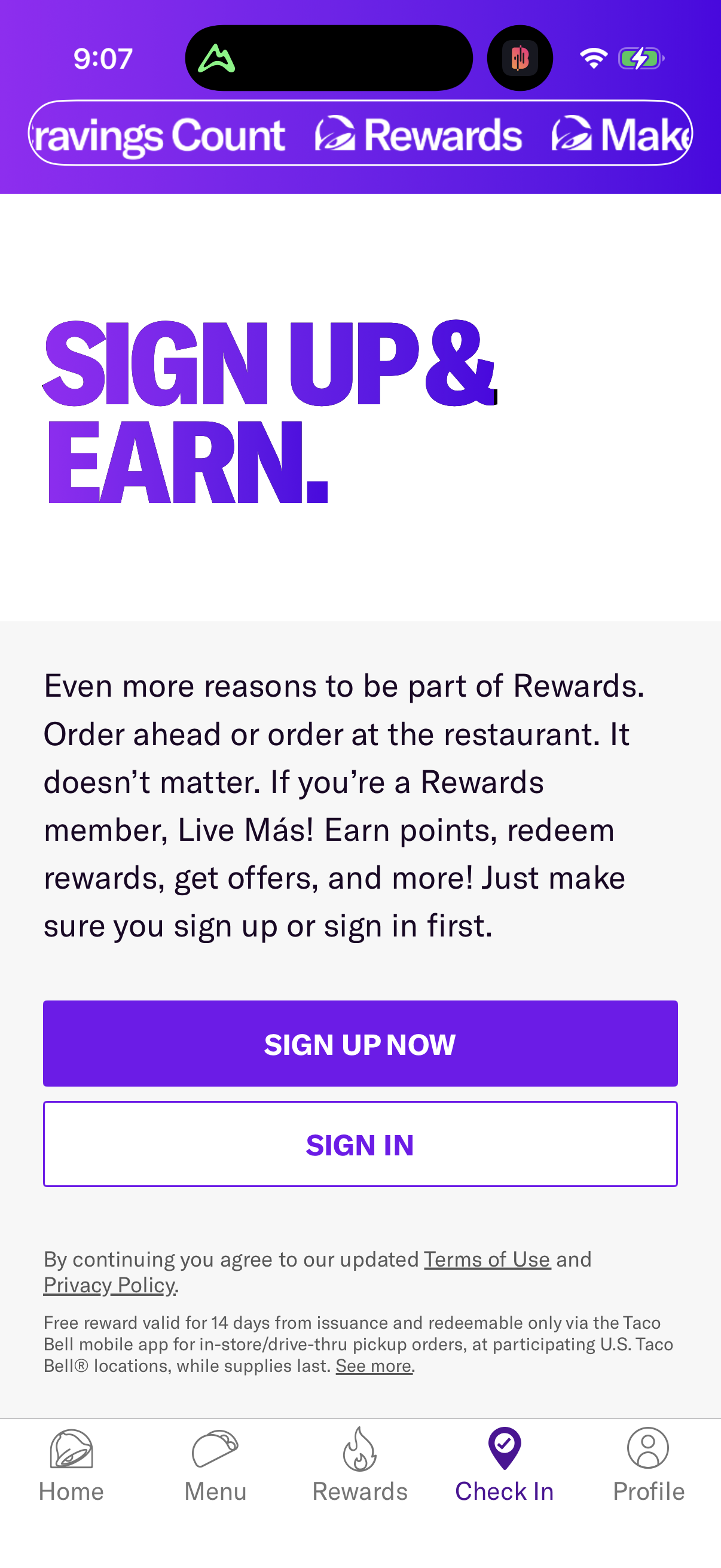
Taco Bell1206 × 2622opens the full image 
Memrise1206 × 2622opens the full image 
Life3601206 × 2622opens the full image 
Honey1290 × 2796opens the full image
The numbers
| # | Stat | Computed from |
|---|---|---|
| [1] | Of 80 apps with detectable framing: 19 single-select, 7 multi-select | single_vs_multi_select |
| [2] | capcut single role; codeacademy-go single experience-level | qualitative capcut; qualitative codeacademy-go |
| [3] | couple-joy multiple-choice tiles | qualitative couple-joy |
Methodology
Universe: 80 quiz apps where select-mode is stateable in the vision text. Method: regex over vision_description for single- vs multi-select framing, deduped by company, July 2026. Caveat: most screens don't state the mode; 19 vs 7 is a lower bound, not the full split.
Sources
- [1]
Lazyweb Research analysis of 80 apps (Lazyweb quiz-framing corpus), July 2026
Of 80 apps with detectable select-mode framing, 19 single-select vs 7 multi-select; most screens don't state the mode, so both are lower bounds.
- [2]
Lazyweb Research analysis of 119 apps (Lazyweb onboarding-quiz corpus), July 2026
capcut single-role selection; codeacademy-go single experience-level choice.
- [3]
Lazyweb Research analysis of 119 apps (Lazyweb onboarding-quiz corpus), July 2026
couple-joy multiple-choice tiles with progress indicator.
Source: Lazyweb Research — proprietary analysis of real, in-market app screens. Cite as Lazyweb Research, 2026-07-07.
Explore the evidence
- Full 45-frame August 2026 capture
- Three captured screens · August 2026