Should you offer a 14-day free trial, and which apps do?
- By Ali Abouelatta
- n = 31
- Published
- Updated
- 2 min read
- paywall · trials · monetization · saas · onboarding
Short answer
Only 12 distinct companies advertise a 14-day trial (31 mentions), versus 42 for 7-day — it is the choice of tools that need setup time, not a mainstream default.source[1]source[2] The named 14-day users are telling: Termius, Canva, Adobe Express, and Zoom, all products with a real learning curve. Reach for 14 days when your value takes more than a week to land.
12 companies advertise a 14-day trial vs 42 for 7-day — a setup-heavy-tool pattern — Lazyweb Research, July 2026.
The finding
14-day (including '2-week') trials appear in 31 primary CTA mentions (1.6% of 1,886), from 12 distinct companies.source[1] That makes it the third-most-common length by company count, behind 7-day (42) and ahead of 3-day (9) and 30-day (7).source[2]
The named 14-day cohort clusters around productivity and creative tools: Canva ('Try Canva's most loved features free for 14 days'), Adobe Express ('Start 14 day free trial'), Zoom ('Try free for 14 days', Zoom Workplace Pro), and Termius.source[1] These are products where a user cannot judge value in a single session — they need to build a project, invite a team, or integrate the tool into a workflow.
How to apply it
Choose 14 days when time-to-value exceeds a week: complex setup, team invitations, data import, or workflow integration. The pattern in the data is unambiguous — 14-day users are professional tools, not habit or content apps.
If your product shows value within a session or two, 14 days mostly extends free usage without improving conversion, and 7-day is the stronger default (42 companies). The 14-day decision is really a question about your activation curve: if most users hit their 'aha' after day 7, extend; if before, don't.
Caveats
14-day is a small sample: 31 mentions from 12 companies, so treat it as a directional pattern, not a precise benchmark.source[1] Detection uses (14|fourteen)[- ]day|2[- ]week regex over button plus adjacent copy; plan-card-only lengths are missed. Company names are drawn from extracted CTA context. July 2026 pull.
Real in-market screens
Screens from real, in-market apps, tracked by Lazyweb Research.
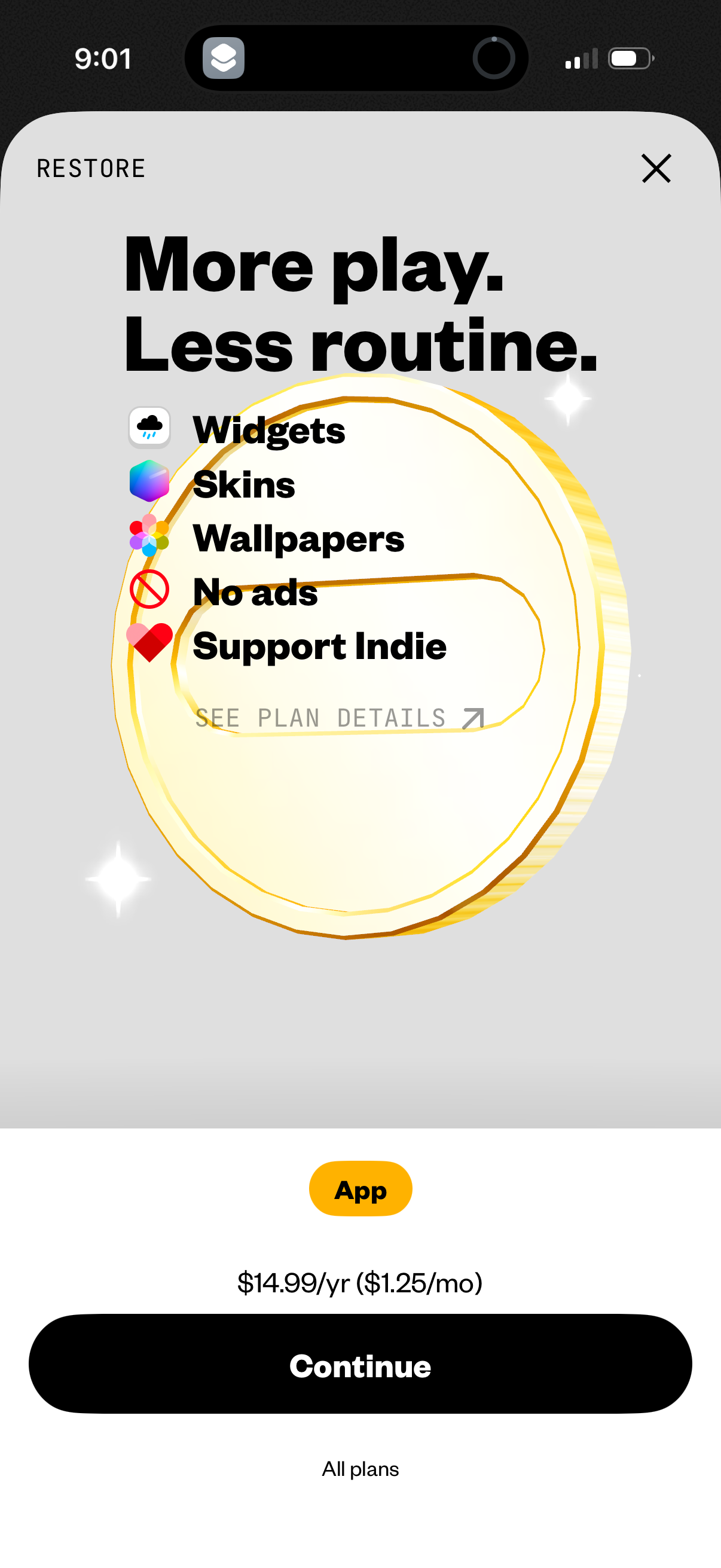
Habits1206 × 2622opens the full image 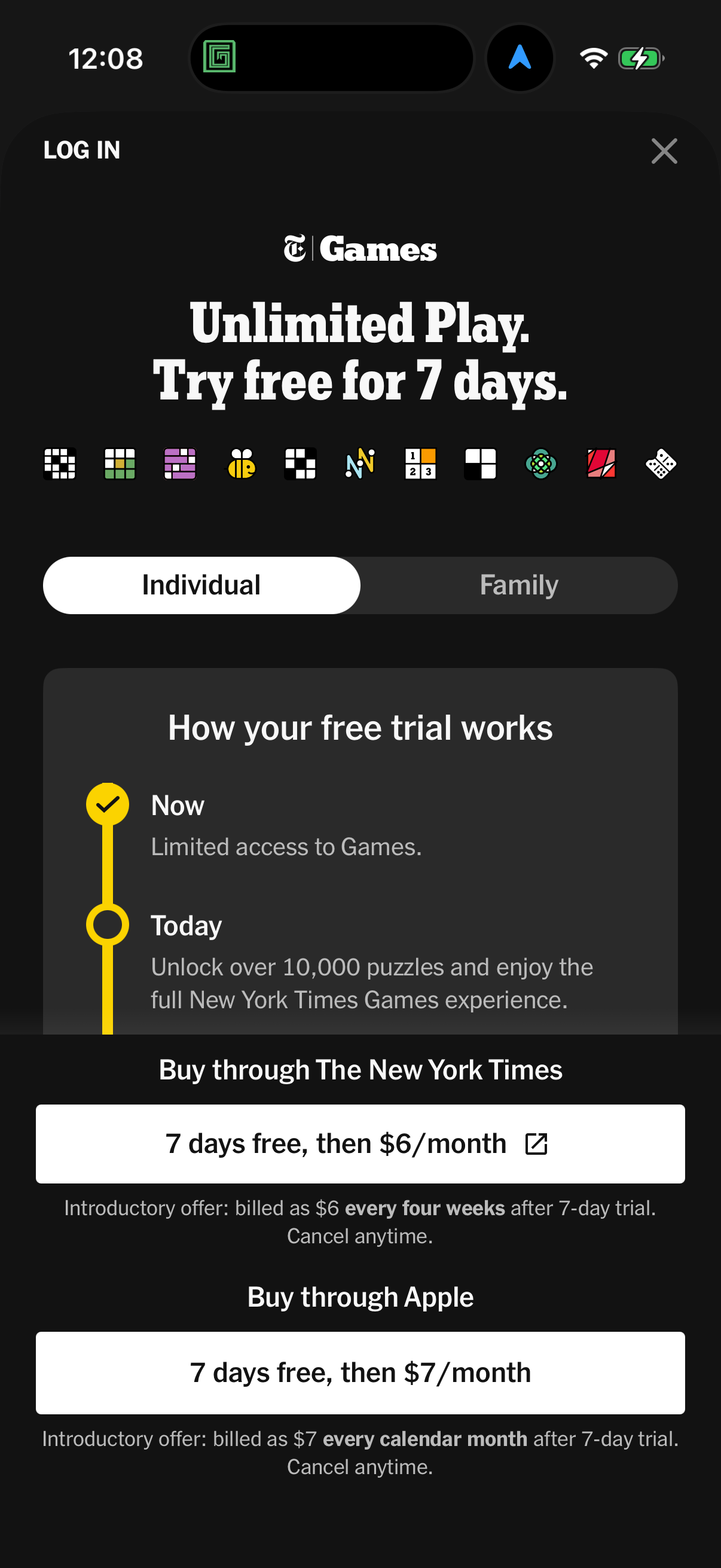
Nyt Games1206 × 2622opens the full image 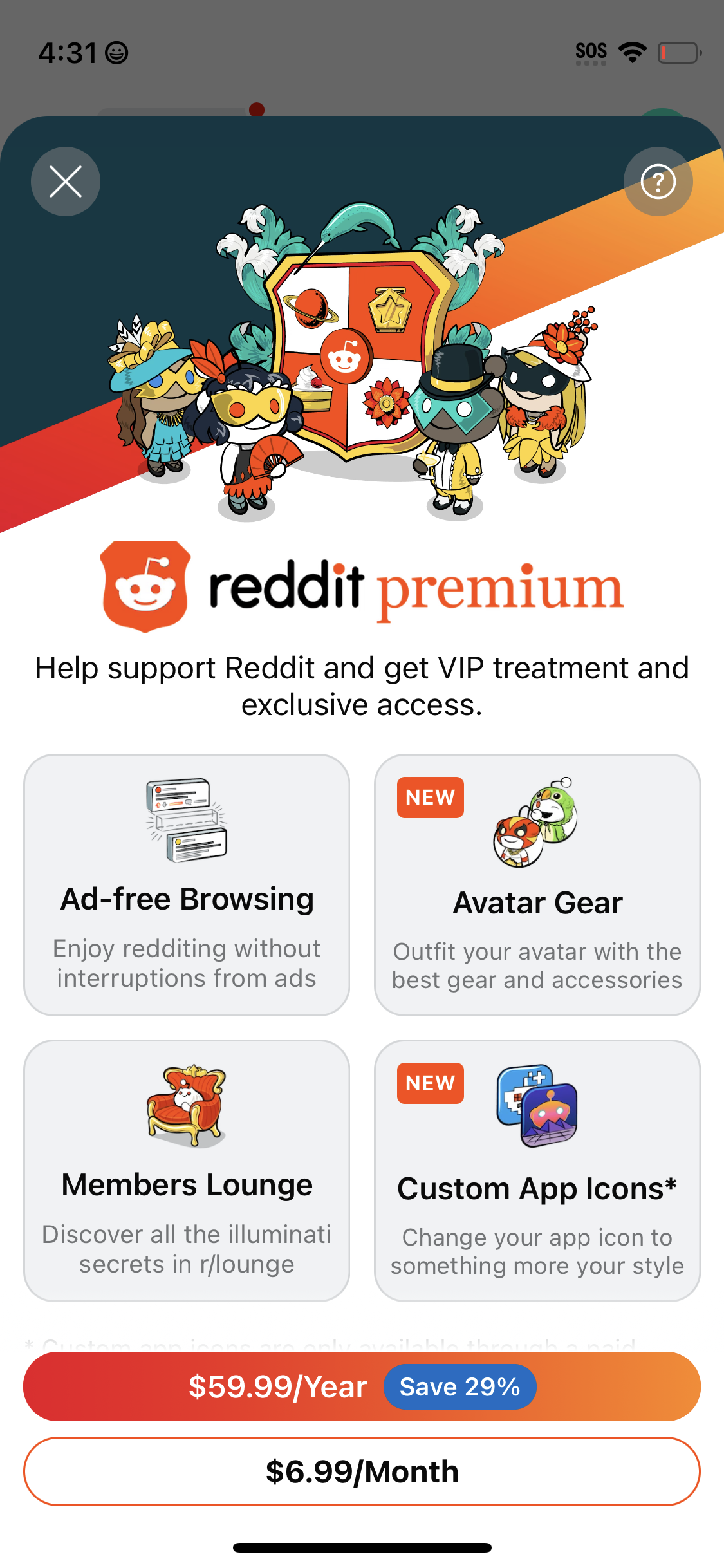
Reddit1125 × 2436opens the full image 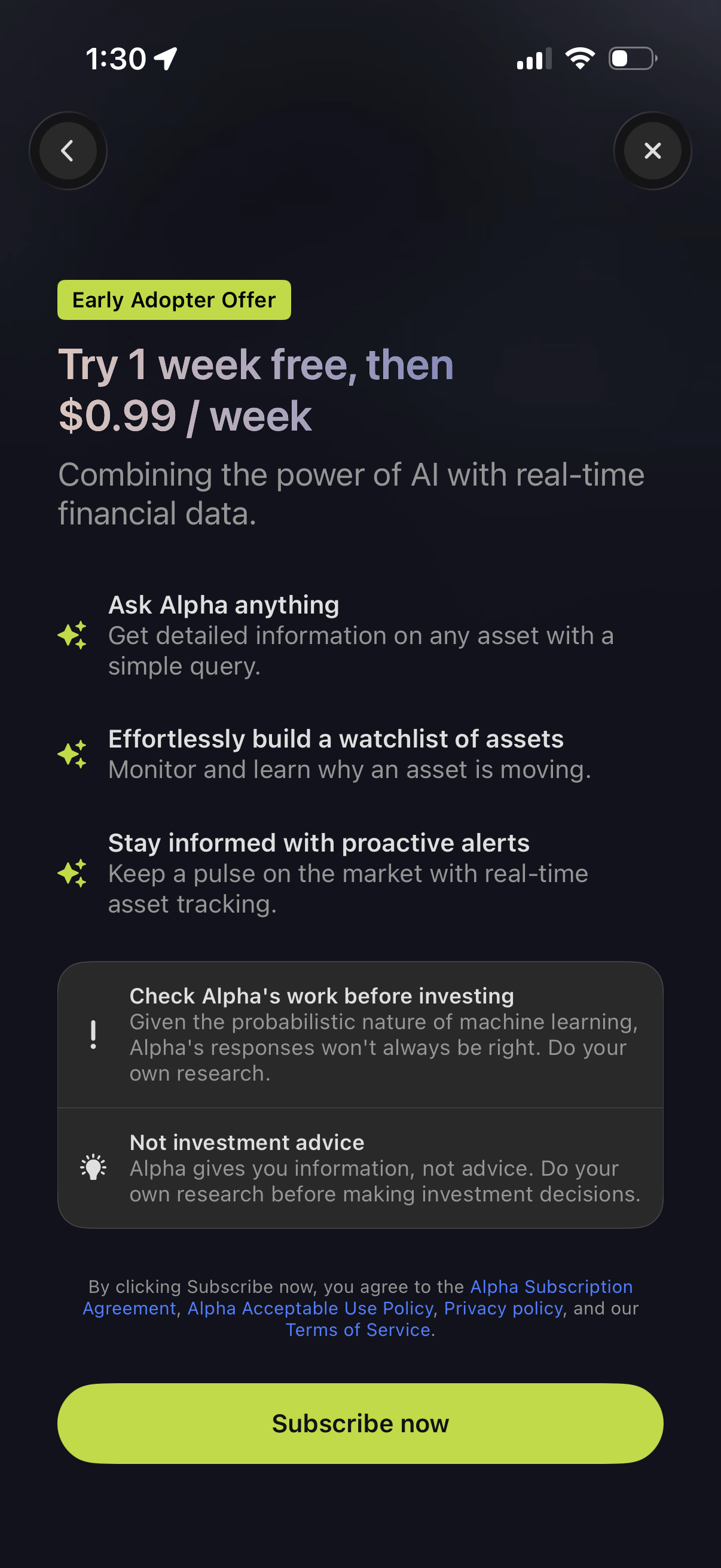
Alpha1206 × 2622opens the full image
The numbers
| # | Stat | Computed from |
|---|---|---|
| [1] | 14-day 31 mentions (1.6% of 1,886), 12 companies; examples Canva, Adobe Express, Zoom, Termius | trial_length_14day, qualitative 14-day examples |
| [2] | company rank: 7-day 42, 14-day 12, 3-day 9, 30-day 7 | trial_length_companies |
Methodology
Universe: 14-day trial mentions among 1,886 primary CTAs across ~800 tracked apps, July 2026. Small sample (12 companies) — directional. Regex over button plus adjacent copy; plan-card-only lengths excluded.
Sources
- [1]
Lazyweb Research analysis of 14-day trial mentions in primary CTAs (~800 tracked apps), July 2026
14-day/2-week regex over button plus adjacent copy; named examples from extracted copy.
- [2]
Lazyweb Research analysis of 63 length-advertising companies (~800 tracked apps), July 2026
Company-deduped length ranking.
Source: Lazyweb Research — proprietary analysis of real, in-market app screens. Cite as Lazyweb Research, 2026-07-07.