Why do registration paywalls look simpler than in-app paywalls?
Registration paywalls often show less feature and benefit detail than later in-app paywalls because they appear before the user has full product context. Ali observed this pattern while reviewing more than 100 onboarding flows, especially in apps with multiple subscription tiers.
- By Ali Abouelatta
- 3 visuals
- 1 min read
- monetization · registration paywalls · onboarding · conversion
The evidence
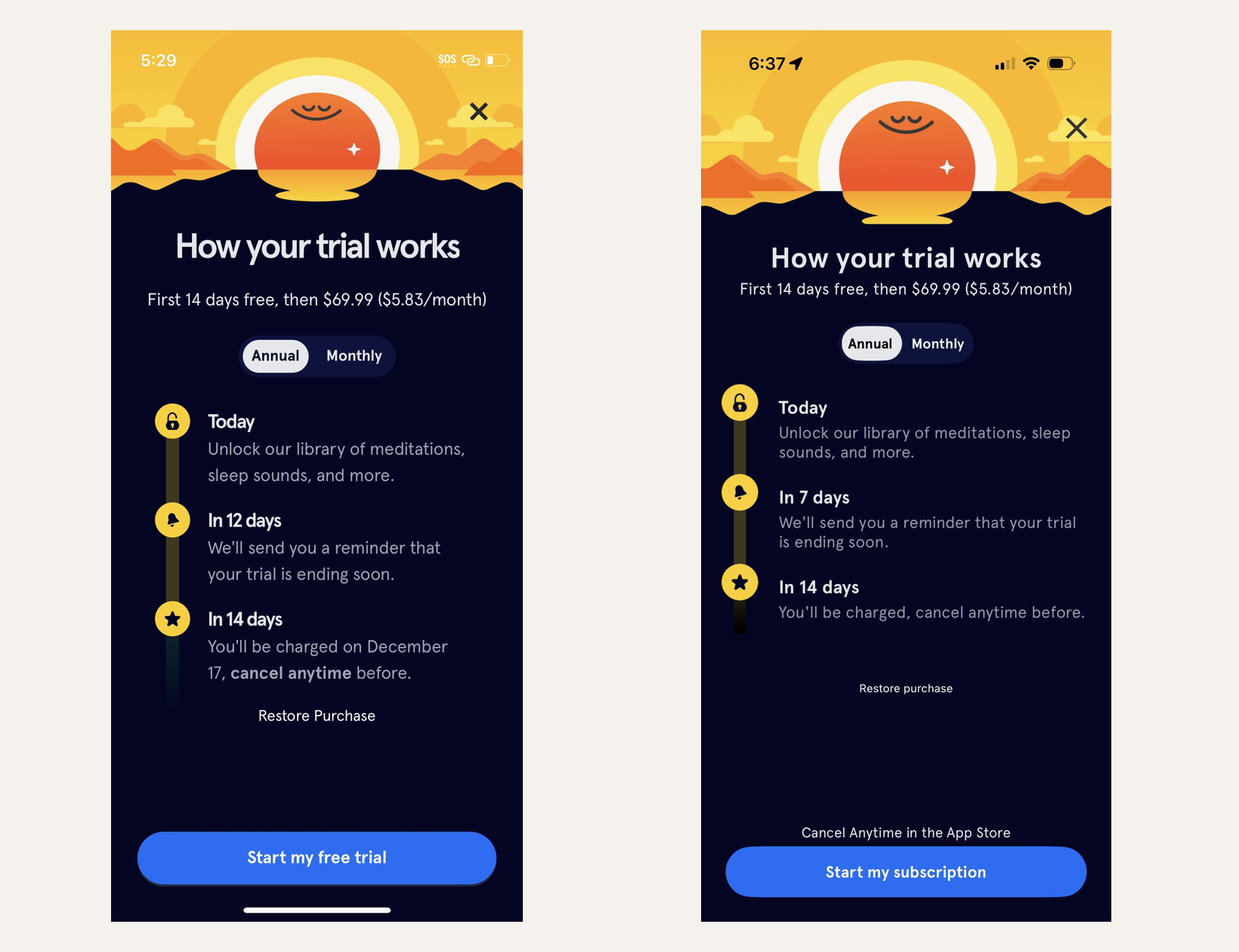
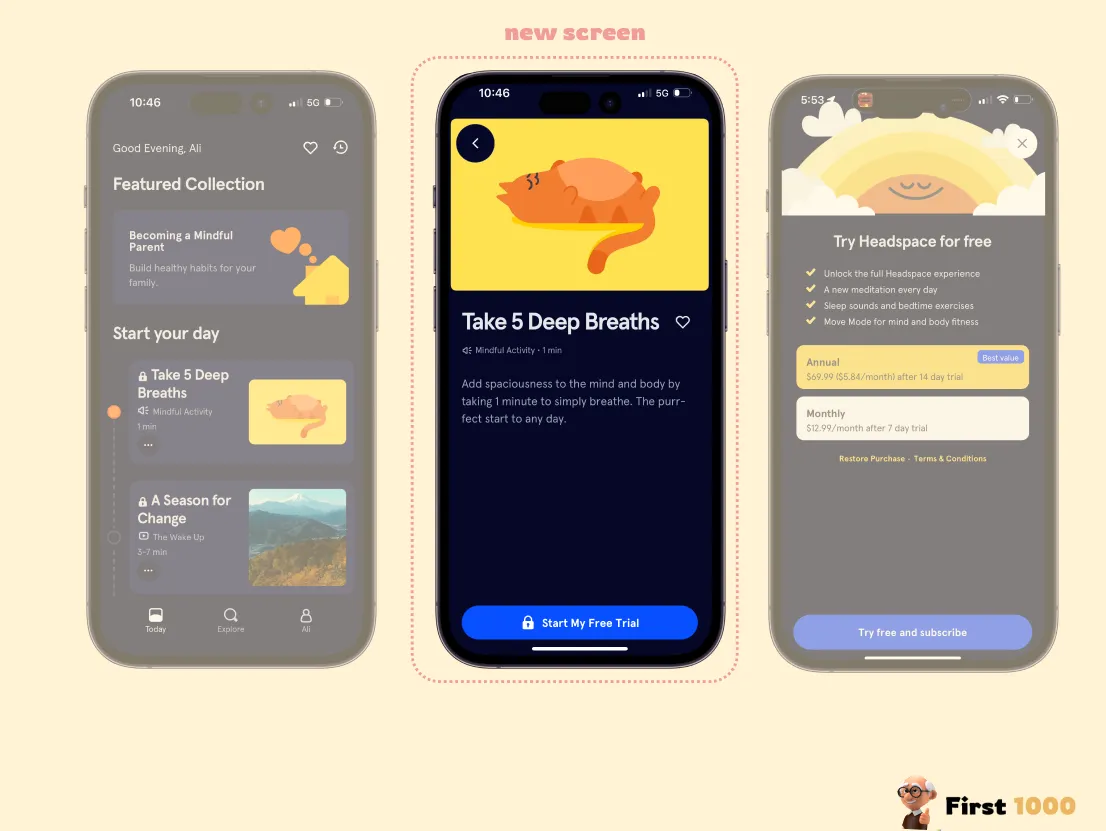
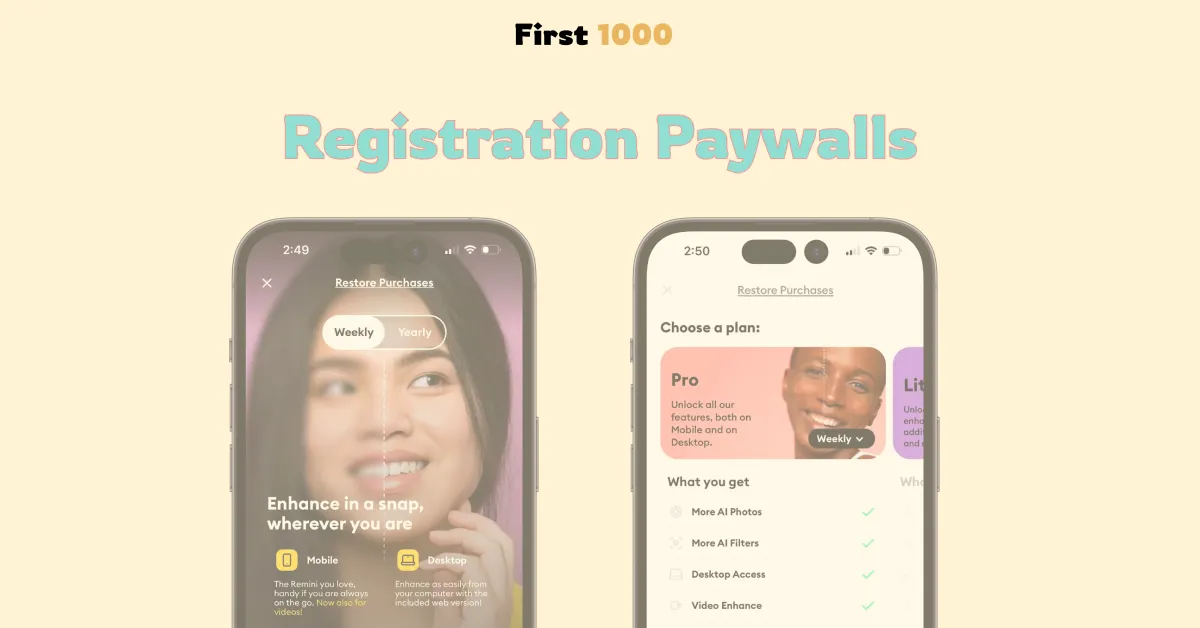
The paired screenshots show the same product category using simpler registration paywalls and more explanatory post-registration paywalls.
What changed
- Registration paywalls reduce context and benefit detail.
- Later paywalls provide more feature explanation because the user has more product context.
- The pattern is especially common where multiple subscription tiers need explanation.
Why it matters
- A first paywall should not always mirror an in-app upsell paywall.
- The right amount of context depends on where the paywall appears in the user journey.
Every visual
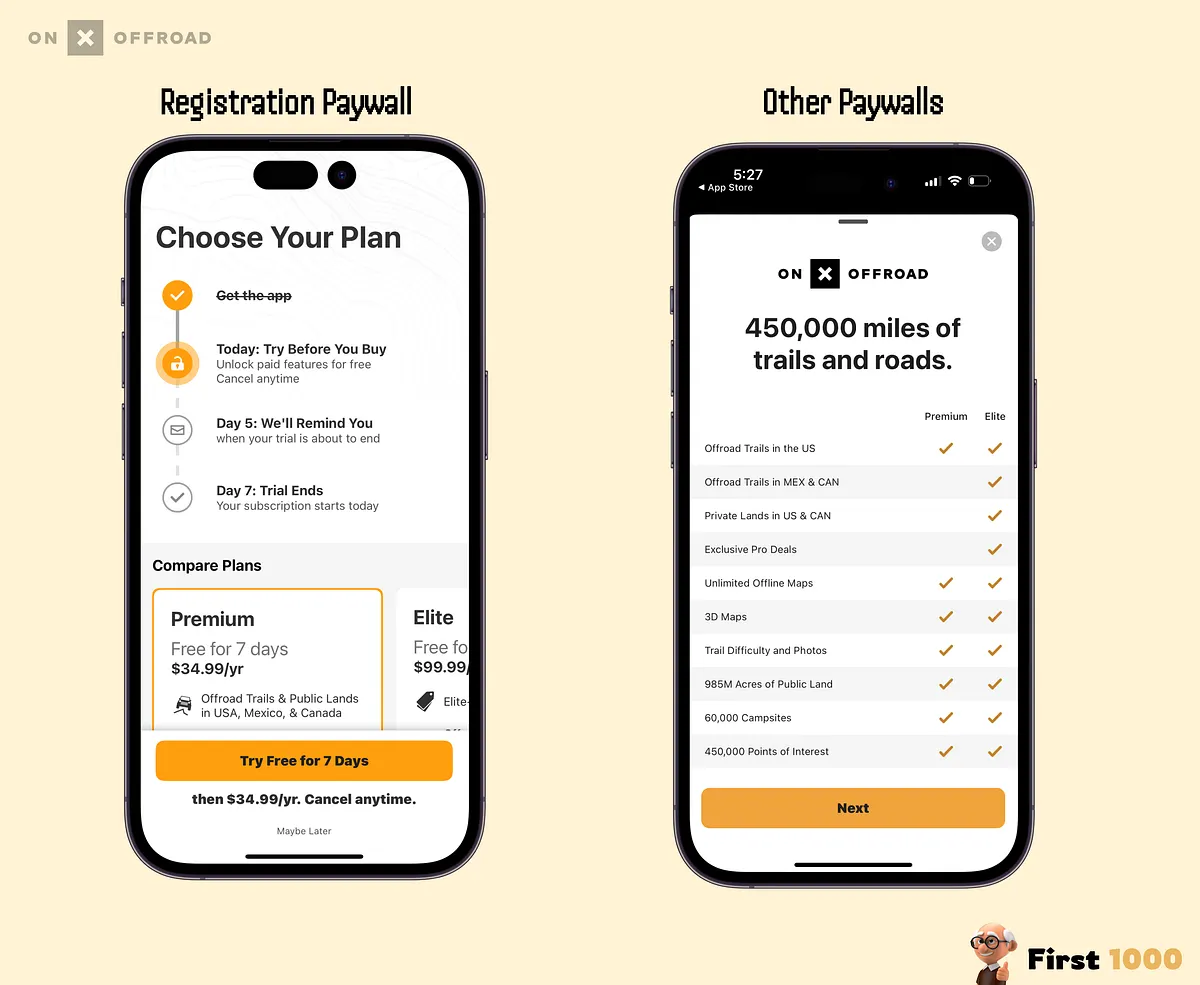
A side-by-side paywall comparison shows the registration version with less explanatory context than a later paywall.1200 × 985opens the full image 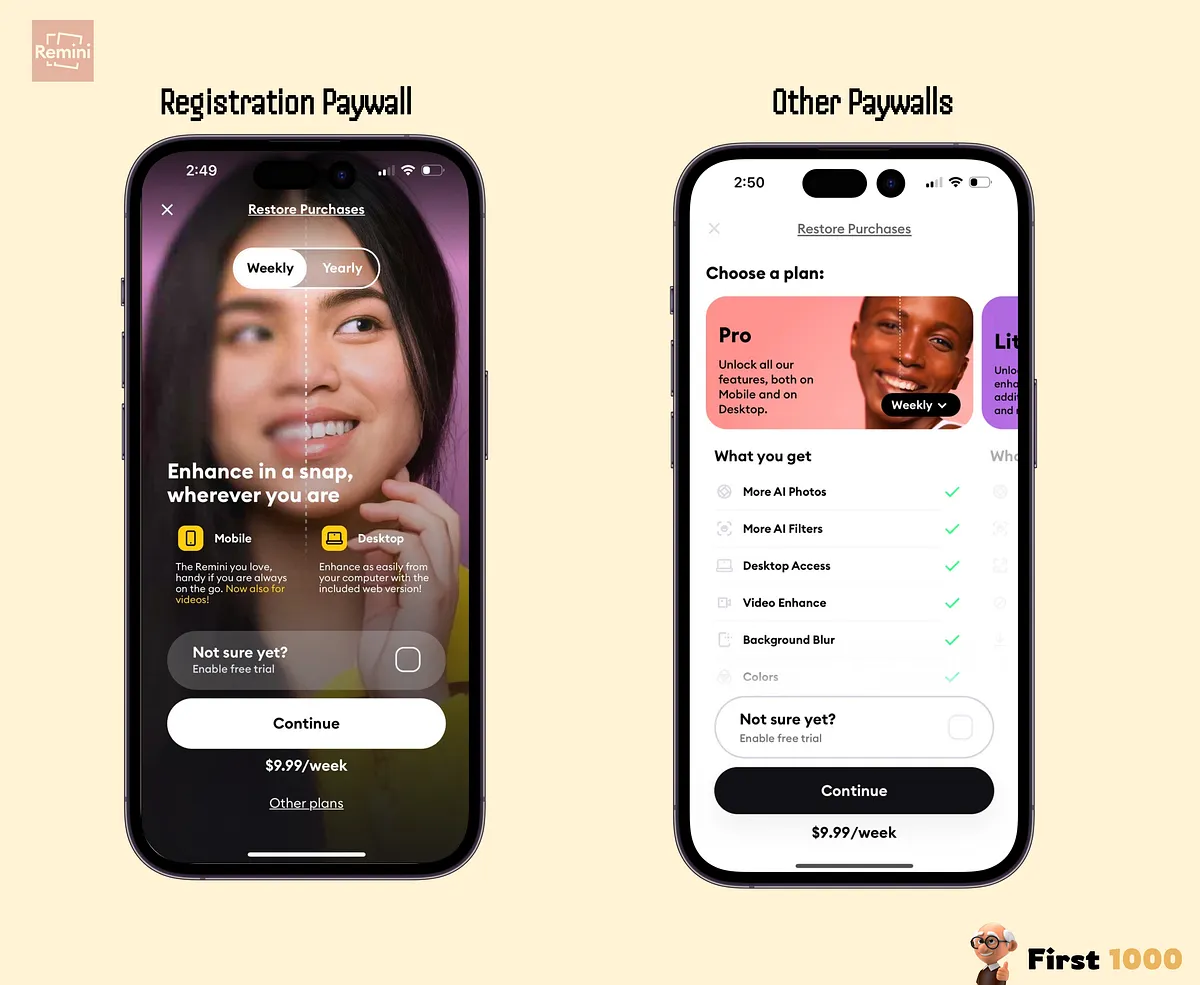
A second comparison reinforces that registration paywalls often simplify benefits while later paywalls carry more detail.1200 × 985opens the full image
Sources
- [1]
Lazyweb Research: Registration Paywalls
Ali says he reviewed more than 100 onboarding flows and saw registration paywalls commonly provide less feature context than post-registration paywalls, especially with multiple tiers.
Methodology
Product-experiment write-up by Ali Abouelatta, dated on April 5, 2024. Source links are listed below.