How do apps anchor price around a discount to raise perceived value?
- By Ali Abouelatta
- n = 795
- Published
- Updated
- 2 min read
- paywall · pricing · checkout · monetization · experiments · upsell
Short answer
The recurring detected move is to raise the reference anchor while keeping the same discount — e.g. Drops replacing a crossed-out $169.99 with a higher 'Previously $199.99' next to 'SAVE 50%.'source[1] Anchoring shows up inside the broader discount-experiment wave: 247 of 795 detected paywall experiments (31.1%) touch a discount or offer.source[2] Pair the deal with a credible higher 'before' price and concrete savings, then test it.
In detected diffs, apps raise the reference anchor (e.g. Drops' 'Previously $199.99') while holding the discount at 50% — Lazyweb Research, July 2026.
The finding: raise the anchor, hold the discount
Anchoring is a distinct move within the discount-experiment set (247 of 795 experiments touch a discount/offer).source[2] The clearest detected pattern is Drops: a control showing crossed-out $169.99 → $84.99 became a variant that removed the crossed price, added benefit copy, and introduced a higher 'Previously $199.99' reference alongside 'SAVE 50%.'source[1] The inferred logic: a higher, believable anchor plus benefit framing raises perceived value versus urgency alone.
Adjacent anchoring moves
Other detected diffs anchor via tier and term rather than a raw 'before' price. Endel added a second −50% tier so buyers compare a Lifetime ($124.99) against a Yearly ($59.99), with 'Best Deal' labeling — the comparison itself is the anchor.source[3] Walmart anchored on a discounted annual ('$49 first year then $98/yr') instead of a monthly trial, making the yearly commitment feel like the value choice.source[4] Instacart discloses the renewal ('$49.99 first year… renews $99/year') so the discount is visibly half the standing price.source[5]
How to apply it
When you show a discount, give the eye a credible higher number to divide against: a 'Previously $X' or a full renewal price, as Drops and Instacart do.source[1]source[5] Prefer a believable anchor over a shocking one — the inferred value of Drops' change was benefit framing plus a real 'previously,' not a bigger strike-through. If you have multiple plans, let the tiers do the anchoring (Endel's Lifetime-vs-Yearly).source[3] All of these are detected diffs, so validate the specific anchor with your own test rather than assuming the higher number always wins.
Caveats
These are detected before/after UI diffs with inferred rationale, not measured lift — 'higher anchor raises perceived value' is an inference, not a proven result.source[1] Renewal-disclosure framing (Instacart) is partly compliance-driven, so its presence isn't purely an optimization choice.source[5] Test anchors on your own funnel; an implausible 'before' price can erode trust and backfire.
Real in-market screens
Screens from real, in-market apps, tracked by Lazyweb Research.

Shein1179 × 2556opens the full image 
Wonder1170 × 2532opens the full image 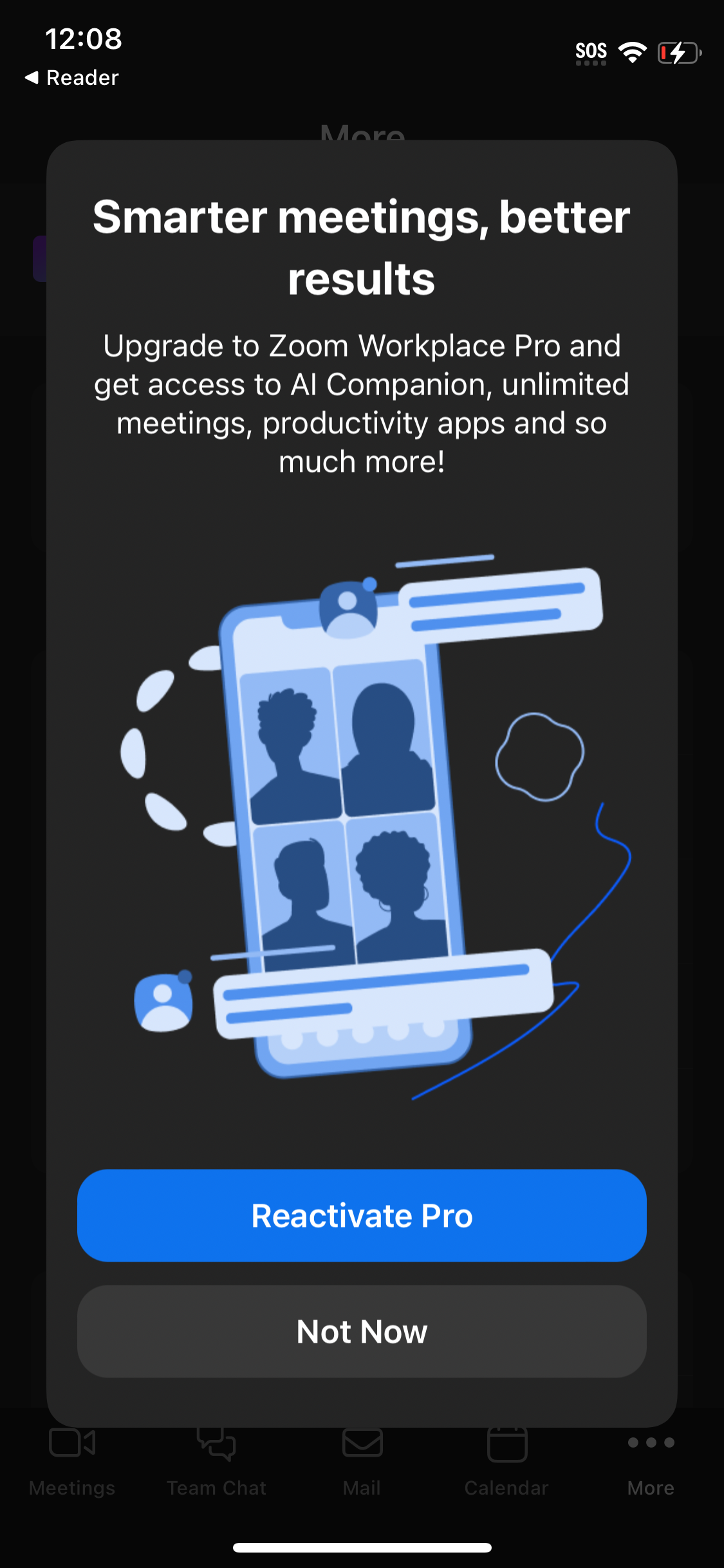
Zoom1125 × 2436opens the full image 
Spin1206 × 2622opens the full image
The numbers
| # | Stat | Computed from |
|---|---|---|
| [1] | Drops: crossed $169.99->$84.99 -> benefit copy + 'Previously $199.99' + 'SAVE 50%' | experiment_learning_drops |
| [2] | 247 of 795 detected paywall experiments (31.1%) touch a discount or offer | discount_experiments_count |
| [3] | Endel: two -50% plans (Lifetime $124.99 + Yearly $59.99) 'Best Deal on Endel Premium' | experiment_learning_endel |
| [4] | Walmart: '50% off annual at $49 first year then $98/yr' default over a monthly trial | experiment_learning_walmart |
| [5] | Instacart: '$49.99 for your first year… Renews $99/year. Limited-Time offer' | named_discount_example_instacart |
Methodology
Universe: 795 detected paywall-CTA experiments plus 4,406 paywall CTAs across 252 tracked mobile apps, July 2026. Method: qualitative reading of detected discount/anchor diffs. Caveat: detected diffs with inferred rationale, not measured lift; validate anchors with your own test.
Sources
- [1]
Lazyweb Research analysis of 795 detected paywall-CTA experiments (252 tracked paywall companies), July 2026
Named detected diff: Drops higher 'Previously $199.99' anchor + benefit framing + 'SAVE 50%'.
- [2]
Lazyweb Research analysis of 795 detected paywall-CTA experiments (252 tracked paywall companies), July 2026
Share of detected experiments touching a discount/offer element.
- [3]
Lazyweb Research analysis of 795 detected paywall-CTA experiments (252 tracked paywall companies), July 2026
Named detected diff: Endel two-tier −50% anchoring.
- [4]
Lazyweb Research analysis of 795 detected paywall-CTA experiments (252 tracked paywall companies), July 2026
Named detected diff: Walmart discounted-annual anchor over monthly trial.
- [5]
Lazyweb Research analysis of 4,406 paywall CTAs (252 tracked paywall companies), July 2026
Named example: Instacart first-year 50% intro with renewal disclosure.
Source: Lazyweb Research — proprietary analysis of real, in-market app screens. Cite as Lazyweb Research, 2026-07-07.